
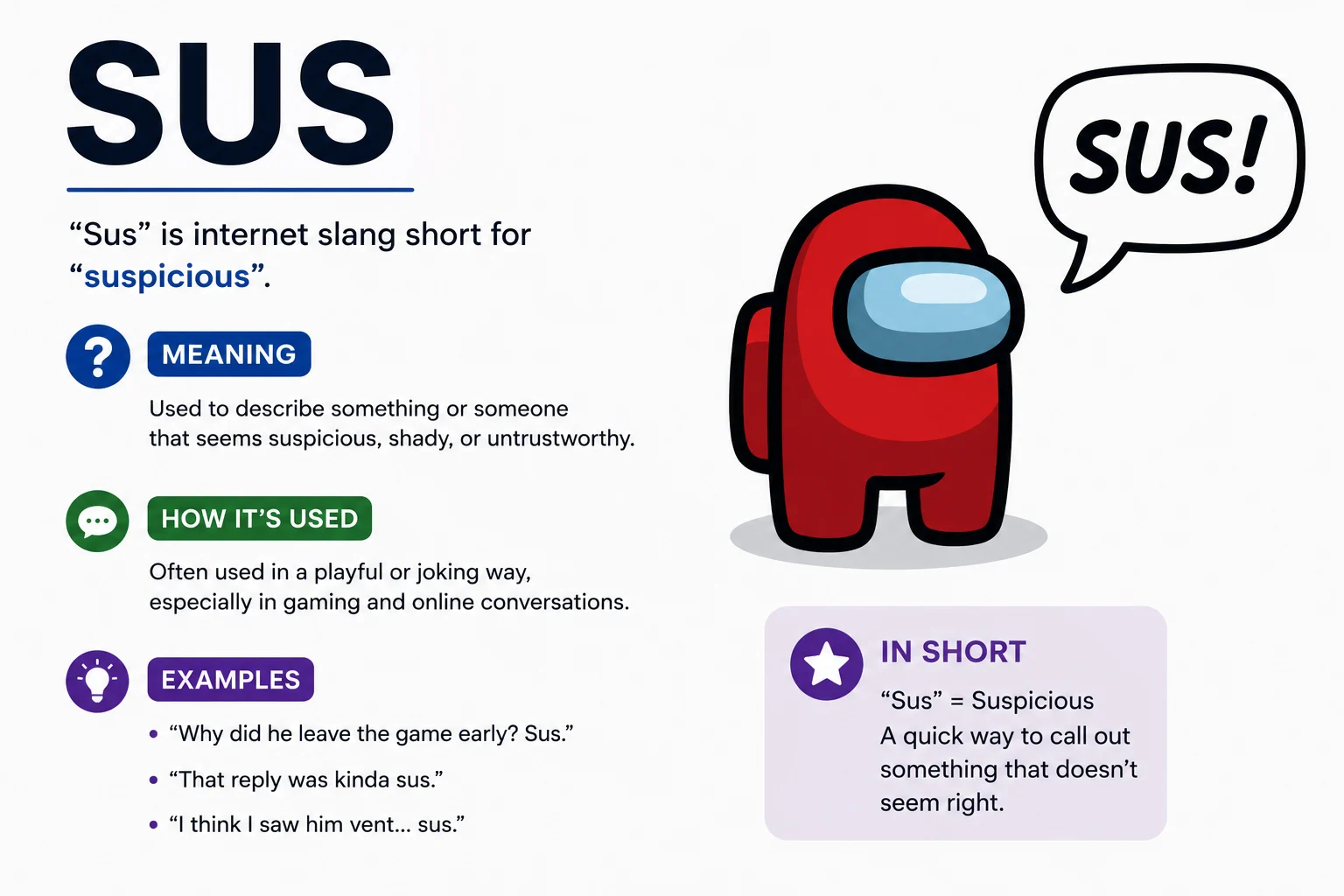
The sus meaning is one of the most recognized internet slang terms today. Whether you’re scrolling through TikTok, chatting on Snapchat, reading Instagram comments, or playing online games, you’ve probably seen someone call another person “sus.” While the word may seem confusing at first, it has become a common part of online conversations and meme culture. Understanding the sus meaning can help you keep up with modern slang and communicate more naturally on social media.
In simple terms, sus is short for suspicious or suspect. People use it when they think someone is acting strangely, hiding something, lying, or behaving in a way that seems unusual. The word is often used jokingly among friends, but it can also express genuine doubt or distrust depending on the context. Today, it extends far beyond gaming and is used in everyday texting, memes, and online discussions.
The popularity of “sus” exploded after the online multiplayer game Among Us became a global sensation. Players constantly accused one another of being “sus” while trying to identify the impostor. Clips from the game quickly spread across TikTok, YouTube, Twitch, and other platforms, turning the expression into one of the biggest internet slang trends of the decade. Even people who have never played the game now use the term in casual conversations.
Today, the sus meaning is much broader than simply describing suspicious behavior. It can refer to funny situations, questionable decisions, awkward moments, or even playful teasing between friends. Learning how and when to use the word correctly will help you understand internet culture and avoid confusion when chatting online. For more insight read here:- bussin meaning and highkey meaning.
What Does Sus Mean?
The sus meaning is straightforward. It simply means suspicious, questionable, or acting in a way that makes people doubt your intentions.
People use the word whenever someone behaves strangely or says something that doesn’t seem believable.
For example:
- “He’s acting sus today.”
- “That excuse sounds sus.”
- “You’re being kind of sus.”
In each example, the speaker believes something seems unusual or untrustworthy.
The word is intentionally short because internet users prefer quick and simple expressions. Instead of typing “You seem suspicious,” they simply type “You’re sus.”
The sus meaning usually carries a playful tone, especially among friends. However, context is important because the word can sometimes imply genuine suspicion.
Where Did Sus Come From?
Although many people believe the sus meaning started with Among Us, the word actually existed long before the game became popular.
“Sus” has been used for years as an abbreviation for “suspicious” in casual English conversations.
However, the release of Among Us completely transformed its popularity.
In the game, players must discover which participant is secretly the impostor.
Typical conversations include:
- “Red is sus.”
- “Blue is acting sus.”
- “Vote green, they’re sus.”
Millions of gamers repeated these phrases every day.
Soon, clips from the game spread across:
- TikTok
- YouTube
- Twitch
- Discord
As memes became viral, the sus meaning entered mainstream internet culture.
Today, even people who have never played Among Us understand the expression.
Sus Meaning in Text Messages
The sus meaning frequently appears in text conversations.
Friends often use the word jokingly.
Example:
Friend:
“I accidentally ate your dessert.”
Reply:
“That’s sus.”
Meaning:
That sounds suspicious.
Another example:
Friend:
“I wasn’t online yesterday.”
Reply:
“Sus.”
Meaning:
I don’t completely believe you.
Texting lacks facial expressions and tone of voice.
The word “sus” quickly communicates doubt without requiring lengthy explanations.
People commonly use it when:
- Someone tells an unbelievable story.
- A friend behaves unusually.
- A joke involves pretending someone is guilty.
- Someone changes plans unexpectedly.
The sus meaning keeps conversations casual and entertaining.
Sus Meaning on TikTok
The sus meaning became one of TikTok’s favorite slang expressions.
Creators use it in:
- Comedy videos
- Reaction clips
- Memes
- Challenges
- Comment sections
Examples:
“That teacher was acting sus.”
“This ending is so sus.”
“My dog is acting sus today.”
TikTok users often exaggerate situations for humor.
Calling something “sus” instantly creates curiosity and comedy.
Many creators also use dramatic music and editing whenever someone behaves suspiciously.
This trend helped introduce the word to millions of new users.
Today, the sus meaning is recognized by almost every active TikTok user.
Sus Meaning on Snapchat and Instagram
The sus meaning is equally popular on Snapchat and Instagram.
Examples include:
Story:
“My brother is acting sus.”
Caption:
“This restaurant looks sus.”
Comment:
“That’s kinda sus.”
On Instagram, the word often appears beneath funny videos and memes.
On Snapchat, friends commonly use it during casual conversations.
Examples:
Friend:
“Who took my charger?”
Reply:
“Not me.”
Response:
“Sus.”
Meaning:
I think you’re lying.
The expression creates playful interactions without sounding overly serious.
Different Ways People Use Sus
The sus meaning changes slightly depending on the conversation.
Suspicious Behavior
“He’s acting sus.”
Meaning:
His behavior seems unusual.
Questionable Excuses
“That explanation is sus.”
Meaning:
I don’t believe it.
Funny Situations
“That’s kinda sus.”
Meaning:
That situation looks strange.
Joking With Friends
“You disappeared for five hours. Sus.”
Meaning:
The speaker is teasing.
Online Gaming
“Vote him. He’s sus.”
Meaning:
The player may be the impostor.
These examples show how flexible the expression has become. Also explore:- alchemist meaning
Sus Meaning in Gaming
Gaming remains one of the biggest reasons for the popularity of the sus meaning.
Players often use the word during multiplayer games.
Examples:
“Red is sus.”
“Blue vented.”
“Green looks sus.”
Although the term became famous through Among Us, gamers now use it in many different games.
Whenever someone behaves strangely, teammates may call them “sus.”
The expression adds humor and excitement to competitive gameplay.
It has become part of gaming vocabulary around the world.
Why Gen Z Loves Saying Sus
The sus meaning perfectly matches Gen Z communication.
Modern internet users enjoy words that are:
- Short
- Funny
- Easy to type
- Meme-friendly
- Versatile
Instead of saying:
“That seems suspicious.”
People simply say:
“Sus.”
The word is memorable and works in countless situations.
Gen Z also enjoys playful teasing.
Calling a friend “sus” often becomes part of harmless jokes rather than serious accusations.
This flexibility explains why the expression remains extremely popular.
Examples of Sus in Real Conversations
Here are some everyday examples showing the sus meaning in action.
Example 1
Friend:
“I didn’t eat your fries.”
Reply:
“Sus.”
Meaning:
I don’t believe you.
Example 2
Friend:
“He suddenly became quiet.”
Reply:
“That’s sus.”
Meaning:
His behavior seems unusual.
Example 3
Friend:
“I finished the project in five minutes.”
Reply:
“Sounds sus.”
Meaning:
That seems unlikely.
Example 4
Friend:
“My cat opened the door.”
Reply:
“That’s kinda sus.”
Meaning:
That sounds unbelievable.
These examples demonstrate how naturally the expression fits into conversations.
Similar Slang Words and Alternatives
The sus meaning shares similarities with several other expressions.
- Sketchy
- Shady
- Fishy
- Questionable
- Doubtful
- Weird
- Strange
Examples:
“That sounds sketchy.”
“He’s acting shady.”
“This situation feels fishy.”
Although these words have similar meanings, “sus” feels much more modern and internet-friendly.
Can Sus Be Used as a Joke?
Absolutely.
Most uses of the sus meaning are humorous.
Friends constantly joke by calling each other sus.
Examples:
“You replied after three hours? Sus.”
“You suddenly became nice? Sus.”
“You won every game today? Sus.”
These playful accusations rarely mean someone actually did something wrong.
Internet humor often exaggerates suspicious situations for entertainment.
However, context always matters.
When You Should Not Use Sus
Although the sus meaning works well online, it is not suitable everywhere.
Avoid using it in:
- Professional emails
- Business meetings
- Academic essays
- Official documents
- Formal presentations
Instead of saying:
“This report is sus.”
Say:
“This report appears inconsistent.”
Formal communication generally requires professional vocabulary.
Frequently Asked Questions
What does sus mean?
Sus is short for “suspicious” or “suspect.” It describes someone or something that seems unusual or untrustworthy.
Is sus a bad word?
No. It is simply internet slang and is usually used jokingly.
Why did sus become popular?
The word became globally popular after the success of Among Us, although it existed before the game.
Can sus be used in texting?
Yes. It is one of the most common slang expressions used in text messages and online chats.
Is sus still popular?
Yes. The word remains widely used across TikTok, Instagram, Snapchat, gaming communities, and everyday conversations.
Conclusion
The sus meaning has evolved from a simple abbreviation for “suspicious” into one of the internet’s most recognizable slang expressions. Thanks to memes, gaming, and social media, the word has become part of everyday online conversations around the world.
Whether you’re texting a friend, commenting on a TikTok video, or joking during an online game, “sus” is a quick and entertaining way to express doubt or point out unusual behavior. While it often carries a humorous tone, the meaning always depends on the context and the relationship between the people involved.
As internet language continues to evolve, the sus meaning remains a perfect example of how a short, simple word can become a global trend. By understanding when and how to use it, you’ll be better prepared to follow modern online conversations and connect with today’s digital culture.