
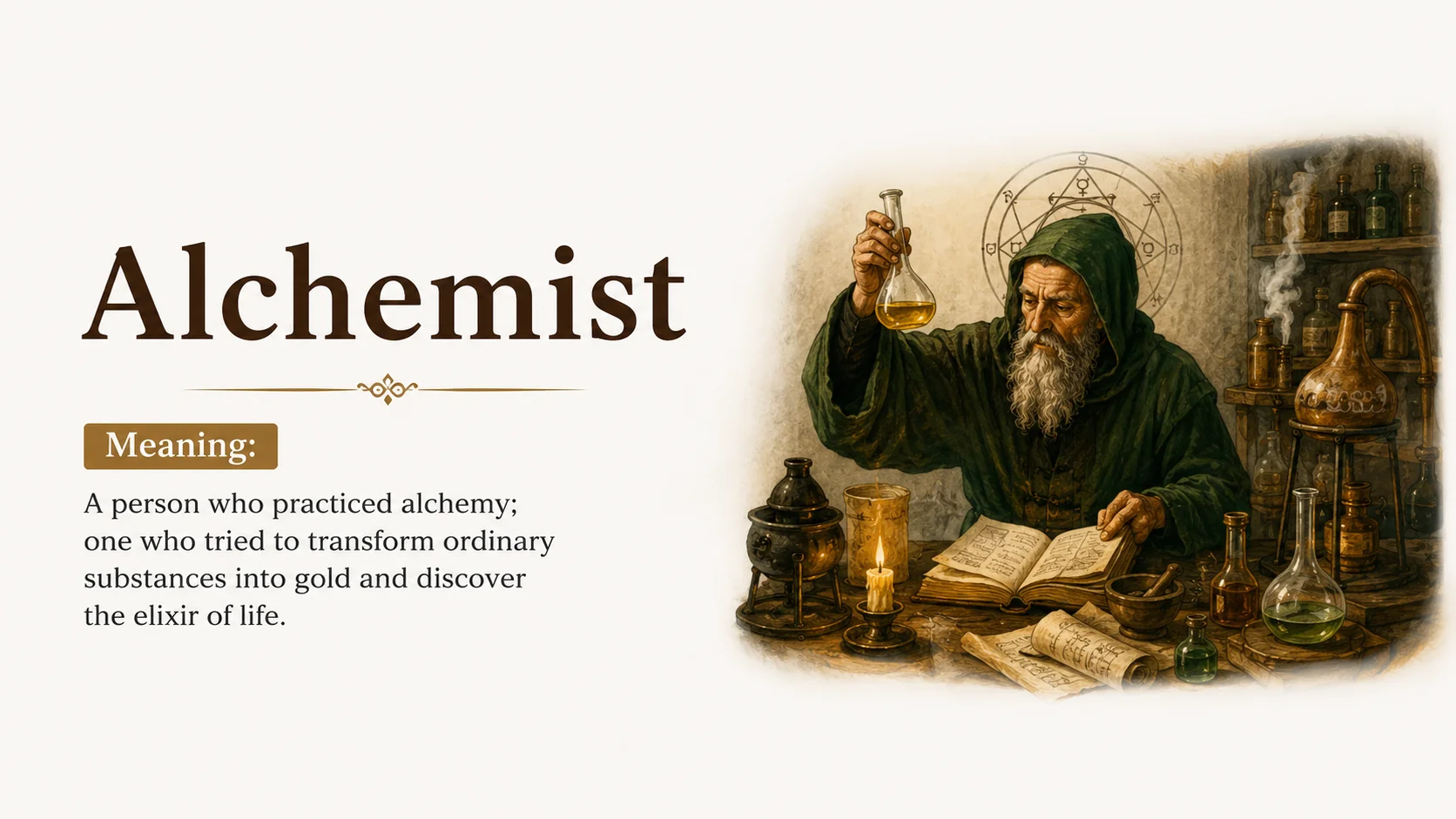
Alchemist meaning is a topic that fascinates history lovers, literature readers, spiritual seekers, and language learners alike. The word “alchemist” carries a sense of mystery, wisdom, transformation, and ancient knowledge. It often brings to mind images of medieval scholars working in secret laboratories, attempting to turn ordinary metals into gold or searching for the legendary philosopher’s stone.
Historically, an alchemist was a practitioner of alchemy, an ancient tradition that combined elements of chemistry, philosophy, astrology, medicine, and spirituality. Long before modern science emerged, alchemists sought to understand the nature of matter and the secrets of transformation. Although many of their theories were eventually replaced by scientific discoveries, their work laid important foundations for modern chemistry.
Today, the alchemist meaning extends far beyond its historical origins. In modern language, an alchemist can symbolize someone who transforms ordinary things into something valuable, whether in business, art, personal development, or creative work. The word has become a powerful metaphor for growth, change, and innovation.
Understanding the alchemist meaning requires exploring both its historical roots and its modern interpretations. From ancient laboratories to bestselling books and motivational discussions, the concept of the alchemist continues to inspire people around the world.
What Does Alchemist Mean?
The alchemist meaning refers to a person who practices alchemy, an ancient discipline focused on transformation and the study of materials.
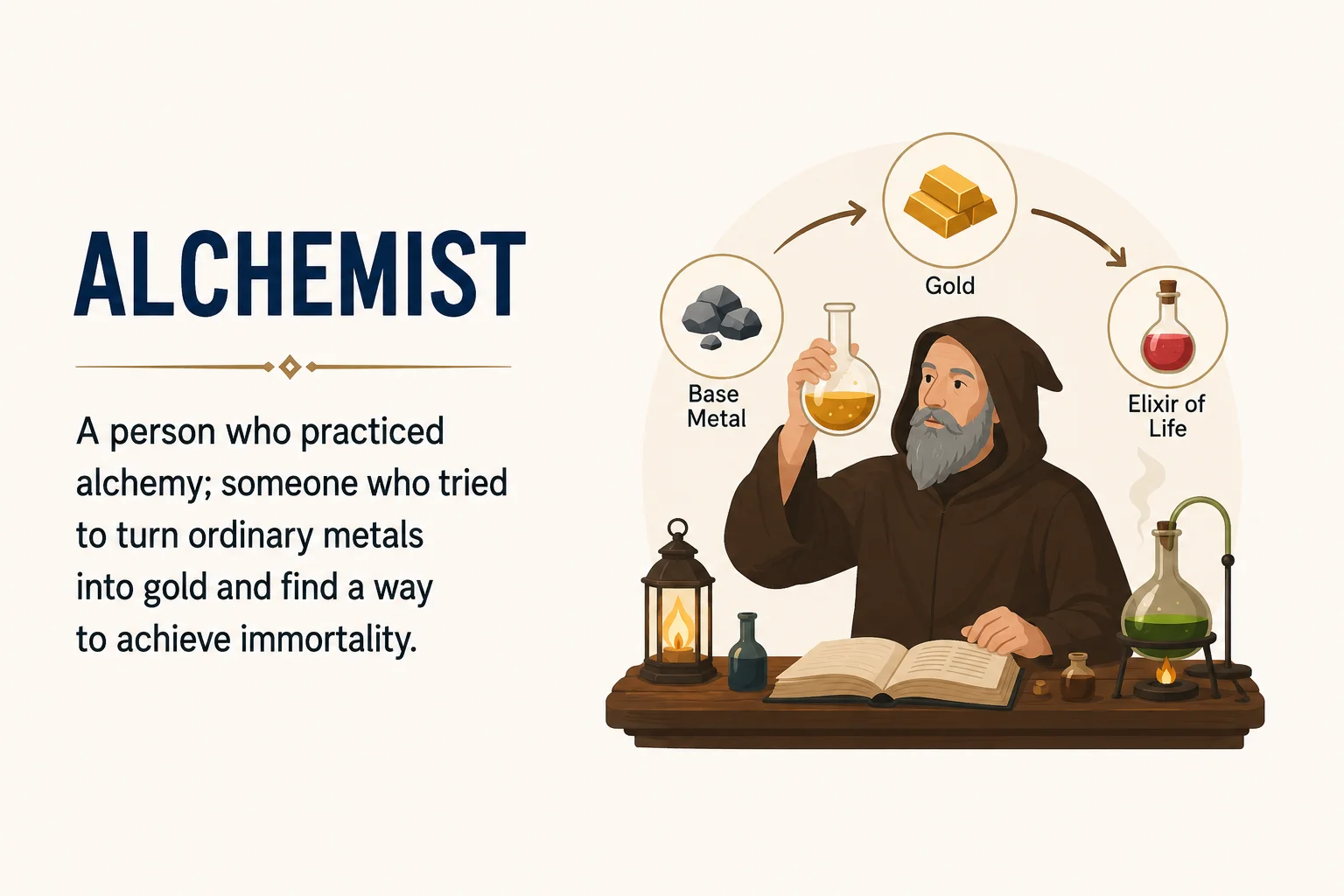
Historically, alchemists believed that substances could be transformed into more valuable forms. Their most famous goal was turning common metals such as lead into gold.
However, alchemy was not solely about wealth. Many alchemists were interested in discovering hidden truths about nature, medicine, and human existence.
In modern usage, the term often describes someone who creates remarkable change or transformation.
For example:
- A successful entrepreneur might be called an alchemist for transforming a simple idea into a thriving company.
- An artist may be described as an alchemist for turning emotions into beautiful works of art.
- A coach might be viewed as an alchemist for helping people improve their lives.
The modern meaning focuses on transformation rather than ancient experiments.
The Origin of the Word Alchemist
Understanding the alchemist meaning becomes easier when examining the word’s origins.
The term comes from the word “alchemy,” which has roots in Arabic and ancient Greek languages.
The Arabic term “al-kimiya” referred to the art of transformation and the study of substances. Over time, the word spread throughout Europe and became associated with medieval scholars who explored the mysteries of nature.
During the Middle Ages, alchemy was considered both a scientific and philosophical pursuit. Alchemists worked to understand the composition of matter while also exploring spiritual concepts.
As scientific methods developed, chemistry gradually replaced alchemy as a formal field of study. However, the word alchemist survived and remains part of modern vocabulary.
Its rich historical background contributes to its continued popularity and intrigue.
The History of Alchemy
The alchemist meaning is closely connected to the history of alchemy itself.
Alchemy existed in various forms across ancient civilizations, including Egypt, China, India, and the Islamic world.
Practitioners believed that all matter contained hidden properties that could be understood and transformed.
Their experiments involved metals, minerals, herbs, liquids, and other substances.
Many alchemists dedicated years to studying nature and conducting experiments. They recorded observations, developed techniques, and shared ideas that would later influence scientific progress.
Although many alchemical theories were eventually disproven, their commitment to observation and experimentation helped shape the foundations of chemistry.
Their legacy remains an important chapter in the history of science.
Why Alchemists Wanted to Create Gold
One of the most famous aspects of the alchemist meaning involves the quest to turn base metals into gold.
This process was known as transmutation.
Alchemists believed that metals could evolve and become more perfect over time. Gold was considered the ultimate form of metal because of its beauty, rarity, and resistance to corrosion.
By understanding nature’s secrets, they hoped to accelerate this transformation.
The dream of creating gold captured imaginations for centuries.
Although modern science has shown that ordinary chemical methods cannot transform lead into gold, the symbolism behind the quest remains powerful.
Today, it often represents the pursuit of extraordinary achievement or personal growth.
The Philosopher’s Stone and the Alchemist
The alchemist meaning is often associated with the legendary philosopher’s stone.
According to alchemical traditions, this mysterious substance possessed incredible powers.
It was believed to:
- Transform metals into gold
- Extend life
- Cure diseases
- Grant wisdom
The philosopher’s stone became one of the most famous symbols in alchemy.
Whether it actually existed remains a matter of legend and speculation.
Many scholars believe it was intended as a metaphor for enlightenment and self-transformation rather than a literal object.
Its influence can still be seen in literature, films, and popular culture.
Alchemist Meaning in Literature
The alchemist meaning has inspired countless writers throughout history.
Authors often use alchemists as symbols of wisdom, curiosity, transformation, and discovery.
In stories, alchemists frequently appear as mysterious figures searching for hidden knowledge.
Some are portrayed as brilliant scholars, while others are depicted as dreamers pursuing impossible goals.
The concept of transformation makes the alchemist a powerful literary symbol.
Readers are often drawn to stories about change, growth, and self-discovery.
As a result, the image of the alchemist continues to appear in novels, fantasy worlds, and philosophical works.
Alchemist Meaning in Personal Development
Modern self-improvement discussions frequently use the alchemist meaning as a metaphor.
In this context, an alchemist is someone who transforms challenges into opportunities.
For example:
- Turning failure into learning
- Converting difficulties into strength
- Transforming ideas into achievements
Many motivational speakers describe personal growth as a form of alchemy.
The process involves changing negative experiences into valuable lessons.
This symbolic interpretation resonates with people because transformation is a central part of human life.
The alchemist becomes a representation of resilience and self-improvement.
Alchemist Meaning in Business and Innovation
The alchemist meaning is also popular in business and entrepreneurship.
Innovators who create extraordinary value from ordinary resources are often compared to alchemists.
Examples include:
- Entrepreneurs building successful companies
- Inventors developing groundbreaking technologies
- Creators producing unique products
These individuals transform ideas into practical results.
Like historical alchemists, they seek possibilities where others see limitations.
The comparison emphasizes creativity, vision, and problem-solving abilities.
In modern business language, being called an alchemist is often considered a compliment.
Alchemist Meaning in Art and Creativity
Artists frequently embody the alchemist meaning through their work.
Creative individuals transform emotions, experiences, and ideas into artistic expressions.
Painters convert imagination into visual art.
Musicians transform feelings into melodies.
Writers turn thoughts into stories.
This process resembles alchemical transformation because something intangible becomes something meaningful and valuable.
Many people describe great artists as alchemists because they create beauty from ordinary experiences.
The metaphor highlights the magical and transformative nature of creativity.
Characteristics of an Alchemist
Several traits are commonly associated with the alchemist meaning.
These include:
- Curiosity
- Persistence
- Creativity
- Patience
- Wisdom
- Open-mindedness
- Dedication
Historical alchemists spent years pursuing knowledge and conducting experiments.
Modern symbolic alchemists demonstrate similar qualities when working toward personal or professional goals.
These characteristics contribute to the enduring appeal of the concept.
People admire individuals who remain committed to growth and discovery.
Common Examples of Alchemist in Sentences
Understanding examples helps clarify the alchemist meaning.
Examples include:
- The ancient alchemist spent decades studying metals.
- She is an alchemist of ideas, turning concepts into successful businesses.
- The artist worked like an alchemist, transforming emotions into paintings.
- His ability to solve problems made him an alchemist in the workplace.
- The novel featured a mysterious alchemist searching for hidden knowledge.
- Great leaders often act as alchemists of change.
- The entrepreneur transformed a small startup into a global company like an alchemist.
- Creativity allows people to become modern alchemists.
These examples demonstrate both historical and symbolic usage.
Synonyms Related to Alchemist
Several words relate to the alchemist meaning.
Depending on context, similar terms include:
- Chemist
- Scholar
- Inventor
- Philosopher
- Researcher
- Creator
- Innovator
- Visionary
- Experimenter
- Transformer
While these words are not exact synonyms, they share connections with knowledge, discovery, and transformation.
Understanding related terms helps broaden vocabulary.
Why the Alchemist Symbol Remains Popular
The alchemist meaning continues to attract attention because transformation is a universal human theme.
People constantly seek ways to improve themselves, solve problems, and achieve goals.
The alchemist symbolizes the possibility of change.
Instead of accepting limitations, the alchemist searches for hidden potential.
This message remains relevant across cultures and generations.
Whether viewed historically or symbolically, the concept inspires curiosity and hope.
Its timeless appeal explains why alchemists continue to appear in books, movies, art, and personal development discussions.
Alchemist Meaning in Modern Culture
Modern culture has embraced the alchemist meaning in many forms.
Movies, television shows, video games, and novels frequently feature alchemist characters.
These portrayals often blend historical elements with fantasy and adventure.
The word is also used metaphorically in motivational content, leadership training, and creative industries.
People enjoy the idea of transforming ordinary circumstances into extraordinary outcomes.
As a result, the alchemist remains one of the most enduring symbols of personal and creative transformation.
Frequently Asked Questions
What is the simple meaning of alchemist?
An alchemist is a person who practiced alchemy, an ancient discipline focused on transformation and the study of substances.
What did alchemists try to do?
Many alchemists attempted to transform ordinary metals into gold and sought hidden knowledge about nature and life.
Is alchemy the same as chemistry?
No. Alchemy is an ancient practice that combined science, philosophy, and spirituality, while chemistry is a modern scientific discipline.
Why is an alchemist a symbol of transformation?
Alchemists were associated with changing one substance into another, making them powerful symbols of growth and change.
Can someone be called an alchemist today?
Yes. The term is often used metaphorically for people who transform ideas, challenges, or opportunities into valuable results.
Conclusion
The alchemist meaning combines history, mystery, science, and symbolism. Originally, an alchemist was someone who practiced alchemy and sought to understand the hidden secrets of nature. These individuals pursued ambitious goals, including transforming metals into gold and discovering the philosopher’s stone.
Over time, the meaning evolved beyond its historical roots. Today, an alchemist often represents a person who creates transformation, whether in business, art, personal development, or innovation. The concept symbolizes creativity, determination, and the pursuit of improvement.
Understanding the alchemist meaning offers valuable insight into both history and modern culture. It reminds us that transformation has always fascinated humanity, from ancient laboratories to contemporary success stories.
Ultimately, the alchemist remains a timeless symbol of possibility—the belief that with knowledge, effort, and imagination, ordinary things can be transformed into something extraordinary.