If you have been scrolling through Snapchat, Instagram, or texting your friends, you have probably seen the abbreviation “WTM” pop up more times than you can count. And if you are anything like most people who first encounter it, your first reaction is probably confusion mixed with a little bit of FOMO. What does WTM actually mean, and why is everyone using it? The WTM MEANING IN TEXT is one of the most commonly used Gen-Z and millennial slang abbreviations in today’s digital conversations, and it carries more weight than you might think for just three letters.
WTM is short, snappy, and incredibly useful — but only if you understand what it actually stands for and the contexts in which it is used. Like most internet slang, WTM has a few different meanings depending on the situation, the platform, and even the relationship between the people texting. In some chats, it is a friendly check-in. In others, it is an invitation to hang out. And sometimes, it is a passive way to start a conversation without actually saying much. The flexibility of this little abbreviation is exactly what makes it so popular across modern digital communication.
In this complete guide, we will break down every layer of WTM — its main meanings, where it came from, how to reply to it, when to use it, and when to avoid it. Whether you are a Gen-Z native fluent in internet slang or a curious millennial trying to keep up with the texting culture, this article will give you everything you need to confidently decode and use WTM like a pro.
By the end, you will not only understand the WTM meaning in text but also know how to read between the lines when someone hits you with this casual little message. You will learn the cultural nuances, the platform-specific differences, and even the generational gap that exists around this slang. Let’s dive in.
The Full Meaning of WTM in Text Messages
WTM most commonly stands for “What’s The Move” — a casual, conversational way of asking someone what they are doing, where they are going, or what plans they have for the day, evening, or weekend. It is the digital equivalent of saying “What’s up?” or “Any plans?” in person, but with a slightly more open-ended and inviting tone. The beauty of WTM lies in its ambiguity — it lets you reach out without committing to anything specific, and it gives the other person room to respond however they want.
When someone texts you “WTM tonight?” they are basically asking what your plans are and, more often than not, hinting that they might want to join you or invite you somewhere. It is a low-pressure way of feeling out the vibe before committing to anything specific. This makes WTM a favorite among Gen-Z and younger millennials who prefer fluid, casual social planning over rigid scheduling. The phrase essentially says, “I’m interested in what’s happening, and I want to be part of it if something cool is going on.”
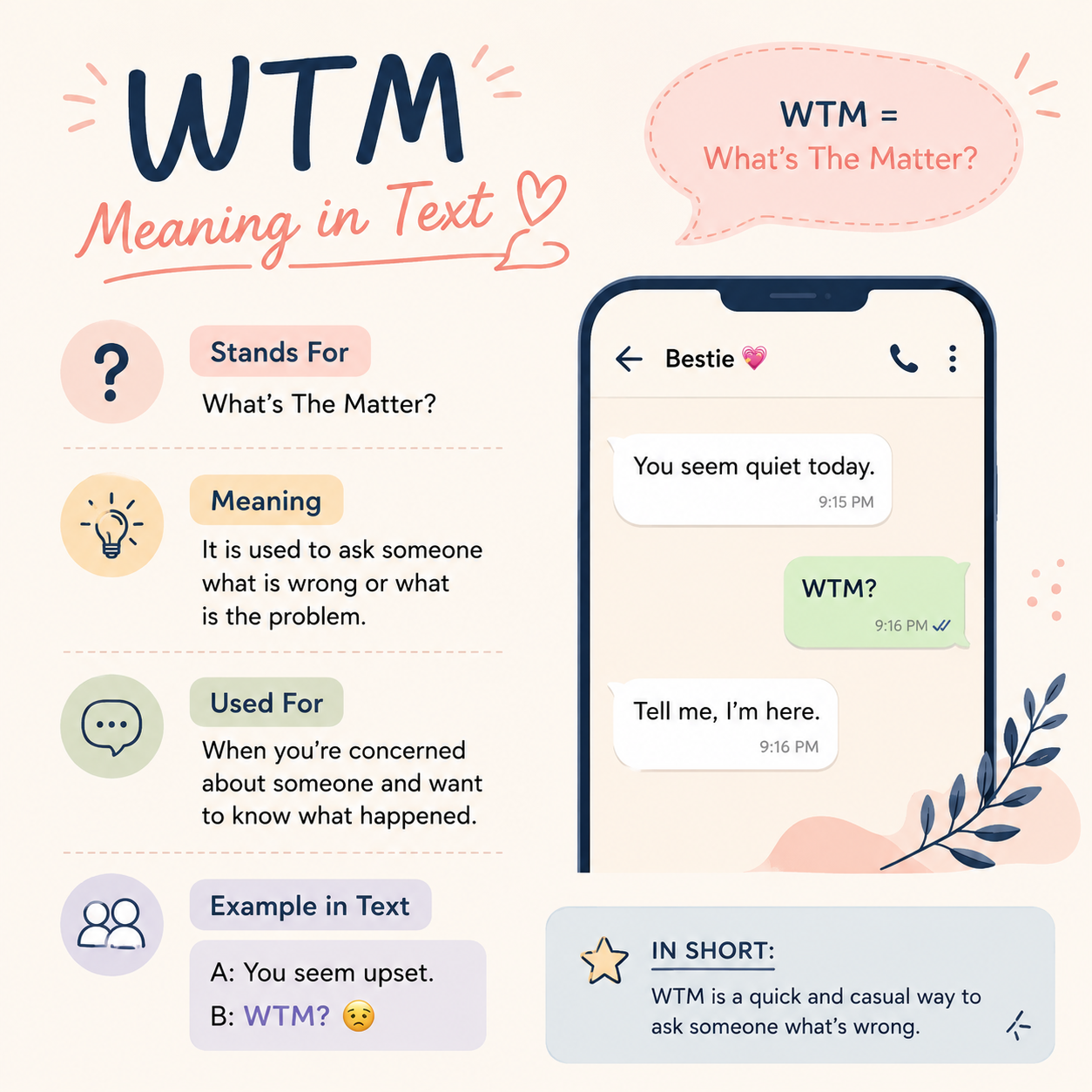
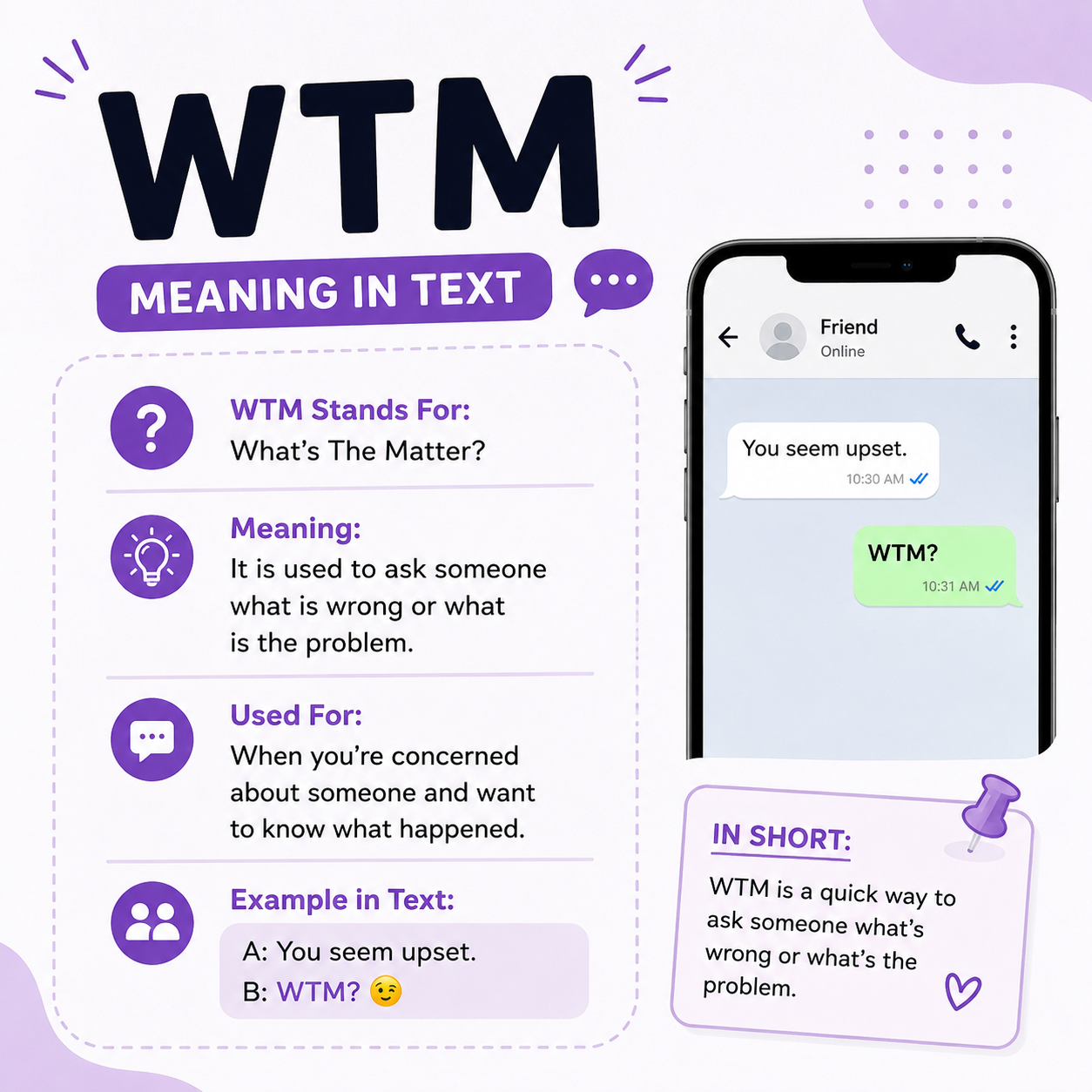
However, WTM is not limited to just “What’s The Move.” Depending on the context, it can also stand for “What’s The Matter?” — used when someone seems off, upset, or quiet, and you want to check in on them gently. In some online communities, particularly gaming forums or older texting circles, WTM can also mean “Whatever That Means” used sarcastically or “Want To Meet” in dating apps like Tinder, Bumble, or Hinge. Each variation carries its own emotional weight and conversational purpose, which is why context matters so much when decoding it.
The flexibility of WTM is exactly why it has become such a staple in modern texting. It can fit into almost any kind of conversation — from planning a Friday night out with friends to checking on a partner who has been distant. The trick is reading the context and tone to figure out which version of WTM applies. Once you understand the situational meaning, replying becomes second nature, and you avoid the awkward “what do you mean?” moments that often come with slang misunderstandings.
Where WTM Came From and How It Got Popular
The origin of WTM is closely tied to the explosion of mobile texting culture in the late 2000s and early 2010s. As smartphones became universal and texting overtook phone calls as the primary mode of casual communication, people started looking for shorter, faster ways to ask common questions. Typing out “What are you doing tonight?” felt long and committed. “WTM?” felt casual, easy, and noncommittal — perfect for the era of constant connectivity but minimal effort. This shift toward brevity in digital communication created the perfect environment for abbreviations like WTM to thrive.
Snapchat is often credited as the platform that helped WTM go viral. Around 2015 and 2016, teens and young adults began using WTM in Snapchat stories and direct messages as a quick way to gauge the social vibe of the night without overcommitting. Posting “WTM tonight?” on your Snapchat story would let your entire friend list know you were looking for plans, without having to text each person individually. This created a kind of open invitation that perfectly fit the loose, last-minute social style of Gen-Z. The disappearing nature of Snapchat stories made the phrase feel even more casual and pressure-free.
From Snapchat, WTM spread to Instagram DMs, iMessage, Discord, TikTok comments, and beyond. Each platform added its own slight twist to how WTM was used, but the core meaning remained the same. By the early 2020s, WTM had become so ingrained in digital communication that it barely needed explanation among younger users. The migration of the abbreviation across platforms also helped it gain layers of meaning, with users on different apps adapting it to fit their specific communication needs.
Interestingly, WTM also gained traction in hip-hop and rap culture, where artists and influencers would use it in tweets, captions, and lyrics as a stylish, casual way to engage with their audience. This further cemented WTM as not just a texting shortcut, but a piece of contemporary slang culture. Today, it shows up everywhere — from celebrity Instagram captions to brand marketing tweets trying to sound relatable to a younger demographic.
How To Use WTM Correctly in Texting and Chats
Using WTM correctly comes down to three things: context, tone, and timing. While it is a flexible abbreviation, sending WTM at the wrong moment or to the wrong person can come across as cold, lazy, or confusing. To use WTM like a native, you need to understand who you are talking to, what kind of conversation you are having, and what response you are hoping to get. Master these elements, and WTM becomes a powerful tool in your texting toolkit.
First, use WTM when you have an established casual relationship with the person you are texting. WTM is informal slang, so it works best between friends, dating partners, or people you have been chatting with regularly. Sending WTM to your boss, your professor, or someone you barely know can come off as too casual or even rude. Save it for friendly, relaxed conversations where the tone is already light and slang is welcome. The relationship has to support that level of informality before you drop a WTM.
Second, use WTM when you genuinely want to know someone’s plans or feelings. The classic “WTM tonight?” is perfect when you are bored on a Friday evening and want to know if your group is doing anything. Pair it with an emoji or follow-up message to make your intent clear. For example, “WTM tonight? I’m down to chill if you are.” This adds warmth and shows you are actually interested in connecting, not just throwing out a vague question hoping someone takes the bait. The more genuine your intent, the better the response.
Third, time your WTM messages well. Texting WTM at 3 AM might come across as desperate or attention-seeking, while sending it during a normal social hour — late afternoon to early evening — feels natural and inviting. Read the room digitally before you send it. Consider what the person you are texting might be doing at that hour and whether your message will feel welcome or intrusive. Timing is one of the most overlooked aspects of slang usage, but it makes a huge difference in how your message is received.
Finally, do not overuse WTM. If you text WTM to the same person every day with no other content, it can start to feel hollow or one-sided. Mix it up with other conversation starters and follow-ups to keep your texting style engaging and human. Repetition kills the magic of any slang word, and WTM is no exception. Sprinkle it in naturally, vary your messages, and let the abbreviation feel fresh every time you use it.
WTM Meaning When Used on Snapchat Stories and Instagram
When you see WTM on a Snapchat story or Instagram story, it usually means the person posting is essentially throwing out a digital invitation to their friend group. Posting “WTM?” with a sticker, a chill photo, or even just a black screen with the letters is the modern version of saying “I’m free — anyone want to hang out?” without sounding needy or desperate. The story format makes it especially powerful because it broadcasts the message to dozens or hundreds of friends at once, increasing the chances of getting a response.
On Snapchat specifically, WTM stories are extremely common on weekends, holidays, and during summer breaks. It is a low-pressure way to find out who is doing what, without having to text 15 different people individually. Friends who see your story and have plans will often reply with a quick “Come thru!” or share their location. Friends who are also bored will reply with “Same here, WTM with you?” — creating a chain reaction that often leads to spontaneous hangouts. The story disappears after 24 hours, which adds to the spontaneity and removes any sense of long-term commitment.
On Instagram, WTM tends to appear more in DMs and close-friend stories rather than public stories. It is often used between close friends to coordinate plans without making things public. You might see something like “WTM tonight? Movie night?” in a story shared only with a select group of people. This makes WTM feel more intimate and selective on Instagram compared to Snapchat. The “Close Friends” feature on Instagram has made WTM stories even more popular in private circles, since users feel comfortable being more direct with smaller audiences.
In both cases, the underlying message is the same: “I’m available and looking for plans. Let’s see what’s happening.” It is one of the most efficient social signals in modern texting culture, and it has reshaped how young people coordinate their social lives. Instead of formal group chats or scheduled plans, WTM stories create an organic, real-time conversation that flows naturally throughout the day.
WTM Meaning in Relationships and Dating App Messages
Beyond friend group hangouts, WTM also plays a significant role in dating culture, especially on apps like Tinder, Bumble, Hinge, and Snapchat. In this context, WTM can mean “What’s The Move” but with a flirty undertone, or it can stand for “Want To Meet” — depending on the conversation flow and how forward the person is being. The dating world has its own dialect of slang, and WTM fits seamlessly into the casual, low-stakes flirting style that defines modern app dating.
When a match texts you “WTM tonight?” early in a conversation, they are usually testing the waters to see if you are interested in meeting up. It is a casual way to suggest moving from texting to something more concrete without explicitly asking you out. If you are interested, you can respond with your plans or invite them to join you. If you are not, you can keep it vague or politely decline. This soft approach takes the pressure off both parties and lets the conversation flow naturally toward a meet-up if the chemistry is there.
In established relationships, WTM takes on a slightly different meaning. Partners often use WTM as a quick check-in throughout the day, similar to “What are you up to?” It is a small but meaningful way of staying connected without sending long messages. A “WTM babe?” during the workday is a soft signal that your partner is thinking about you. These micro-interactions build emotional connection over time, even when both people are busy with separate lives. The brevity of WTM actually makes it feel intimate rather than impersonal.
However, WTM in relationships can sometimes signal something else — if your partner suddenly starts using WTM less often or stops asking, it might be a sign that something has shifted emotionally. Slang patterns can be subtle indicators of how someone is feeling, so pay attention to the rhythm of your conversations. On the flip side, an increase in WTM messages might indicate that your partner wants more attention or feels disconnected and is reaching out to bridge that gap. Reading these patterns helps you stay attuned to your relationship’s emotional health.
WTM as a Reply to Someone Else’s Message
WTM is not just a question — it can also be used as a reply, depending on the conversation. If someone texts you “I’m bored” or “I don’t know what to do tonight,” responding with “WTM?” turns the question back to them. It opens up the floor for them to suggest plans or share what is on their mind. This reflective use of WTM keeps conversations balanced and invites the other person to take the lead in steering where things go next.
Using WTM as a reply also works well when you want to gently steer a conversation forward. For example, if a friend is venting about their boring day and you want to switch gears, replying “Damn, WTM? Want to do something later?” smoothly transitions the chat from complaints to plans. It is a great conversational tool for keeping things moving without dropping the topic awkwardly. The natural flow makes it feel like a thoughtful suggestion rather than an attempt to change the subject.
Be careful, though — responding with just “WTM” and nothing else can sometimes come across as dismissive or low-effort, especially if the other person was trying to have a deeper conversation. In emotional or serious chats, it is better to acknowledge their feelings first and then ask “WTM?” to shift the energy if appropriate. Context matters a lot here, and reading the emotional weight of the conversation before tossing out a casual abbreviation will save you from coming across as cold or uncaring.
Another way to use WTM as a reply is to mirror back questions. If someone asks you “What are you doing tonight?” you can respond with “Not much, WTM with you?” This keeps the conversation balanced and shows you are genuinely curious about them too, not just answering robotically. This back-and-forth use of WTM creates a sense of mutual interest and keeps the energy of the chat alive, especially in early-stage friendships or dating conversations where reciprocity matters.
When You Should NOT Use WTM in a Conversation
While WTM is super useful in casual settings, there are definitely times when you should avoid using it. Knowing when not to use WTM is just as important as knowing when to use it, especially if you want to come across as respectful, thoughtful, and emotionally aware. Using slang in the wrong setting can damage relationships, hurt feelings, or make you look unprofessional, so reading the room is essential.
Do not use WTM in professional or formal settings. Texting your boss, coworker, professor, or any business contact with “WTM?” will likely come across as unprofessional and confusing. Stick to clear, full sentences in any work-related communication. Save WTM for friends and casual chats only. Professional communication should always prioritize clarity and respect, and slang abbreviations can muddy both of those goals. When in doubt, default to formal language in any work or school environment.
Avoid using WTM during emotional or serious conversations. If a friend just shared bad news, lost a loved one, broke up with their partner, or is going through something difficult, responding with “WTM?” will feel cold and dismissive. These moments call for empathy, full sentences, and emotional presence — not slang shortcuts. People remember how you show up during their tough moments, and a thoughtful response goes much further than a casual abbreviation. Take the extra ten seconds to write a real message when it matters.
Steer clear of WTM when you are texting someone you do not know well or have just met. Until you have established a casual tone, sending WTM can feel presumptuous or overly familiar. Wait until the relationship has warmed up before throwing slang into the mix. First impressions matter, even in texts, and using slang too early can give off the wrong vibe. Build the conversational rapport first, then ease into casual abbreviations as the friendship develops naturally.
Lastly, do not use WTM as a way to avoid making real plans. If you genuinely want to hang out with someone, eventually you have to propose something concrete. Hiding behind a vague “WTM?” forever can come off as flaky or noncommittal, which can frustrate the people you are texting. Use WTM as a starting point, then follow through with actual ideas and invitations. The people who consistently make plans are the ones who maintain stronger social connections, and WTM should be a doorway to those plans, not a replacement for them.
Examples of WTM Used in Real Text Conversations
Seeing WTM in action is one of the best ways to understand how it actually flows in conversations. Real examples capture the rhythm, tone, and timing of how this abbreviation gets used in everyday life. Here are some realistic scenarios showing how WTM might appear in different texting contexts, complete with the back-and-forth that often follows.
Example 1 — Friend group hangout: Person A: “Yo WTM tonight?” Person B: “Nothing yet. Mike said something about bowling. You down?” Person A: “Bet, I’m in.” This is the classic WTM exchange — a quick check-in that turns into actual plans within three messages. No drama, no pressure, just smooth social coordination among friends.
Example 2 — Dating context: Match: “Hey, WTM this weekend?” You: “Probably gym Saturday and chill Sunday. WTM with you?” Match: “Coffee at the new spot Saturday afternoon?” This shows how WTM can naturally transition a dating app conversation from casual texting to an actual date proposal. The mutual use of WTM creates balance and shows shared interest.
Example 3 — Check-in during work hours: Partner: “WTM babe?” You: “Just finishing this report. Lunch at 1?” Partner: “Cool, I’ll grab us food.” A short but meaningful relationship moment. WTM here works as a connector — a tiny pause in a busy workday to acknowledge each other and coordinate something simple like lunch.
Example 4 — Snapchat story bait: Story post: “WTM tonight 👀” DM replies: “Drinks at my place?”, “Movie?”, “Pull up to mine” This demonstrates the broadcast power of WTM on Snapchat. One story post pulls in multiple suggestions, and the user can choose what sounds best without ever having to text anyone individually.
Example 5 — Concerned check-in: You: “You’ve been quiet lately, WTM?” Friend: “Just tired. Work has been crazy.” Here WTM works as “What’s The Matter” — a softer way to ask if someone is okay without making them feel pressured to explain themselves. The follow-up answer naturally opens the door to a supportive conversation if needed.
Each of these shows how WTM adapts to the situation. The same three letters can mean different things, but the social function is always the same: opening a door to connection, plans, or a quick check-in.
Similar Slang Words and Alternatives to WTM
If WTM does not quite fit the vibe you are going for, there are plenty of similar slang phrases and abbreviations that can do the job. Knowing these alternatives helps you mix up your texting style and avoid sounding repetitive. Each one has its own subtle flavor and best-use context, so learning them gives you a richer texting vocabulary that can match any mood or moment.
“WYD” — Short for “What You Doing” or “What Are You Doing.” This is even more casual and direct than WTM, and it is often used at any time of day to check in on someone. It feels slightly more personal because it is asking about the person rather than the broader social scene. WYD is great when you want to feel out a one-on-one situation rather than group plans.
“HMU” — Stands for “Hit Me Up.” This is more of a closing call to action than an opener. You might end a conversation or post a story with “HMU later” to invite people to reach out to you. It puts the next move in the other person’s court, which can be useful when you want to seem available but not pushy.
“DTM” — “Doing Too Much” — though less commonly used as a question, sometimes appears in friend groups as a playful jab. It can also mean “Down To Meet” depending on context. Less universal than WTM but useful in tight friend groups who know the inside reference.
“What’s good?” — Less of an abbreviation and more of a tone setter, this phrase serves the same function as WTM but feels more chill and conversational. It works great in person and in texts, and it gives off relaxed, friendly energy that invites a natural response.
“Plans?” — Sometimes the most efficient way to ask is just the word itself. “Plans?” with no other context is direct and easy to respond to. It cuts through any guessing games and gets straight to the point. Great for quick check-ins when you do not want to overthink your message.
“You up?” — Specifically used at night, this one carries a different vibe — sometimes flirty, sometimes just casual. It is more loaded than WTM, so use it carefully. The connotation depends heavily on who is sending it and what your relationship history is, so think twice before dropping a “You up?” message after midnight.
Choosing the right alternative depends on your tone, your audience, and the time of day. Mixing these phrases keeps your texting style fresh and dynamic, and it shows that you have range in how you communicate.
How WTM Differs Across Generations and Age Groups
Different age groups interpret WTM in slightly different ways, and understanding these generational differences can save you from awkward misunderstandings. While Gen-Z fluently uses WTM as “What’s The Move,” older millennials and Gen-X users might read it completely differently — or not understand it at all. These generational gaps in slang understanding are a normal part of how language evolves, but being aware of them helps you communicate more clearly across age groups.
For Gen-Z (born roughly 1997 to 2012), WTM is second nature. It is part of their everyday texting vocabulary, especially in group chats and on Snapchat. They understand the subtle implications of WTM — whether it is an invitation, a check-in, or a vibe-feeler — without needing any context. They also fluently switch between WTM, WYD, HMU, and similar abbreviations based on the conversation. To a Gen-Z user, typing out “What are you doing tonight?” almost feels formal compared to a quick “WTM?”
Millennials (born 1981 to 1996) are familiar with WTM but use it less consistently. Older millennials might still default to typing out full questions like “What are you up to?” while younger millennials adopt WTM more comfortably, especially those active on social media and dating apps. There is also a tendency among millennials to use WTM in ironic or self-aware ways, recognizing that it is technically Gen-Z slang they have borrowed from their younger cousins, coworkers, or social media feeds.
Gen-X (born 1965 to 1980) and Baby Boomers often have no idea what WTM means. If you text WTM to your parents or older relatives, expect either confusion, a literal interpretation, or a request for clarification. In professional or family contexts with older recipients, always default to clear, full sentences. Some older users may even take offense at slang they do not understand, interpreting it as disrespect or laziness rather than casual friendliness.
This generational gap also affects how WTM is received emotionally. Younger users see it as friendly and casual, while older users might interpret it as lazy or impolite. Always consider your audience before texting WTM. Adjusting your slang to match the person you are talking to is a small but powerful skill that makes you a better communicator overall, both online and in person.
Frequently Asked Questions
Does WTM mean “What’s The Move” or “What’s The Matter”?
WTM most commonly stands for “What’s The Move,” especially in casual conversations about plans and social activities. This is the version you will see most often in friend group chats, Snapchat stories, and dating app conversations. However, it can also mean “What’s The Matter” when used to check on someone who seems upset or off. The exact meaning depends on the tone and context of the conversation, so always pay attention to what was said before the WTM message. If the chat has been about plans or hanging out, it is “What’s The Move.” If someone has been quiet, sad, or distant, and a friend sends “WTM?”, it is likely “What’s The Matter.” Reading these contextual clues comes naturally with practice, but if you are ever unsure, you can simply ask the sender to clarify in a friendly way.
Is WTM rude to use in texting?
WTM is not rude when used between friends or in casual chats. It is actually a friendly, casual way to engage with people you know well. However, it can come across as too informal or dismissive in serious conversations, professional settings, or with people you do not know well. The key is matching your slang to your audience and the mood of the chat. A WTM in your friend group on a Friday night is totally fine, but the same message to your boss or to someone going through a hard time could feel cold or unprofessional. As long as you are reading the room and using WTM with people who appreciate casual slang, it is a perfectly polite and friendly abbreviation.
How do I reply if someone texts me WTM?
The best way to reply to WTM is to share what you are actually doing or planning, then turn the question back to them. For example, “Nothing much, just got home from work. WTM with you?” This keeps the conversation flowing and shows genuine interest in what they are up to as well. You can also be more direct if you have plans you want to share or want to invite them somewhere — “Going to the movies later, want to come?” works great too. If you are not feeling social, a quick “Not much, just chilling” is also a valid reply. The most important thing is to respond in a way that matches the casual energy of WTM rather than ignoring it or being overly formal. Even a one-word answer like “Bored” can keep things light and open the door to more conversation.
Can WTM be used in dating apps?
Yes, WTM is commonly used on dating apps like Tinder, Bumble, and Hinge. In a dating context, it often means “What’s The Move” with a flirty undertone, or sometimes “Want To Meet” if the conversation is moving toward meeting up. Read the vibe of the chat to interpret it correctly. If you have been chatting for a while and the energy is building, a WTM message is often a soft invitation to take things offline. If it is sent early in a conversation, it is usually a casual way to test interest without seeming too forward. WTM works particularly well on dating apps because it removes the pressure of formally “asking someone out” while still moving things in that direction. Just be sure to actually follow through with concrete plans if both parties seem interested — using WTM endlessly without proposing real plans can come across as flaky.
Why do people post WTM on their Snapchat stories?
People post WTM on Snapchat stories as a way to broadcast that they are available and looking for plans without having to text individual friends. It is a low-pressure social signal that invites replies and often leads to spontaneous hangouts. Snapchat’s casual, story-based culture makes WTM stories especially popular on weekends and evenings, when people are most likely to be looking for last-minute plans. The disappearing nature of stories adds to the casual feel — there is no permanent record, no awkward follow-up, just a quick “anyone around?” signal. This style of social coordination is uniquely Gen-Z and has replaced more formal ways of making plans for many young people. WTM stories essentially turn your friend list into a real-time social radar, helping you find out who is doing what without having to make any individual moves yourself.
Conclusion
The WTM meaning in text is far more than just a three-letter abbreviation — it is a cultural marker of how Gen-Z and millennials communicate, plan, and connect in the digital age. Whether it is being used to coordinate a Friday night hangout, check in on a friend, flirt on a dating app, or simply break the silence in a slow conversation, WTM has become one of the most flexible and universal slang abbreviations in modern texting. Its rise reflects a broader shift in how younger generations approach social interaction — preferring low-pressure, fluid communication over rigid, formal planning.
Understanding WTM is not just about knowing what the letters stand for. It is about reading context, recognizing tone, and adapting your responses to keep conversations natural and engaging. The more you use WTM in the right situations, the more fluent you become in the unspoken rhythm of digital communication. It is a small skill, but in today’s text-driven world, it makes a real difference in how you connect with people. Becoming comfortable with slang like WTM also helps you stay relevant in friend groups, dating circles, and online communities where this kind of language is the norm rather than the exception.
There is also something deeper at play with abbreviations like WTM. They represent a generational shift toward efficiency, casualness, and emotional safety in communication. By keeping messages short and open-ended, users protect themselves from rejection and create space for spontaneous connection. WTM is a tiny piece of a much bigger puzzle — one where digital communication is constantly evolving and reshaping how people form relationships, plan their lives, and express themselves.
So the next time someone texts you “WTM?”, you will know exactly what to say — and more importantly, how to read between the lines. Whether you respond with plans, a flirty comeback, a check-in of your own, or simply a casual update on your day, you will be participating in one of the most defining communication trends of this generation. WTM is here to stay, at least for now, and being fluent in it is just one more way to stay connected in an increasingly fast-paced digital world.