
Vicious meaning is a commonly searched English term because it appears in news reports, books, movies, social media discussions, and everyday conversations. The word carries a strong negative tone and is often used to describe people, actions, animals, comments, or situations that are cruel, violent, harmful, or extremely severe.
When someone hears the word “vicious,” they usually think of aggression, hostility, or something capable of causing significant harm. However, the word can have multiple meanings depending on the context. It may describe a dangerous animal, a harsh verbal attack, a destructive cycle, or even an intense storm.
Understanding the vicious meaning is important because it helps improve communication and comprehension. The word is frequently used in both formal and informal English, making it valuable for students, professionals, and language learners alike.
In today’s world, where information moves quickly across social media and digital platforms, words like “vicious” often appear in headlines and discussions. Learning its full meaning, usage, examples, and related terms can help you use it correctly and confidently in different situations.
What Does Vicious Mean?
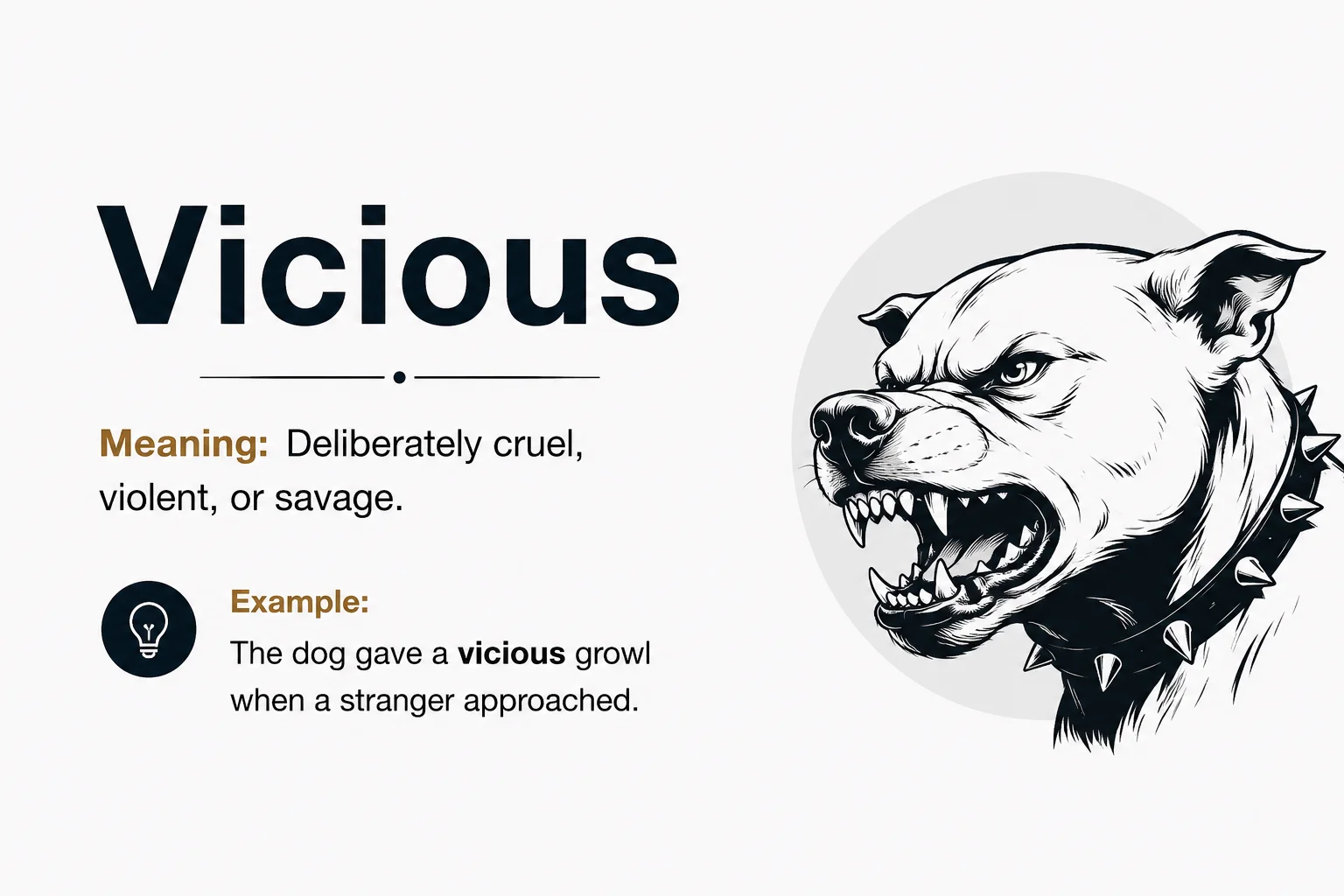
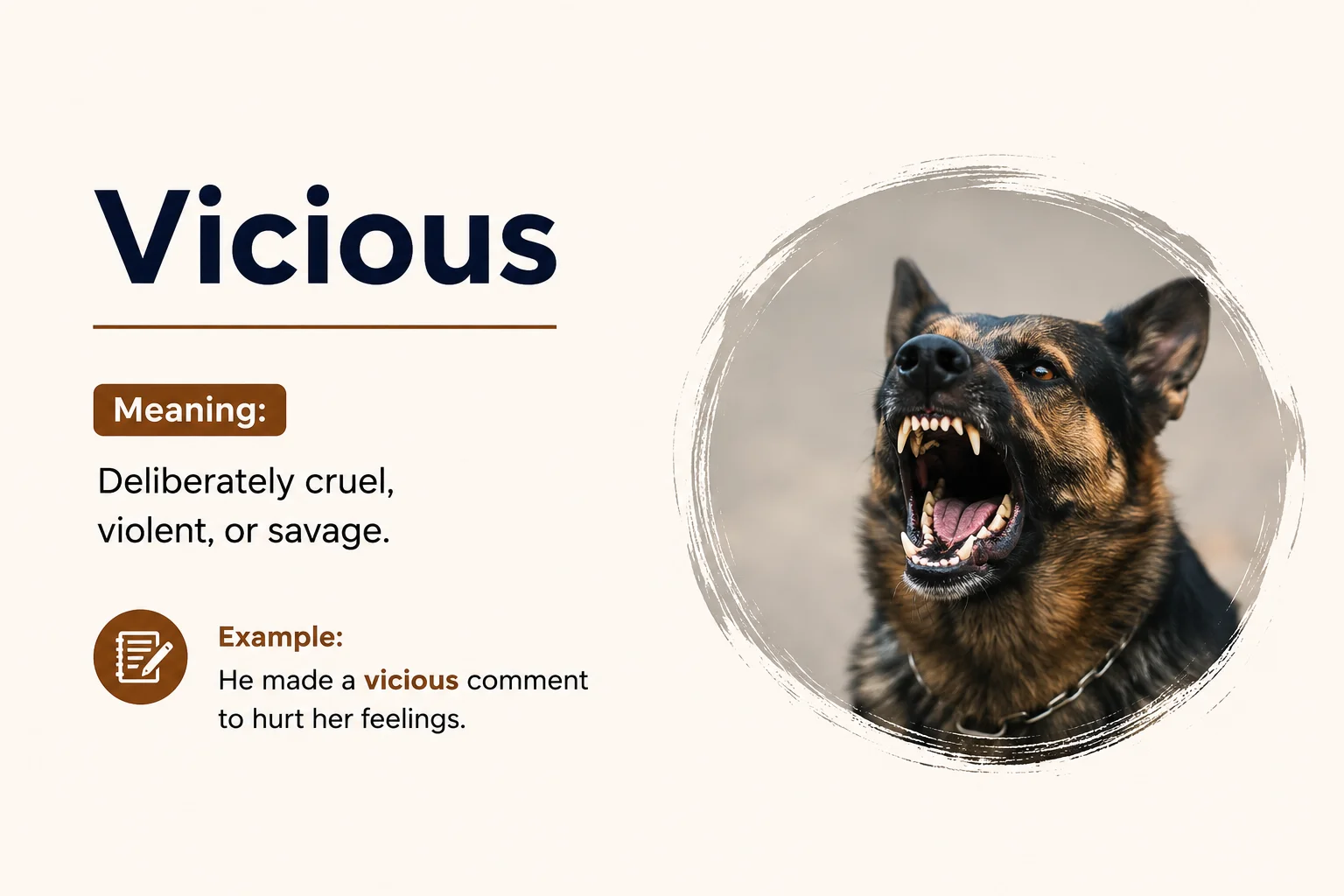
The vicious meaning generally refers to something that is deliberately cruel, violent, harmful, or extremely aggressive.
The word is often used to describe actions or behavior intended to hurt others physically or emotionally.
For example:
- A vicious attack
- A vicious dog
- A vicious rumor
- A vicious argument
In each example, the word emphasizes severity and harm.
The term can also describe situations that are difficult to escape from, such as a vicious cycle. In that context, it refers to a repeating pattern of negative events that continue to make a problem worse.
Overall, the word carries a strong negative connotation and is rarely used in a positive way.
The Origin and History of the Word Vicious
Understanding the vicious meaning becomes easier when exploring its history.
The word originates from the Latin term “vitiosus,” which referred to something faulty, corrupt, or defective.
Over time, the meaning evolved through Old French and Middle English before becoming the modern English word “vicious.”
Historically, it was used to describe moral corruption, bad habits, and harmful behavior.
As the language evolved, the word expanded to include meanings related to violence, cruelty, and aggression.
Today, “vicious” is widely used to describe both people and situations that involve severe negativity or harm.
Its historical development explains why the word continues to carry such a strong emotional impact.
Vicious Meaning When Describing a Person
One common use of the vicious meaning is to describe a person who behaves in a cruel or aggressive manner.
A vicious person may intentionally hurt others through actions, words, or decisions.
Examples include:
- A vicious bully who targets classmates.
- A vicious criminal who harms innocent people.
- A vicious leader who rules through fear.
In these situations, the word highlights a lack of kindness, compassion, or concern for others.
Calling someone vicious is a serious accusation because it suggests deliberate cruelty.
The term is much stronger than words such as “mean” or “rude.”
It implies behavior that causes significant harm or suffering.
Vicious Meaning When Describing Animals
The vicious meaning is frequently used to describe aggressive animals.
For example:
- A vicious dog that attacks people.
- A vicious wolf defending its territory.
- A vicious animal displaying dangerous behavior.
In this context, the word refers to physical aggression and the potential to cause injury.
However, animal experts often caution against labeling animals as naturally vicious because behavior is influenced by environment, training, and circumstances.
Despite this, the term remains common in news reports and everyday speech when discussing dangerous animal attacks.
The emphasis is usually on the threat posed by the animal rather than its intentions.
Vicious Meaning in Arguments and Criticism
Another common use of the vicious meaning involves verbal attacks and criticism.
Examples include:
- A vicious insult.
- A vicious online comment.
- A vicious political debate.
- A vicious rumor.
In these cases, the word refers to language that is intentionally harmful or destructive.
Social media has increased the visibility of this usage.
People often describe harsh online criticism as vicious because it can be emotionally damaging.
A vicious comment is usually more than simple disagreement.
It often includes personal attacks, hostility, or malicious intent.
Understanding this meaning helps explain why the word frequently appears in discussions about cyberbullying and toxic behavior.
Vicious Meaning in a Vicious Cycle
The phrase “vicious cycle” is one of the most common expressions associated with the vicious meaning.
A vicious cycle occurs when one problem causes another problem, which then worsens the original issue.
Examples include:
- Poverty leading to poor education, which contributes to continued poverty.
- Stress causing poor sleep, which increases stress.
- Debt leading to financial pressure, which creates more debt.
In this context, the word does not necessarily refer to cruelty.
Instead, it emphasizes a harmful pattern that repeats itself.
Breaking a vicious cycle often requires intervention, awareness, and deliberate action.
This usage is common in discussions about economics, health, relationships, and social issues.
Vicious Meaning in Sports and Competition
The vicious meaning sometimes appears in sports reporting.
Examples include:
- A vicious tackle.
- A vicious punch.
- A vicious rivalry.
- A vicious knockout.
Here, the word highlights intensity and aggression.
Sports commentators may use it to describe powerful actions or highly competitive situations.
However, there is a distinction between competitive aggression and harmful behavior.
A vicious foul may result in penalties because it exceeds acceptable levels of competition.
The term adds dramatic emphasis and captures the severity of the action being described.
Vicious Meaning in Nature and Weather
Nature provides another context for understanding the vicious meaning.
Examples include:
- A vicious storm.
- A vicious hurricane.
- A vicious heatwave.
- A vicious wildfire.
In these situations, the word describes extreme intensity and destructive power.
The weather is not intentionally cruel, but the damage it causes can be severe.
Journalists often use the term to communicate the seriousness of natural disasters.
It helps readers understand the scale of danger and destruction involved.
This figurative use demonstrates the flexibility of the word in English.
Common Examples of Vicious in Sentences
Learning sentence examples helps clarify the vicious meaning.
Examples include:
- The town was shocked by the vicious attack.
- She faced vicious criticism online.
- The company became trapped in a vicious cycle of debt.
- The storm brought vicious winds and heavy rain.
- The boxer delivered a vicious punch.
- A vicious rumor spread throughout the school.
- The dog became vicious after being mistreated.
- The debate quickly turned vicious.
These examples show how the word can apply to people, actions, situations, and events.
Synonyms of Vicious
Several words have meanings similar to the vicious meaning.
Common synonyms include:
- Cruel
- Brutal
- Violent
- Savage
- Ruthless
- Malicious
- Aggressive
- Hostile
- Harsh
- Ferocious
Each synonym has slightly different nuances.
For example, “ferocious” often describes animals, while “malicious” emphasizes harmful intent.
Learning these alternatives can improve vocabulary and writing skills.
Antonyms of Vicious
The opposite of the vicious meaning includes words that convey kindness and gentleness.
Common antonyms include:
- Kind
- Gentle
- Compassionate
- Friendly
- Caring
- Benevolent
- Merciful
- Peaceful
- Considerate
- Helpful
These words represent positive behavior and attitudes.
Understanding opposites can help clarify the meaning of the original term.
Vicious Meaning in Modern Media
The vicious meaning appears frequently in modern media.
News outlets often use the word to describe:
- Crimes
- Attacks
- Political disputes
- Online harassment
- Natural disasters
The term attracts attention because it communicates seriousness and urgency.
Writers and journalists use it to emphasize the severity of events.
However, some critics argue that the word can be overused in sensational reporting.
Despite this concern, it remains a powerful descriptive term in modern communication.
Common Mistakes When Using Vicious
People sometimes misunderstand the vicious meaning.
One common mistake is using it to describe minor disagreements.
The word implies significant aggression or harm.
Another mistake is confusing it with “viciously” or “vice.”
Although the words may sound similar, they have different meanings.
It is also important to recognize that “vicious” is stronger than words like “mean” or “unpleasant.”
Using the term appropriately helps ensure accurate communication.
Context plays a major role in determining whether the word is suitable.
Why Understanding Vicious Matters
The vicious meaning is important because the word appears frequently in everyday English.
Understanding it can improve:
- Reading comprehension
- Vocabulary skills
- Writing clarity
- Communication confidence
Whether encountered in books, movies, news reports, or conversations, the word often conveys important information about severity and harm.
Recognizing its various meanings helps avoid misunderstandings.
It also allows speakers and writers to express ideas more precisely.
Strong vocabulary contributes to more effective communication in both personal and professional settings.
Frequently Asked Questions
What is the simple meaning of vicious?
Vicious means cruel, violent, aggressive, or harmful. It often describes actions, people, animals, or situations that cause significant harm.
Is vicious always about physical violence?
No. The word can also describe harmful words, criticism, rumors, or repeating negative situations such as a vicious cycle.
What is a vicious cycle?
A vicious cycle is a repeating pattern where one problem creates another problem, making the original issue worse.
Can weather be described as vicious?
Yes. People often describe storms, hurricanes, and other extreme weather conditions as vicious because of their destructive power.
Is vicious a negative word?
Yes. The word almost always carries a negative meaning and is associated with harm, aggression, cruelty, or severe intensity.
Conclusion
The vicious meaning revolves around cruelty, aggression, harm, and severity. Whether describing a person, an animal, a storm, a comment, or a recurring problem, the word communicates a strong sense of negativity and danger.
Throughout history, the term has evolved from describing moral corruption to encompassing a wide range of harmful behaviors and situations. Today, it remains a powerful word in English vocabulary and appears frequently in media, literature, and everyday conversations.
Understanding the vicious meaning allows readers and speakers to interpret information more accurately and communicate more effectively. The word’s flexibility makes it useful in many contexts, but its strong negative tone means it should be used carefully and appropriately.
Ultimately, “vicious” is a word that highlights the serious side of human behavior and challenging circumstances. By understanding its meaning and usage, you can confidently recognize and apply the term whenever the situation calls for it.