
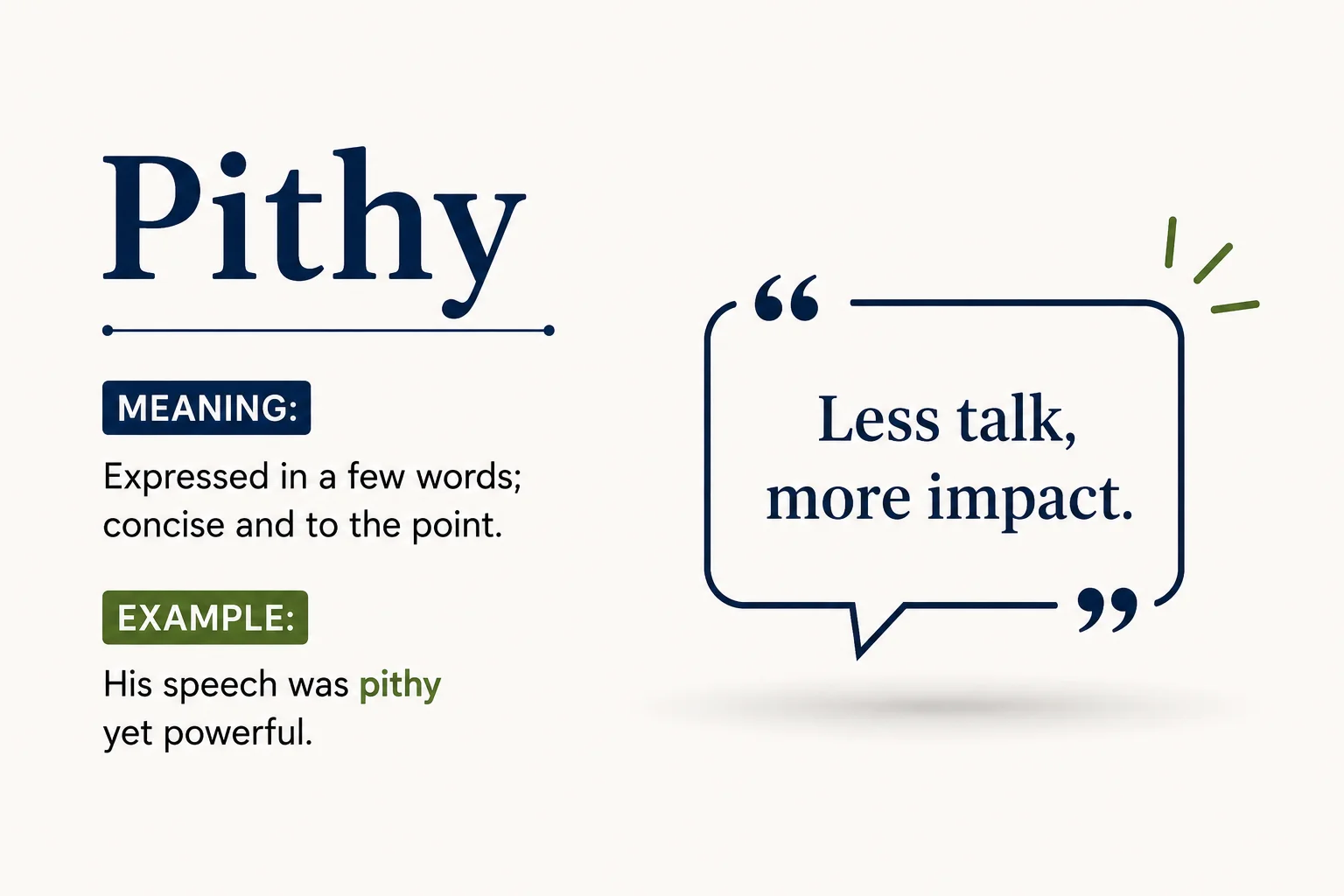
PITHY MEANING is a topic that many English learners search for after encountering the word in books, speeches, articles, or professional writing. The word “pithy” is often used to describe statements that are short but full of meaning. Instead of using many words to explain an idea, a pithy statement communicates a powerful message in a concise and memorable way.
In today’s fast-paced world, people value clear and direct communication. Social media posts, marketing slogans, famous quotes, and motivational sayings often succeed because they are pithy. They capture attention quickly and deliver their message without unnecessary details. This ability to say a lot with only a few words is what makes pithy communication so effective.
The pithy meaning goes beyond simply being brief. A short sentence is not automatically pithy. To be considered pithy, a statement must also be meaningful, insightful, or impactful. It should leave the listener or reader with something valuable to think about. This combination of brevity and depth is what makes the word unique.
Understanding the pithy meaning can improve your writing, speaking, and communication skills. Whether you are a student, writer, professional, or language enthusiast, learning how pithy expressions work can help you express ideas more effectively and leave a stronger impression on your audience.
What Does Pithy Mean?
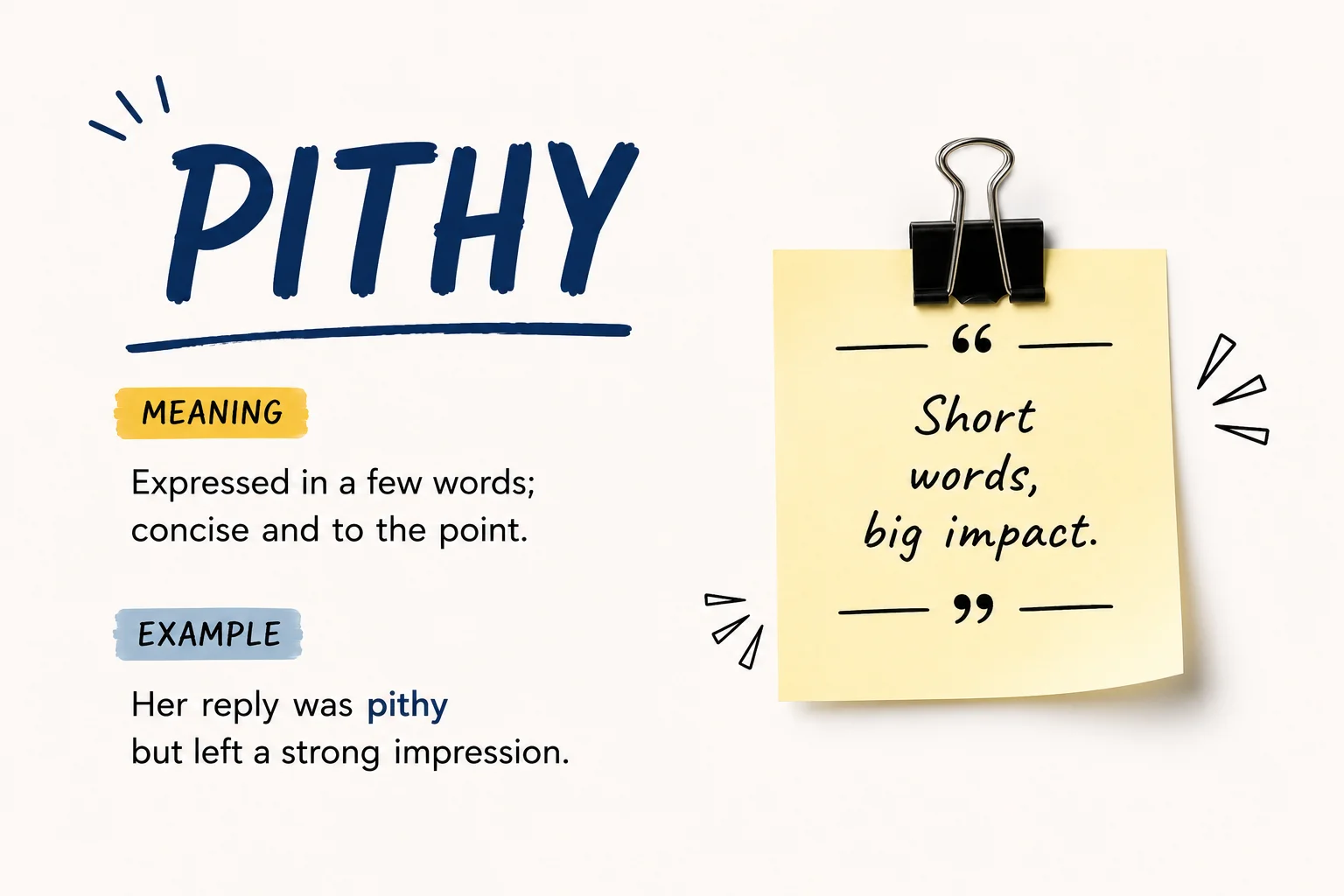
The pithy meaning refers to something that is concise yet meaningful. A pithy statement uses few words but communicates an important idea clearly and effectively.
For example, the phrase “Time is money” contains only three words, yet it conveys a significant message about the value of time. Because it is short and meaningful, it can be described as pithy.
People often use pithy language when they want to communicate ideas efficiently. Instead of providing lengthy explanations, they focus on delivering the essential message.
The word is generally positive because it highlights clarity, wisdom, and effective communication.
The Origin and History of the Word Pithy
The word pithy comes from the noun “pith,” which originally referred to the essential or central part of something. Over time, the adjective pithy developed to describe speech and writing that contains the essence of an idea without unnecessary details.
Historically, philosophers, writers, and leaders often used pithy statements to communicate complex ideas in memorable ways. Many famous quotations from history remain popular because they are concise and meaningful.
As language evolved, pithy became associated with effective communication. Writers and speakers who could express powerful ideas with few words were often admired for their skill.
Today, the Pithy Meaning word remains relevant because modern audiences appreciate messages that are both brief and impactful.
Why Pithy Communication Is Effective
One reason pithy communication is effective is that it captures attention quickly. People often have limited time and may lose interest in lengthy explanations.
A Pithy Meaning statement delivers its message immediately, making it easier to remember and share. This is especially important in advertising, social media, and public speaking.
Another advantage is clarity. By removing unnecessary words, pithy communication focuses on the main idea. This helps prevent confusion and ensures the audience understands the message.
Because of these benefits, many successful communicators intentionally use pithy language to maximize their impact.
Characteristics of a Pithy Statement
Several qualities define a pithy statement.
First, it is brief. A pithy sentence uses as few words as possible without losing meaning.
Second, it is meaningful. The statement communicates an idea that is important, insightful, or memorable.
Third, it is clear. Readers or listeners should easily understand the message.
Finally, it often has lasting impact. A pithy statement stays in people’s minds because it expresses a truth or observation effectively.
These characteristics help distinguish pithy communication from ordinary short sentences.
Examples of Pithy Expressions
Many common sayings demonstrate the pithy meaning.
Examples include:
- Actions speak louder than words.
- Less is more.
- Knowledge is power.
- Practice makes perfect.
- Honesty is the best policy.
Each of these expressions is relatively short, yet it communicates a meaningful idea.
Because they are easy to remember and understand, pithy expressions often become widely used in everyday language.
Pithy Meaning in Literature
Writers frequently use pithy statements to create memorable passages.
A well-crafted pithy sentence can summarize a complex theme or reveal an important truth about human nature.
Many famous novels contain lines that readers remember long after finishing the book. These lines are often pithy because they combine brevity with insight.
Authors value pithy language because it allows them to communicate powerful ideas without interrupting the flow of the narrative.
As a result, pithy writing remains an important literary technique.
Pithy Meaning in Public Speaking
Public speakers often rely on pithy statements to engage audiences and reinforce key points.
A concise phrase is easier for listeners to remember than a lengthy explanation.
Political leaders, motivational speakers, and business executives frequently use pithy language to make their messages more effective.
For example, a speaker might summarize an entire presentation with a short, memorable statement that captures the central idea.
This technique helps ensure that the audience remembers the most important information.
Pithy Meaning in Social Media
Social media platforms have increased the popularity of pithy communication.
Because users scroll quickly through content, short and meaningful messages often perform better than long posts.
Quotes, captions, and tweets that are pithy can attract attention and encourage sharing.
Many influencers and content creators intentionally use concise language to communicate ideas efficiently.
This trend demonstrates how the pithy meaning remains highly relevant in the digital age.
Pithy Meaning in Business and Marketing
Businesses frequently use pithy language in advertising and branding.
A memorable slogan can communicate a company’s message more effectively than a lengthy description.
For example, many successful brands are known for short phrases that instantly convey their values or benefits.
Marketing professionals understand that consumers often remember concise and meaningful messages more easily.
This makes pithy communication a valuable tool for attracting attention and building brand recognition.
Synonyms of Pithy
Several words share similarities with pithy.
Common synonyms include:
- Concise
- Brief
- Succinct
- Compact
- Meaningful
- Expressive
- Direct
- Insightful
- Powerful
- To the point
While these words have slightly different meanings, they all relate to communication that is efficient and effective.
Choosing the best synonym depends on the specific context.
Antonyms of Pithy
Understanding opposites can help clarify the pithy meaning.
Common antonyms include:
- Wordy
- Verbose
- Lengthy
- Rambling
- Long-winded
- Repetitive
- Excessive
- Complicated
These words describe communication that uses more words than necessary.
Comparing these opposites highlights why pithy language is often preferred in modern communication.
How to Use Pithy in Sentences
Learning how to use the word correctly can strengthen your vocabulary.
Examples include:
- The professor’s pithy explanation helped students understand the concept quickly.
- Her speech was filled with pithy observations about life and success.
- The article concluded with a pithy statement that summarized its main argument.
- He is known for writing pithy social media posts that attract attention.
- The manager appreciated the employee’s pithy report because it focused on key information.
These examples demonstrate the positive and practical nature of the word.
Why Pithy Language Matters Today
Modern life is filled with information competing for people’s attention.
As a result, clear and concise communication has become increasingly valuable.
Pithy language helps people share ideas quickly while maintaining meaning and impact.
Whether in business, education, media, or personal relationships, the ability to communicate effectively is an important skill.
Learning to create pithy messages can improve both written and spoken communication.
Common Mistakes When Using Pithy
One common mistake is assuming that any short statement is pithy.
A statement can be brief without being meaningful. To qualify as pithy, it must communicate an important idea effectively.
Another mistake is sacrificing clarity for brevity. Removing too many words can make a message confusing.
Effective pithy communication balances conciseness with understanding.
By focusing on both brevity and meaning, communicators can avoid these common errors.
Frequently Asked Questions
What is the simple meaning of pithy?
Pithy means expressing an idea in a few words while still being meaningful and impactful.
Is pithy a compliment?
Yes. Describing someone’s writing or speech as pithy is generally a compliment because it suggests clarity and effectiveness.
What is an example of a pithy statement?
A classic example is “Knowledge is power.” It is short, memorable, and meaningful.
What is the difference between pithy and concise?
Concise simply means brief, while pithy means brief and meaningful. A pithy statement contains insight or importance in addition to brevity.
Why is pithy communication important?
Pithy communication helps people understand and remember information quickly. It is especially useful in modern environments where attention spans are often limited.
Conclusion
The pithy meaning centers on the ability to communicate important ideas using very few words. Unlike ordinary brief statements, pithy expressions combine conciseness with depth, making them memorable and impactful.
From literature and public speaking to marketing and social media, pithy communication plays an important role in modern life. It helps writers and speakers capture attention, improve clarity, and leave lasting impressions on their audiences.
Understanding the pithy meaning can improve your communication skills by teaching you how to focus on the essential message. Instead of relying on lengthy explanations, you can learn to express ideas more effectively and efficiently.
Ultimately, the pithy meaning reminds us that powerful communication does not always require many words. Sometimes the most memorable messages are the shortest ones. A well-crafted pithy statement can inspire, educate, and influence others long after it has been spoken or written.