
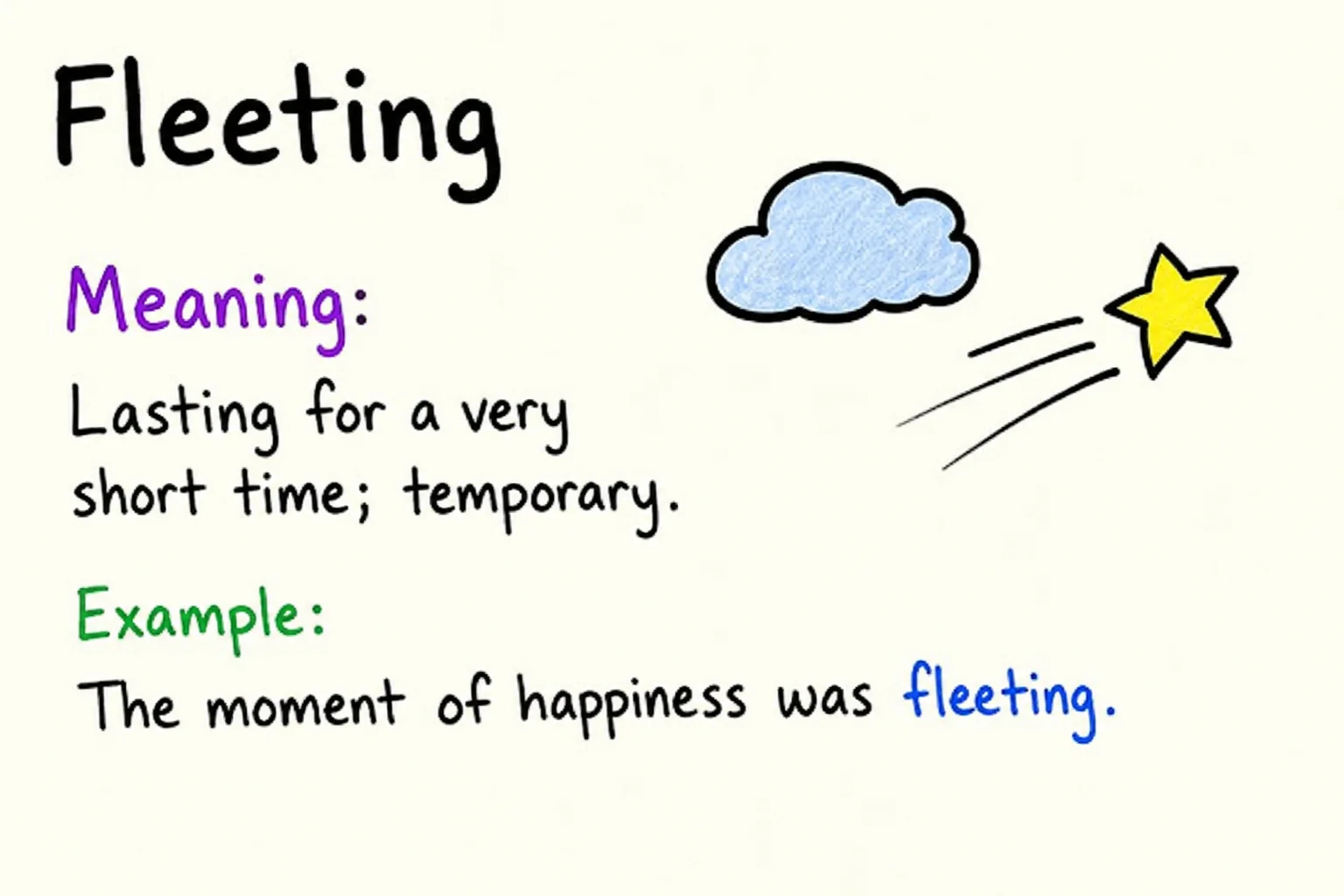
FLEETING MEANING is one of the most searched word definitions because people often come across it in books, movies, social media posts, and everyday conversations. While the word sounds sophisticated, its meaning is actually very simple. Fleeting refers to something that lasts for only a short period of time before disappearing.
You may hear someone talk about a fleeting moment of happiness, a fleeting opportunity, or a fleeting feeling. In all these cases, the word describes something temporary that doesn’t stay around for long. Because life is full of short-lived experiences, the word appears frequently in both casual and formal English.
The term has become increasingly popular online because people often use it in captions, quotes, and emotional posts. Whether it’s a beautiful sunset, a quick memory, or a brief encounter with someone special, many people describe these experiences as fleeting.
Understanding the fleeting meaning can help improve your vocabulary and make it easier to understand books, social media posts, and conversations where the word is commonly used.
The Full Meaning of Fleeting
The fleeting meaning is simple: something that lasts for a very short time.
When something is fleeting, it appears briefly and then disappears. It is temporary rather than permanent.
Examples include:
- A fleeting smile
- A fleeting thought
- A fleeting opportunity
- A fleeting feeling of excitement
In each example, the experience doesn’t last very long.
The word is often used to describe emotions, moments, memories, and opportunities that come and go quickly.
Because of this, fleeting often carries a slightly emotional tone, reminding people that some things in life are temporary.
Where the Word Fleeting Came From
The word fleeting comes from the English verb “flee,” which means to run away or disappear quickly.
Over time, the adjective fleeting developed to describe things that pass by rapidly.
Writers and poets have used the word for centuries when describing short-lived beauty, emotions, and experiences.
Because the concept of temporary moments is universal, the word has remained popular throughout history.
Today, it continues to appear in literature, music, movies, and social media.
Its meaning has stayed remarkably consistent over time.
How To Use Fleeting Correctly in Conversations
Using the fleeting meaning correctly is easy once you understand that it refers to something temporary.
Examples:
- “The happiness was fleeting.”
- “It was a fleeting moment of joy.”
- “Success can sometimes be fleeting.”
- “She had a fleeting thought about her childhood.”
The word usually comes before a noun, such as moment, feeling, thought, or opportunity.
It can also be used to describe experiences that don’t last as long as people would like.
Because it sounds expressive and thoughtful, many people use it in both spoken and written English.
Fleeting Meaning on Social Media
The fleeting meaning is very common on social media platforms.
Users often post captions such as:
- “Enjoy every fleeting moment.”
- “Life is beautiful but fleeting.”
- “A fleeting memory I’ll never forget.”
These captions often accompany photos of sunsets, vacations, friendships, and special life events.
The word helps create an emotional and reflective tone.
Because social media encourages people to share meaningful experiences, fleeting has become a popular choice for captions and quotes.
Many influencers and content creators also use the word when discussing personal growth and life lessons.
Fleeting Meaning in Relationships
In relationships, the fleeting meaning usually refers to emotions, attractions, or experiences that do not last long.
For example:
- A fleeting crush
- A fleeting romance
- A fleeting attraction
These phrases suggest that the feeling existed temporarily before fading away.
People often use the word when reflecting on past experiences.
However, fleeting does not necessarily mean unimportant. Some short-lived experiences can still have a significant impact on someone’s life.
That’s one reason the word is frequently used in romantic writing and emotional conversations.
When Someone Calls Something Fleeting
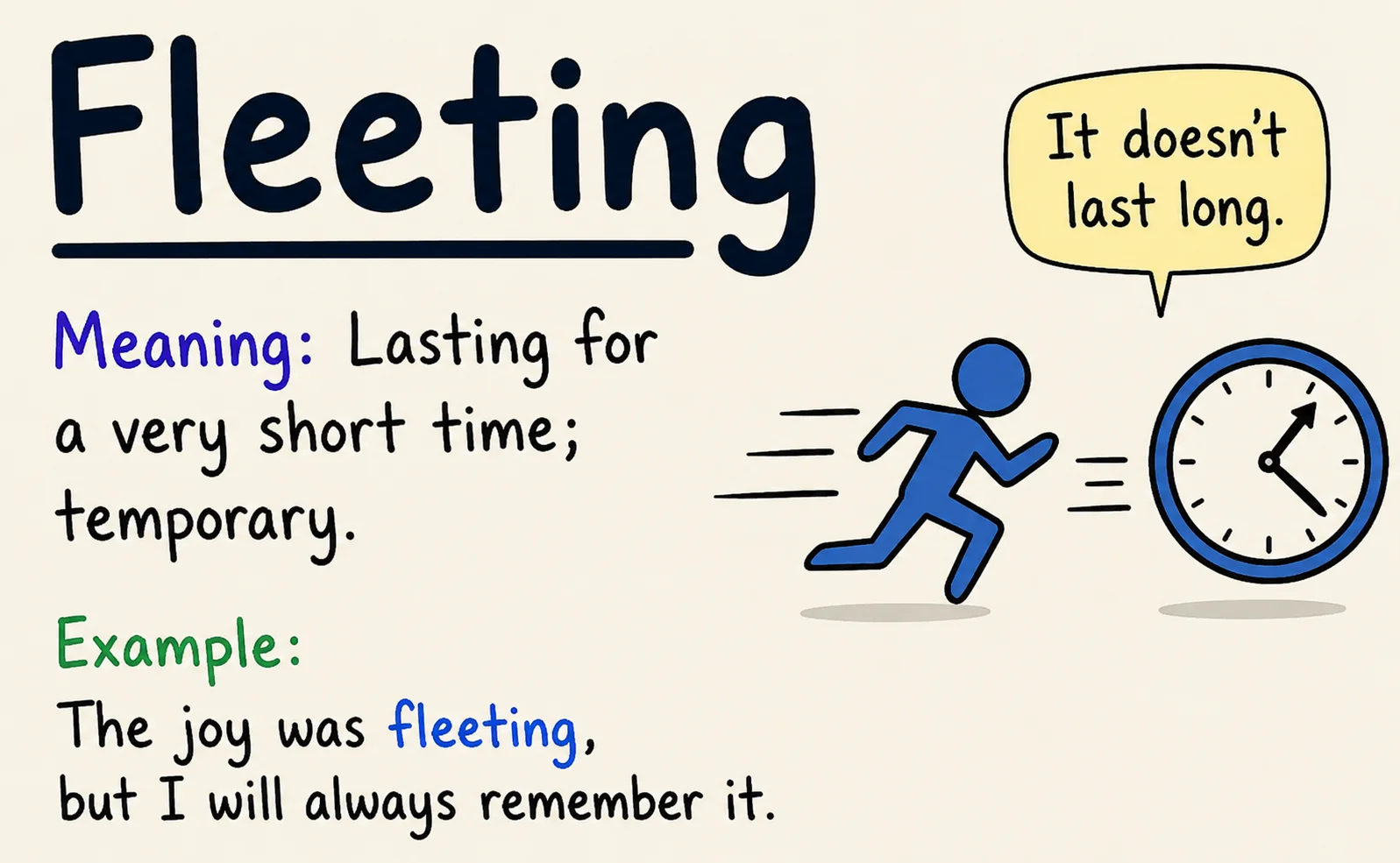
If someone describes something as fleeting, they are emphasizing its temporary nature.
For example:
- “The opportunity was fleeting.”
- “The excitement was fleeting.”
- “Their fame proved fleeting.”
In these cases, the speaker is highlighting that the experience didn’t last very long.
The word often encourages appreciation because it reminds people that many valuable moments are temporary.
Understanding this nuance can help you interpret the word more accurately.
When You Should Not Use Fleeting
Although the fleeting meaning is useful, it doesn’t fit every situation.
You generally shouldn’t use it to describe things that are permanent or long-lasting.
For example:
Incorrect:
- “A fleeting mountain.”
- “A fleeting building.”
Correct:
- “A fleeting shadow.”
- “A fleeting feeling.”
The word works best with experiences, emotions, opportunities, thoughts, and events.
Using it correctly helps make your communication more precise and natural.
Examples of Fleeting in Real Conversations
Example 1:
Person A: “Were you nervous before the presentation?”
Person B: “Only for a fleeting moment.”
Example 2:
Person A: “Do you still like him?”
Person B: “No, it was just a fleeting crush.”
Example 3:
Person A: “How was your vacation?”
Person B: “Amazing, but it felt so fleeting.”
These examples show how naturally the word fits into everyday conversations.
Words Similar to Fleeting
Several words have meanings similar to fleeting.
These include:
- Temporary
- Brief
- Short-lived
- Momentary
- Passing
- Transient
- Quick
- Impermanent
While these words are similar, fleeting often sounds more emotional and descriptive.
That’s why it’s frequently used in literature and social media posts.
The word creates a stronger image of something appearing briefly before disappearing.
Why the Word Fleeting Remains Popular Today
The fleeting meaning remains relevant because modern life is filled with temporary experiences.
Social media trends, viral moments, and fast-moving lifestyles make people increasingly aware of how quickly things change.
The word captures this reality perfectly.
People use it to describe memories, opportunities, emotions, relationships, and experiences that don’t last forever.
Because everyone encounters temporary moments, the concept behind the word is universally relatable.
This is one reason fleeting continues to be widely used in everyday English.
Frequently Asked Questions
What does fleeting mean?
Fleeting means lasting for only a short period of time before disappearing.
Is fleeting a positive or negative word?
It can be either. It simply describes something temporary.
Can fleeting describe feelings?
Yes. People often use it to describe emotions, thoughts, and memories.
What is a synonym for fleeting?
Common synonyms include brief, temporary, momentary, and short-lived.
How do you use fleeting in a sentence?
Example: “She experienced a fleeting moment of happiness before returning to work.”
Conclusion
The fleeting meaning refers to something that lasts only a short time. Whether it’s a feeling, memory, opportunity, or experience, the word reminds us that many things in life are temporary.
Because of its emotional and descriptive nature, fleeting is commonly used in books, conversations, social media posts, and everyday writing. It helps people express the idea that certain moments come and go quickly.
Understanding this word can improve your vocabulary and help you communicate more effectively. It also allows you to appreciate the beauty of temporary experiences that make life meaningful.
Sometimes the most memorable moments are the most fleeting.