
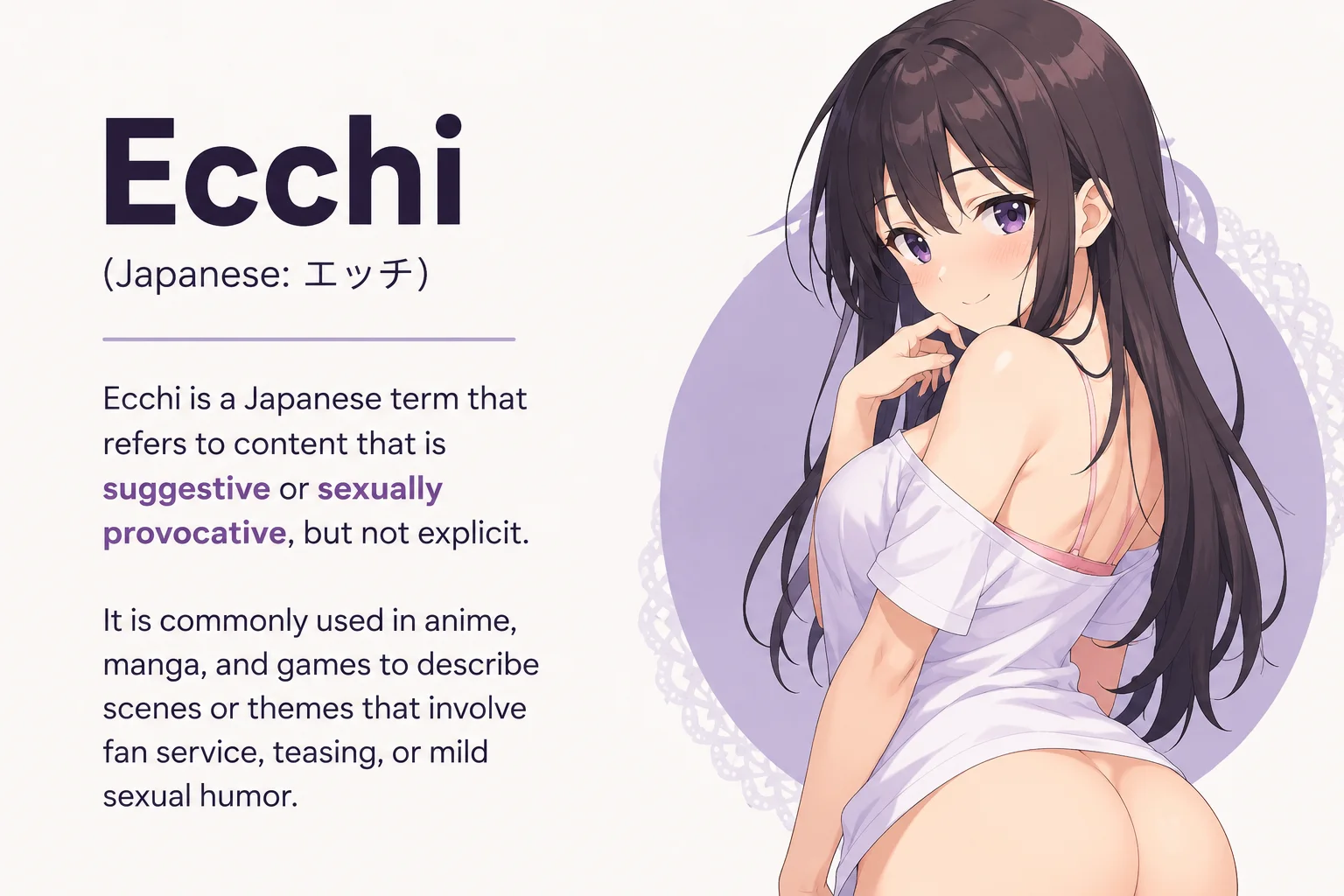
The term ecchi meaning is commonly searched by anime fans, manga readers, and internet users who come across the word while exploring Japanese entertainment. If you’ve spent time watching anime, reading manga, or browsing anime communities online, you’ve probably encountered the term “ecchi” at least once. While it may seem confusing at first, understanding its meaning can help you better navigate Japanese pop culture and entertainment discussions.
Ecchi is a Japanese slang term that generally refers to content that is playful, flirtatious, suggestive, or mildly sexual in nature. Unlike explicit adult material, ecchi usually focuses on teasing, fan service, romantic tension, and humorous situations rather than graphic content. Because of this distinction, the term has become a popular category within anime and manga culture.
Over the years, ecchi has evolved from a Japanese slang expression into an internationally recognized term. Anime fans across the world use it to describe certain genres, scenes, characters, and storytelling styles. Social media platforms, forums, and streaming communities frequently discuss ecchi content, making the word an important part of anime vocabulary.
Understanding the ecchi meaning requires looking at its origins, cultural context, anime applications, and modern internet usage. Whether you’re a new anime fan or simply curious about Japanese slang, this guide explains everything you need to know about the term and why it remains popular today.
What Does Ecchi Mean?
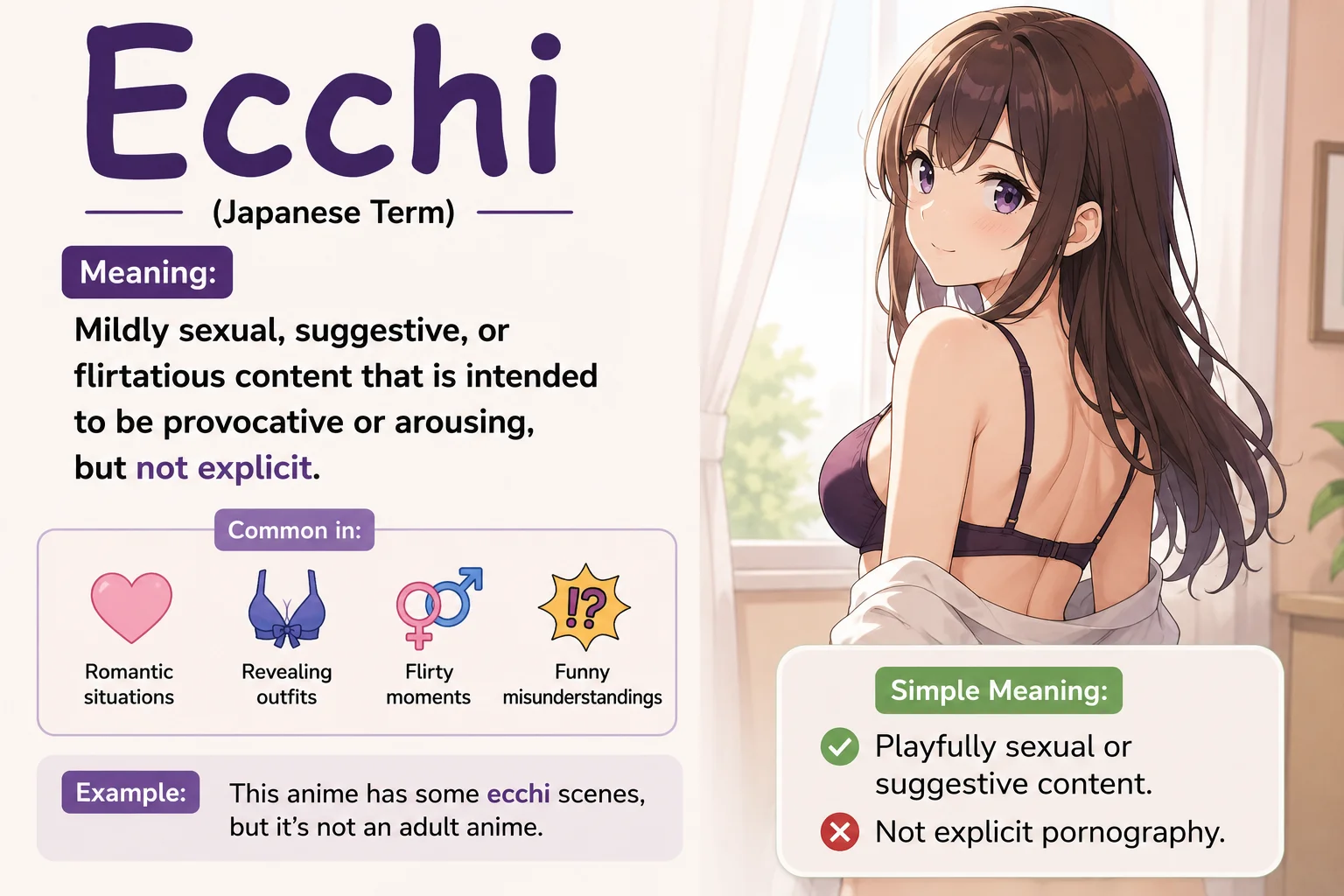
The most common ecchi meaning refers to content that is suggestive, flirtatious, or mildly sexual without being fully explicit.
In Japanese entertainment, ecchi often includes:
- Romantic teasing
- Playful fan service
- Embarrassing situations
- Suggestive jokes
- Revealing outfits
- Comedic misunderstandings
The term is generally used to describe content that creates sexual tension while remaining relatively lighthearted.
Unlike adult-only content, ecchi usually focuses on humor, attraction, and playful interactions.
Because of this, many anime series can include ecchi elements while still appealing to a broad audience.
The exact interpretation may vary depending on context, but the overall idea remains consistent.
The Origin of the Word Ecchi
To understand the ecchi meaning, it helps to examine its origins.
The word comes from Japanese slang and is connected to the pronunciation of the letter “H.”
Historically, “H” became associated with topics related to romance and sexuality in Japanese popular culture.
Over time, the pronunciation evolved into “ecchi.”
The term gradually became a casual way to describe something suggestive or sexually playful.
Unlike many modern internet slang terms, ecchi has existed in Japanese culture for decades.
As anime and manga became popular worldwide, the word spread internationally.
Today, many people use ecchi without realizing its historical linguistic origins.
Ecchi Meaning in Anime
Anime is where most people encounter the ecchi meaning.
In anime culture, ecchi describes scenes or themes that contain suggestive content without crossing into explicit territory.
Common examples include:
- Accidental romantic encounters
- Embarrassing wardrobe malfunctions
- Beach episodes
- Hot spring scenes
- Flirtatious character interactions
These moments are often played for comedy rather than serious romance.
Many anime creators use ecchi elements to add humor, tension, or entertainment value.
Because the content remains relatively mild compared to adult material, ecchi has become one of the most recognized categories in anime culture.
Ecchi Meaning in Manga
Manga also plays a major role in defining the ecchi meaning.
Many manga series contain ecchi themes as part of their storytelling approach.
Artists often use visual humor, exaggerated reactions, and romantic misunderstandings to create entertaining situations.
Readers may encounter:
- Suggestive artwork
- Flirtatious dialogue
- Comedic romance
- Fan-service moments
The purpose is typically to entertain rather than provide explicit content.
As with anime, ecchi manga usually emphasizes playful attraction rather than graphic depictions.
This distinction helps separate ecchi from adult-oriented genres.
Why Ecchi Became Popular
The popularity of ecchi meaning can be explained by several factors.
First, it combines humor and romance in an accessible way.
Second, it appeals to audiences who enjoy playful storytelling.
Third, it creates memorable character interactions.
Many viewers appreciate the balance between comedy and attraction.
Ecchi scenes often generate discussions within fan communities because they are entertaining and easy to remember.
The genre’s flexibility also contributes to its success.
Ecchi elements can appear in action series, romantic comedies, fantasy adventures, and school-life stories.
This adaptability has helped ecchi remain relevant for decades.
Ecchi Meaning in Japanese Culture
The ecchi meaning carries unique cultural significance in Japan.
In everyday conversation, the term can sometimes describe someone behaving flirtatiously or acting in a slightly naughty manner.
However, the word is usually used in a playful rather than offensive way.
Japanese media often approaches romance and attraction differently from Western entertainment.
Ecchi reflects these cultural storytelling traditions.
Many Japanese audiences view ecchi content as a lighthearted form of entertainment.
Understanding this cultural context helps international fans interpret the term more accurately.
Without this perspective, some viewers may misunderstand its intended purpose.
Common Features of Ecchi Content
Several characteristics frequently appear when discussing the ecchi meaning.
These include:
Fan Service
Visual moments designed to entertain viewers.
Romantic Tension
Characters experiencing attraction or awkward feelings.
Comedy
Humorous misunderstandings and exaggerated reactions.
Embarrassment
Characters finding themselves in awkward situations.
Suggestive Themes
Playful references to romance and attraction.
These features work together to create the distinctive style associated with ecchi content.
Not every series includes all of these elements, but many combine several of them.
Ecchi vs Adult Content
A common misconception about the ecchi meaning involves confusion with adult content.
While ecchi contains suggestive themes, it is generally less explicit.
Key differences include:
Ecchi
- Playful
- Comedic
- Suggestive
- Focused on teasing
Adult Content
- Explicit
- Graphic
- Intended for mature audiences
This distinction is important because many newcomers assume the terms are interchangeable.
In reality, ecchi occupies a separate category that emphasizes humor and attraction rather than explicit material.
Understanding this difference helps viewers navigate anime genres more effectively.
Ecchi Meaning in Internet Communities
Online communities frequently discuss the ecchi meaning.
Anime forums, Discord servers, Reddit communities, and social media platforms often use the term when reviewing series or recommending content.
Examples include:
- “This anime has some ecchi scenes.”
- “It’s mostly comedy with light ecchi.”
- “The show includes ecchi elements but isn’t explicit.”
The word has become part of international anime vocabulary.
Many fans use it naturally in conversations about entertainment.
Its widespread adoption demonstrates the global influence of Japanese pop culture.
Popular Genres That Include Ecchi Elements
The ecchi meaning often overlaps with several anime and manga genres.
Examples include:
Romantic Comedy
Relationships and humor create natural opportunities for ecchi moments.
School Life
Teenage characters often experience awkward romantic situations.
Fantasy
Magical worlds frequently include playful fan-service elements.
Action
Some action series incorporate ecchi scenes for comic relief.
Harem
Stories involving multiple romantic interests commonly feature ecchi themes.
The presence of ecchi varies from series to series.
Some use it occasionally, while others make it a central part of the experience.
Misconceptions About Ecchi Meaning
Several misconceptions surround the ecchi meaning.
One common misunderstanding is that all ecchi content is explicit.
In reality, many ecchi series focus primarily on comedy.
Another misconception is that ecchi only appeals to one type of audience.
Fans from various age groups and backgrounds enjoy different aspects of the genre.
Some viewers appreciate the humor, while others enjoy the romantic elements.
A third misconception is that ecchi lacks storytelling value.
Many successful anime combine strong narratives with occasional ecchi content.
Understanding these distinctions helps create a more balanced perspective.
Ecchi Meaning in Modern Anime Culture
The ecchi meaning remains highly relevant in contemporary anime culture.
Streaming services have made anime more accessible than ever before.
As a result, international audiences continue discovering ecchi-related content.
Modern creators often blend traditional ecchi elements with updated storytelling approaches.
This evolution helps the genre remain fresh and appealing.
Online discussions, reviews, and recommendations frequently reference ecchi themes.
The term has become a permanent part of anime culture worldwide.
Its continued popularity demonstrates the lasting influence of Japanese entertainment.
Examples of Ecchi Usage
Understanding the ecchi meaning becomes easier through examples.
Example 1:
“This anime is a romantic comedy with light ecchi scenes.”
Example 2:
“The show uses ecchi humor to create funny moments.”
Example 3:
“The manga contains some ecchi elements but focuses on adventure.”
Example 4:
“Fans recommend it if you enjoy comedy and ecchi content.”
In each example, the term describes suggestive but generally non-explicit material.
The specific interpretation depends on context.
However, the overall meaning remains consistent.
Why Understanding Ecchi Matters
Learning the ecchi meaning helps anime fans make informed viewing choices.
Genre labels provide valuable information about content and themes.
Understanding ecchi allows viewers to:
- Choose appropriate series
- Understand fan discussions
- Interpret reviews accurately
- Explore anime culture more confidently
As anime continues gaining popularity worldwide, familiarity with terms like ecchi becomes increasingly useful.
Knowledge of genre terminology enhances the viewing experience.
It also helps newcomers participate in community conversations.
Frequently Asked Questions
What does ecchi mean?
Ecchi is a Japanese term used to describe suggestive, flirtatious, or mildly sexual content that is generally playful rather than explicit.
Is ecchi the same as adult content?
No. Ecchi usually focuses on teasing, humor, and romantic tension rather than graphic or explicit material.
Why is ecchi popular in anime?
Many viewers enjoy the combination of comedy, romance, and entertaining character interactions found in ecchi content.
Can ecchi appear in different genres?
Yes. Ecchi elements can appear in romantic comedies, fantasy stories, action series, school-life anime, and many other genres.
Is ecchi a bad word?
No. In anime and manga communities, ecchi is a common descriptive term and is generally used in a neutral context.
Conclusion
The ecchi meaning represents an important part of Japanese entertainment culture. Originating as Japanese slang, the term evolved into a widely recognized category within anime and manga communities. Today, it is used around the world to describe playful, suggestive, and humorous content that emphasizes attraction and comedy rather than explicit material.
Anime and manga have played a major role in spreading awareness of ecchi. Through fan service, romantic misunderstandings, comedic situations, and entertaining character interactions, creators have developed a storytelling style that remains popular with audiences worldwide.
Understanding ecchi helps viewers navigate anime genres, interpret recommendations, and participate in community discussions. It also provides valuable insight into how Japanese popular culture approaches romance, humor, and entertainment.
Ultimately, the ecchi meaning reflects a unique blend of comedy, attraction, and creativity. Whether you’re new to anime or a longtime fan, understanding the term can deepen your appreciation for one of the most recognizable concepts in modern Japanese pop culture.