
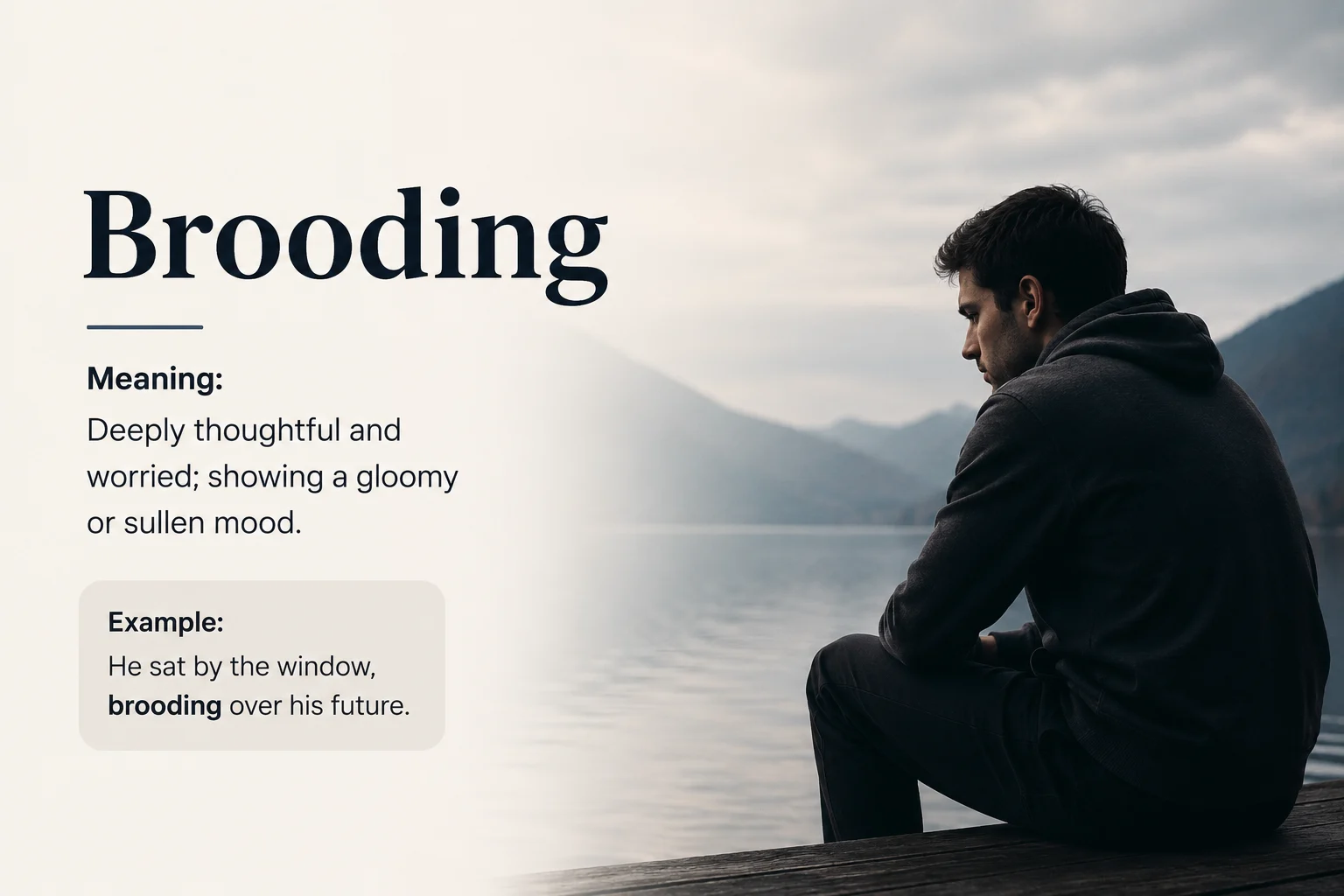
The term brooding meaning is frequently searched by people who encounter the word in books, movies, social media posts, or everyday conversations. At first glance, the word “brooding” may seem complicated, but its meaning is actually quite simple. It generally describes someone who is deeply thoughtful, worried, or quietly dwelling on certain emotions or problems.
In modern English, the word is often associated with a person who appears serious, mysterious, or lost in thought. You may have heard someone describe a movie character as “brooding” because they spend a lot of time thinking quietly and expressing emotions through their facial expressions rather than words.
The popularity of the term has increased in recent years due to its frequent appearance in popular culture. Many fictional characters are portrayed as brooding personalities because their quiet, reflective nature adds depth and intrigue to their stories. As a result, people often search for the brooding meaning to better understand books, films, and online discussions.
Understanding the brooding meaning can help improve your vocabulary and communication skills. This guide explains what brooding means, where the word originated, how it is used, examples of the term, and why it continues to be relevant in modern English. For more insight read this:- atp meaning texting and amos meaning.
What Does Brooding Mean?
The brooding meaning refers to being deeply absorbed in thought, often involving sadness, worry, anger, or serious contemplation.
A brooding person typically spends considerable time thinking about problems, memories, or emotions. Instead of openly discussing their feelings, they tend to keep their thoughts private and reflect internally.
For example:
- “He sat alone with a brooding expression.”
- “She seemed brooding after receiving the disappointing news.”
- “The character’s brooding personality made him mysterious.”
The word does not necessarily indicate sadness alone. Someone can brood over many things, including:
- Life decisions
- Future plans
- Relationships
- Personal mistakes
- Difficult situations
In simple terms, brooding describes deep, prolonged thinking that often involves strong emotions.
The Origin of the Word Brooding
To fully understand the brooding meaning, it helps to explore the word’s history.
The word “brood” originally referred to birds sitting on eggs to keep them warm until they hatched.
Over time, the term developed a figurative meaning.
Just as a bird remains quietly focused while protecting its eggs, people also spend time sitting quietly and concentrating on thoughts or worries.
Eventually, the word “brooding” came to describe people who:
- Think deeply
- Worry continuously
- Reflect silently
- Remain emotionally withdrawn
This evolution demonstrates how language changes over time and how physical actions can inspire emotional expressions.
Today, the original bird-related meaning still exists, but the emotional meaning has become far more common in everyday English.
Brooding Meaning in Everyday Conversations
The brooding meaning appears frequently in ordinary conversations.
People often use the term when describing someone’s mood or behavior.
For example:
“Why are you so brooding today?”
“He has been brooding about his exam results.”
“She looked brooding after the meeting.”
In these examples, the individuals are spending significant time thinking about something important.
The term usually implies:
- Seriousness
- Emotional reflection
- Deep concentration
- Quiet contemplation
However, brooding does not automatically mean someone is unhappy.
A person can brood while considering major life decisions or reflecting on meaningful experiences.
The word simply emphasizes prolonged, thoughtful focus.
Brooding Meaning in Literature
Writers frequently use brooding characters because they often appear more complex and interesting.
Understanding the brooding meaning can greatly improve reading comprehension.
Brooding characters are commonly portrayed as:
- Mysterious
- Intelligent
- Emotionally deep
- Quiet
- Reflective
Authors use these personalities to create intrigue.
Readers naturally become curious about characters who reveal little about their thoughts and feelings.
Many literary heroes and antiheroes possess brooding personalities.
Their internal struggles often become central elements of their stories.
Because brooding characters think deeply, they frequently experience significant personal growth throughout narratives.
Their reflective nature allows readers to explore complicated emotions and ideas.
Brooding Meaning in Movies and Television
The brooding meaning has become especially popular in entertainment.
Many famous movie and television characters are described as brooding.
These characters often:
- Speak less than others
- Spend time alone
- Think deeply
- Display serious expressions
- Carry emotional burdens
The brooding personality creates mystery.
Viewers often find such characters fascinating because their thoughts and emotions are not immediately obvious.
Examples of brooding behavior in films include:
- Staring thoughtfully into the distance
- Remaining silent during emotional situations
- Reflecting on painful experiences
- Carefully considering important decisions
Directors frequently use brooding personalities to create emotional depth and dramatic tension.
Brooding Meaning on Social Media
The brooding meaning has also become common on social media platforms.
Users frequently post captions such as:
“Feeling brooding today.”
“In my brooding era.”
“Just sitting here and brooding.”
On social media, the term often refers to:
- Reflecting on life
- Thinking about relationships
- Processing emotions
- Feeling introspective
- Taking time for self-reflection
The internet has helped popularize emotional vocabulary.
People increasingly discuss their thoughts and feelings online, making words like brooding more recognizable.
Social media also encourages introspection and personal expression, which explains why the term appears frequently in posts and discussions.
Signs of a Brooding Personality
People who demonstrate the brooding meaning often share certain characteristics.
Common signs include:
Deep Thinking
They analyze situations carefully.
Quiet Behavior
They may prefer reflection over conversation.
Emotional Awareness
They think seriously about their feelings.
Strong Imagination
They often consider possibilities and outcomes.
Preference for Solitude
They may enjoy spending time alone.
These characteristics do not necessarily indicate problems.
Many thoughtful and intelligent individuals possess brooding tendencies.
The key difference lies in how frequently and intensely someone engages in deep reflection.
Is Brooding Positive or Negative?
The brooding meaning can have both positive and negative aspects.
Positive Effects
Brooding can encourage:
- Self-awareness
- Creativity
- Problem-solving
- Personal growth
- Emotional understanding
Deep thinking often leads to valuable insights.
Many artists, writers, and thinkers spend significant time reflecting.
Negative Effects
Excessive brooding can contribute to:
- Stress
- Anxiety
- Overthinking
- Emotional exhaustion
- Difficulty making decisions
Thinking deeply is beneficial, but becoming trapped in repetitive negative thoughts can be harmful.
Balance is important.
Healthy reflection encourages growth, while excessive worry may create unnecessary problems.
Brooding vs. Overthinking
Many people confuse the brooding meaning with overthinking.
Although the concepts are related, they are not identical.
Brooding
- Deep reflection
- Emotional contemplation
- Quiet thoughtfulness
- Serious consideration
Overthinking
- Excessive analysis
- Repetitive worry
- Difficulty making decisions
- Mental exhaustion
Brooding may involve meaningful reflection.
Overthinking often becomes unproductive.
For example:
Brooding:
“I need to think carefully about my future.”
Overthinking:
“I’ve considered every possibility hundreds of times and still can’t decide.”
Understanding this distinction helps clarify the emotional nuances of the word.
Examples of Brooding in Sentences
Learning examples makes the brooding meaning easier to understand.
Examples include:
- “He sat by the window with a brooding expression.”
- “She became brooding after the argument.”
- “The hero’s brooding personality made him intriguing.”
- “They spent the evening brooding over recent events.”
- “His brooding silence worried his friends.”
Each sentence highlights prolonged thoughtfulness and emotional reflection.
Context determines whether the brooding appears positive, negative, or neutral.
The term primarily emphasizes depth of thought rather than specific emotions.
Synonyms of Brooding
Several words share similarities with the brooding meaning.
Common synonyms include:
- Reflective
- Thoughtful
- Contemplative
- Pensive
- Meditative
- Introspective
- Serious
- Gloomy
- Moody
- Concerned
Although these words are similar, each carries unique emotional nuances.
For example:
“Pensive” often sounds softer and more intellectual.
“Gloomy” suggests sadness.
“Introspective” emphasizes self-examination.
“Brooding” typically combines thoughtfulness with emotional intensity.
Antonyms of Brooding
Understanding opposites can also clarify the brooding meaning.
Common antonyms include:
- Cheerful
- Carefree
- Lighthearted
- Optimistic
- Outgoing
- Untroubled
- Relaxed
- Happy
- Sociable
- Playful
These words describe individuals who appear emotionally open, positive, and less preoccupied with serious reflection.
Comparing opposites helps reveal the unique qualities associated with brooding personalities.
Why People Become Brooding
Various situations can encourage brooding behavior.
Common causes include:
Major Life Decisions
Career choices and personal goals often require deep reflection.
Relationship Issues
People frequently brood after conflicts or breakups.
Stressful Experiences
Challenges naturally encourage serious thinking.
Personal Growth
Self-discovery often involves introspection.
Creative Projects
Artists and writers commonly spend time in reflective states.
Brooding is often a natural response to meaningful experiences.
It becomes problematic only when negative thoughts dominate for extended periods.
Brooding in Modern Culture
The brooding meaning continues to remain relevant because modern life encourages reflection.
People constantly think about:
- Careers
- Relationships
- Finances
- Identity
- Personal growth
Movies, books, and social media have also romanticized brooding personalities.
The quiet, mysterious individual often appears intelligent and emotionally deep.
As a result, the term has become part of popular vocabulary.
Many people even describe themselves as brooding when they are simply spending time thinking about important aspects of their lives.
Frequently Asked Questions
What is the brooding meaning?
Brooding means thinking deeply and seriously about something, often involving emotions such as worry, sadness, or contemplation.
Is brooding always negative?
No. Brooding can encourage self-awareness and problem-solving, although excessive negative reflection may become unhealthy.
Can happy people be brooding?
Yes. A person can brood over important decisions or meaningful experiences without feeling sad.
What is a brooding personality?
A brooding personality is typically thoughtful, reflective, quiet, and emotionally introspective.
Is brooding the same as overthinking?
Not exactly. Brooding involves deep reflection, while overthinking usually refers to excessive, repetitive analysis that becomes mentally exhausting.
Conclusion
Understanding the brooding meaning provides valuable insight into human thoughts and emotions. The term generally refers to deep, prolonged reflection, often involving serious feelings or important life considerations. Brooding individuals tend to keep their thoughts private and spend time processing experiences internally.
The word has evolved significantly from its original association with birds protecting their eggs. Today, it describes thoughtful and introspective behavior that appears frequently in literature, entertainment, social media, and everyday conversations.
Brooding itself is neither entirely positive nor entirely negative. Healthy reflection can promote creativity, self-awareness, and personal growth. However, excessive rumination may lead to stress and emotional exhaustion. Balance remains essential.
Ultimately, the brooding meaning reminds us that thoughtful reflection is a natural part of the human experience. Taking time to think deeply about our emotions, decisions, and experiences can help us better understand ourselves and navigate life’s challenges with greater wisdom and awareness.