
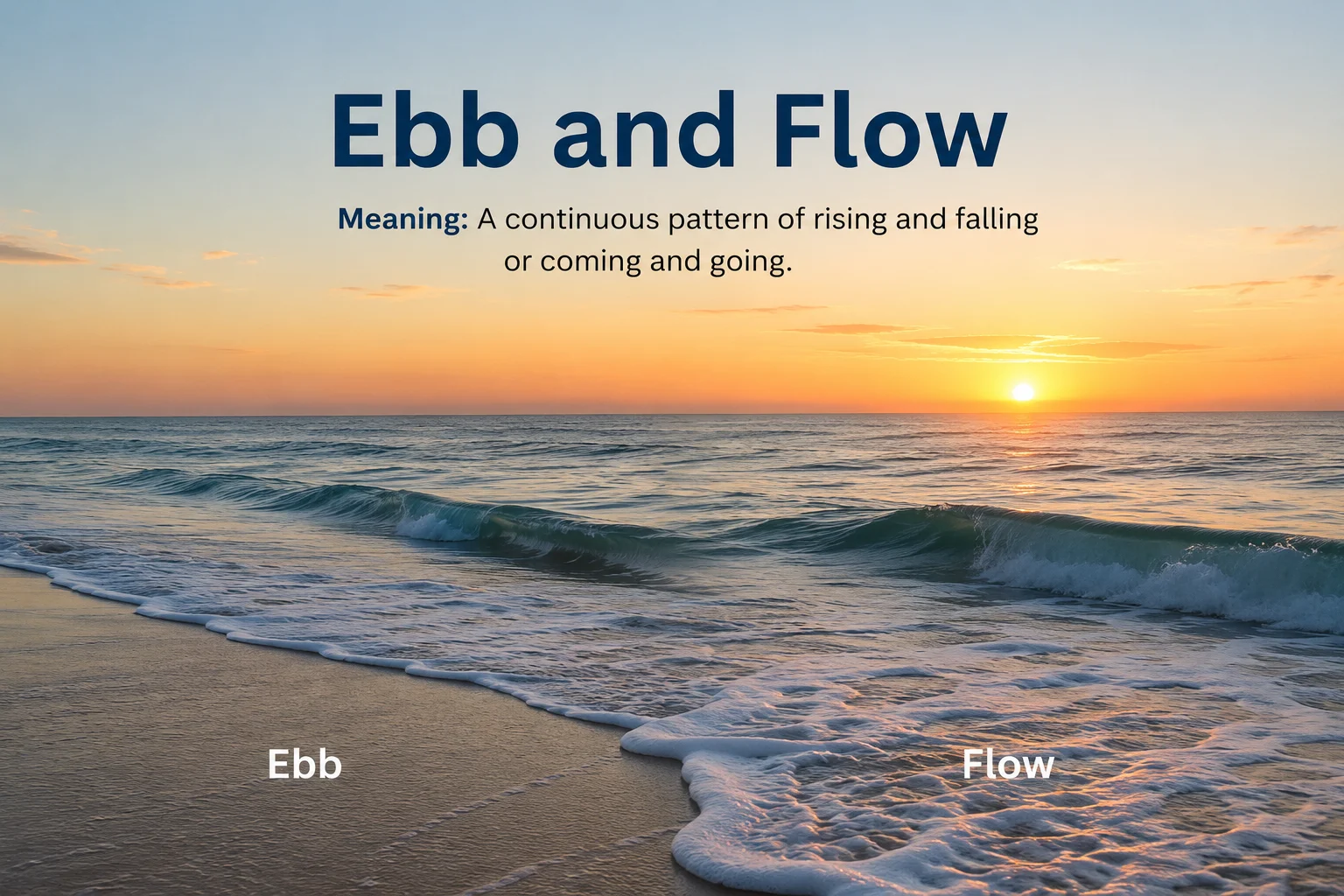
Ebb and flow meaning is one of the most common English expressions used to describe the natural ups and downs of life. Whether people are talking about relationships, emotions, careers, business, or personal growth, this phrase often appears when discussing change and movement over time. It is a simple expression, yet it carries a deep and powerful message about how life rarely stays the same.
At its core, the phrase “ebb and flow” refers to a recurring pattern of increase and decrease. Just as ocean tides move in and out, many aspects of life experience periods of growth followed by periods of decline. Understanding this idea helps people become more patient and adaptable when facing challenges or unexpected changes.
The expression has been used for centuries and remains popular because it applies to almost every area of life. Success may come and go. Motivation can rise and fall. Friendships may grow stronger and then become distant before reconnecting again. The concept reminds us that change is natural and often temporary.
In today’s fast-paced world, understanding the ebb and flow meaning can help people manage expectations and maintain perspective. Rather than expecting constant progress or permanent happiness, the phrase encourages acceptance of life’s natural cycles. This article explores the full meaning, history, examples, and modern usage of this timeless expression.
What Does Ebb and Flow Mean?
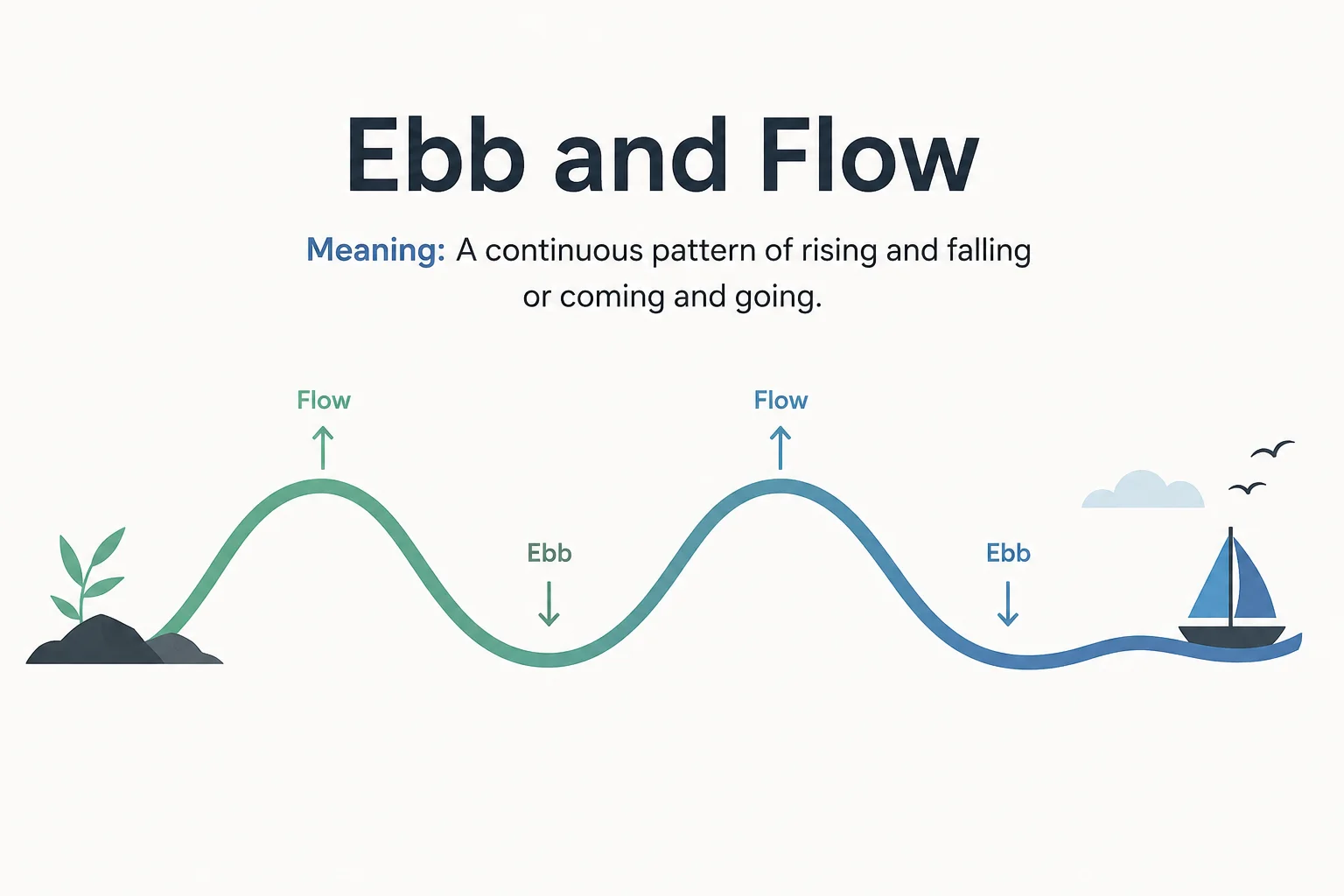
The ebb and flow meaning refers to a pattern of coming and going, rising and falling, or increasing and decreasing over time.
The phrase originates from the movement of ocean tides. “Ebb” refers to the tide moving away from the shore, while “flow” refers to the tide returning toward the shore.
When used figuratively, the expression describes situations that naturally fluctuate.
For example:
- Energy levels may ebb and flow throughout the day.
- Business profits can ebb and flow during different seasons.
- Friendships sometimes experience an ebb and flow over the years.
- Motivation often ebbs and flows while working toward long-term goals.
The phrase suggests that change is normal rather than unusual. It reminds people that difficult periods are often temporary and that positive changes can return after setbacks.
Because of this broader meaning, the expression is widely used in both personal and professional conversations.
The Origin and History of the Phrase
Understanding the ebb and flow meaning becomes easier when examining its origins.
The phrase comes directly from the natural movement of ocean tides. For centuries, sailors, fishermen, and coastal communities observed the regular pattern of tides moving away from and returning to shore.
The word “ebb” originated from ancient Germanic languages and referred to the receding tide.
The word “flow” referred to the incoming tide.
Over time, writers and speakers began using these terms metaphorically to describe changing circumstances in life.
By the 16th and 17th centuries, the phrase was commonly found in English literature and everyday speech.
Its popularity continued because it perfectly captured the idea of natural cycles. People recognized that emotions, relationships, success, and challenges often follow patterns similar to the ocean’s tides.
Today, the expression remains one of the most recognizable metaphors for life’s constant changes.
Why the Phrase Is So Popular
The ebb and flow meaning remains popular because nearly everyone experiences changing circumstances.
Life rarely moves in a straight line. Most people encounter periods of success followed by setbacks, excitement followed by calmness, and confidence followed by uncertainty.
The phrase resonates because it reflects reality.
Instead of promising permanent happiness or continuous growth, it acknowledges that fluctuations are normal.
People often find comfort in this idea because it reduces the pressure to be perfect or consistently productive.
The phrase also encourages patience.
When someone is struggling, the concept of ebb and flow suggests that better times may return.
Likewise, during successful periods, it reminds people to stay humble and prepared for future changes.
Its universal relevance makes it useful in countless situations.
Ebb and Flow Meaning in Daily Life
One of the most common uses of the ebb and flow meaning appears in discussions about everyday life.
Daily routines often involve changing energy levels, emotions, and priorities.
For example, someone may feel highly productive one week and less motivated the next.
Students may experience periods of academic confidence followed by moments of frustration.
Parents often describe family life as having an ebb and flow due to changing responsibilities and challenges.
The phrase helps normalize these experiences.
Rather than viewing every setback as a failure, people can recognize it as part of a larger cycle.
Understanding this perspective often reduces stress and promotes resilience.
Life becomes easier to manage when people accept that fluctuations are a natural part of growth and development.
Ebb and Flow Meaning in Relationships
The ebb and flow meaning is frequently used when discussing relationships.
Friendships, family relationships, and romantic partnerships often change over time.
People may feel extremely close during certain periods and more distant during others.
Busy schedules, life events, and personal growth can influence the dynamics of relationships.
This does not necessarily mean that the relationship is failing.
Instead, it may simply be experiencing a natural cycle.
Healthy relationships often involve periods of intense connection followed by quieter phases.
Understanding the ebb and flow of relationships can help reduce unnecessary worry.
It encourages patience, communication, and trust during times when things feel different.
Many strong relationships survive because both individuals understand that temporary changes do not always indicate permanent problems.
Ebb and Flow Meaning in Work and Career
The ebb and flow meaning is also relevant in professional environments.
Careers often involve changing levels of success, workload, and opportunity.
Employees may experience busy seasons followed by slower periods.
Businesses often see profits rise and fall throughout the year.
Creative professionals frequently discuss the ebb and flow of inspiration.
Not every project will be equally successful, and not every day will feel productive.
Understanding these cycles helps people maintain realistic expectations.
Rather than becoming discouraged during slower periods, professionals can focus on preparation, learning, and long-term growth.
Recognizing the natural ebb and flow of work often leads to greater patience and career resilience.
Ebb and Flow Meaning in Emotions and Mental Well-Being
Emotional experiences provide another important example of the ebb and flow meaning.
People do not feel the same way every day.
Happiness, confidence, excitement, and motivation naturally fluctuate.
Similarly, feelings of sadness, frustration, and uncertainty may come and go.
Understanding emotional ebb and flow helps people avoid unrealistic expectations.
Many individuals mistakenly believe they should feel positive all the time.
However, emotional variation is a normal part of being human.
Accepting this reality can improve mental well-being.
Instead of fighting every negative emotion, people can recognize that emotions often change with time.
This perspective encourages self-compassion and emotional balance.
Examples of Ebb and Flow in Nature
The ebb and flow meaning originally came from nature, and many natural examples still illustrate the concept perfectly.
Examples include:
- Ocean tides moving in and out
- Seasonal weather changes
- Plant growth cycles
- Animal migration patterns
- River water levels
Nature rarely remains static.
Everything experiences periods of growth, rest, activity, and renewal.
Observing these patterns helps explain why the phrase remains so powerful.
Many people find comfort in recognizing that human experiences often mirror the rhythms of the natural world.
The concept reminds us that change is not only normal but essential.
Common Examples of Ebb and Flow in Conversations
The ebb and flow meaning frequently appears in everyday speech.
Examples include:
- “Our friendship has an ebb and flow, but we’re always there for each other.”
- “Business tends to ebb and flow throughout the year.”
- “Creative inspiration has its ebb and flow.”
- “Relationships naturally experience an ebb and flow.”
- “My motivation ebbs and flows depending on my schedule.”
- “Life has an ebb and flow that everyone experiences.”
- “Success often follows the ebb and flow of opportunity.”
- “The team’s performance showed an ebb and flow during the season.”
These examples demonstrate how flexible and widely applicable the phrase is.
Similar Expressions and Alternatives
Several expressions share similarities with the ebb and flow meaning.
Common alternatives include:
- Ups and downs
- Highs and lows
- Peaks and valleys
- Changing tides
- Come and go
- Rise and fall
- Cycles of life
- Natural rhythm
Although each phrase has slightly different nuances, they all emphasize change and fluctuation.
Understanding these alternatives can help improve communication and vocabulary.
Writers and speakers often use them interchangeably depending on context.
Why Understanding Ebb and Flow Matters
The ebb and flow meaning offers an important life lesson.
Many people become frustrated when progress slows or circumstances change unexpectedly.
However, understanding natural cycles can provide perspective.
Success is rarely permanent.
Challenges are rarely permanent either.
The phrase encourages adaptability and patience.
Rather than resisting every change, people can learn to navigate fluctuations more effectively.
This mindset often reduces stress and increases emotional resilience.
Whether applied to work, relationships, health, or personal growth, the concept remains valuable.
It reminds people that difficult moments often pass and that positive opportunities can return.
Misconceptions About Ebb and Flow
Some misunderstand the ebb and flow meaning and assume it promotes passivity.
In reality, the phrase does not suggest giving up or avoiding effort.
Instead, it encourages recognizing natural patterns while continuing to move forward.
Another misconception is that every setback will automatically resolve itself.
While change often occurs naturally, action and effort still play important roles.
The phrase simply acknowledges that circumstances fluctuate.
It does not eliminate personal responsibility.
Understanding this distinction helps people use the concept more effectively.
The goal is balance between acceptance and action.
Ebb and Flow Meaning in Modern Culture
The ebb and flow meaning remains highly relevant in modern culture.
Social media, self-improvement content, business coaching, and wellness discussions frequently reference the phrase.
People use it to describe:
- Personal growth journeys
- Entrepreneurial challenges
- Fitness progress
- Creative work
- Emotional well-being
Its continued popularity reflects a growing awareness that sustainable success involves managing change rather than eliminating it.
The phrase provides a practical framework for understanding life’s unpredictability.
This timeless wisdom continues to resonate with new generations.
Frequently Asked Questions
What is the simple meaning of ebb and flow?
Ebb and flow refers to a natural pattern of increase and decrease, rise and fall, or coming and going over time.
Where does the phrase ebb and flow come from?
The phrase originates from ocean tides. “Ebb” refers to the outgoing tide, while “flow” refers to the incoming tide.
Can ebb and flow describe emotions?
Yes. People often use the phrase to describe changing emotions, motivation levels, and mental states.
Is ebb and flow a positive or negative phrase?
It is generally neutral. The phrase simply describes natural cycles of change rather than judging them as good or bad.
Why is ebb and flow important in life?
Understanding ebb and flow helps people accept change, remain patient during challenges, and appreciate periods of growth and success.
Conclusion
The ebb and flow meaning represents one of the most valuable concepts in the English language. Rooted in the natural movement of ocean tides, the phrase has evolved into a powerful metaphor for life’s changing circumstances.
From relationships and careers to emotions and personal development, nearly every aspect of life experiences periods of growth and decline. Understanding these natural cycles can help people manage expectations and respond to challenges more effectively.
Rather than viewing change as a problem, the concept encourages acceptance and adaptability. It reminds us that setbacks are often temporary and that progress does not always occur in a straight line.
Ultimately, the ebb and flow meaning teaches an important lesson: life is constantly moving, changing, and evolving. By embracing these natural rhythms, people can navigate challenges with greater confidence and appreciate the opportunities that come with every new tide.