
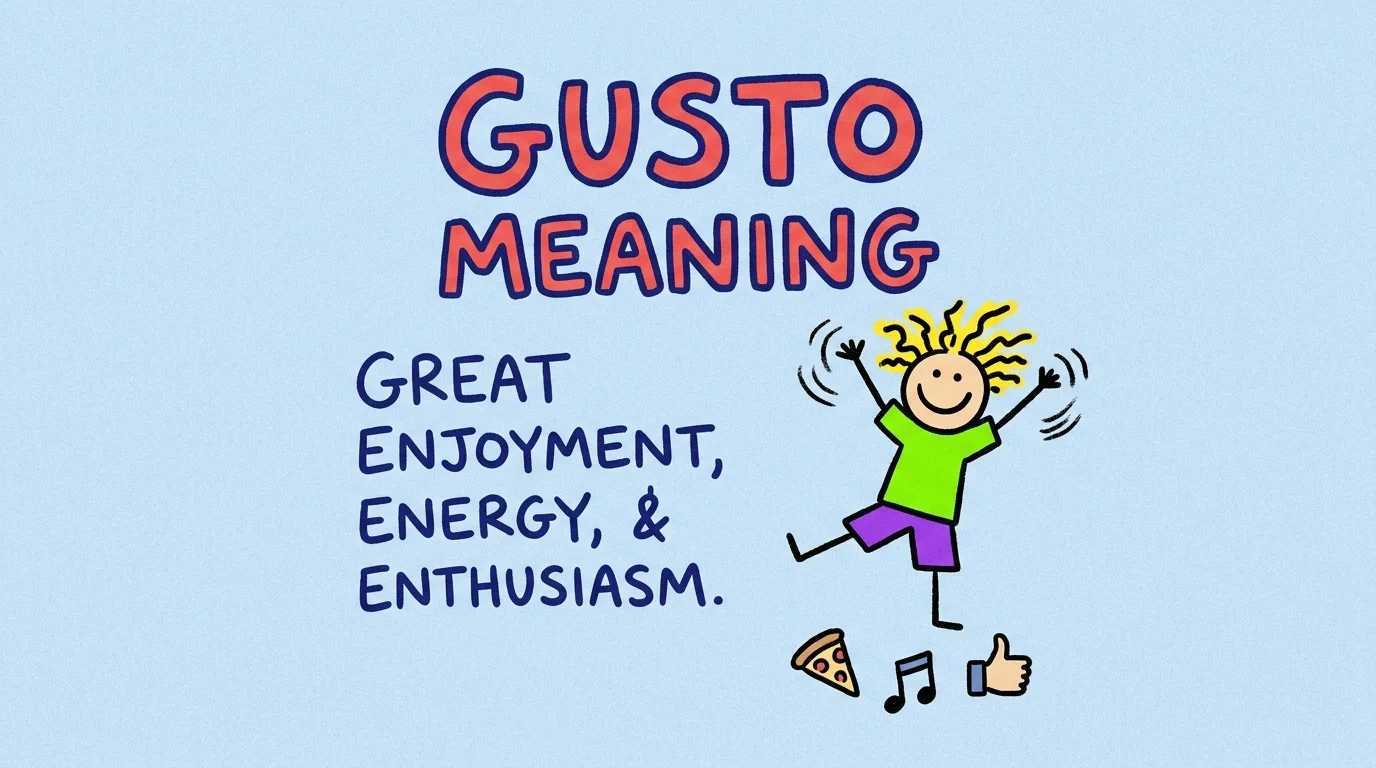
Gusto meaning is a popular topic among English learners and vocabulary enthusiasts because the word appears in books, conversations, motivational speeches, and everyday communication. While it may seem like a simple word, gusto carries a powerful message about enthusiasm, passion, and energy. People often use it to describe someone who approaches life with excitement and dedication.
In modern English, gusto refers to great enthusiasm, enjoyment, energy, or eagerness when doing something. When a person tackles a task with gusto, they do it wholeheartedly rather than reluctantly. The word creates an image of someone fully engaged in an activity and enjoying every moment of it.
The term is commonly used in both personal and professional settings. You might hear someone say that a child attacked a birthday cake with gusto, an athlete played with gusto, or an employee completed a project with gusto. In each situation, the word highlights energy and passion.
Understanding the gusto meaning can improve your vocabulary and help you communicate more effectively. Whether you’re reading a novel, listening to a speech, or writing an article, knowing how and when to use this word can make your language more expressive and engaging.
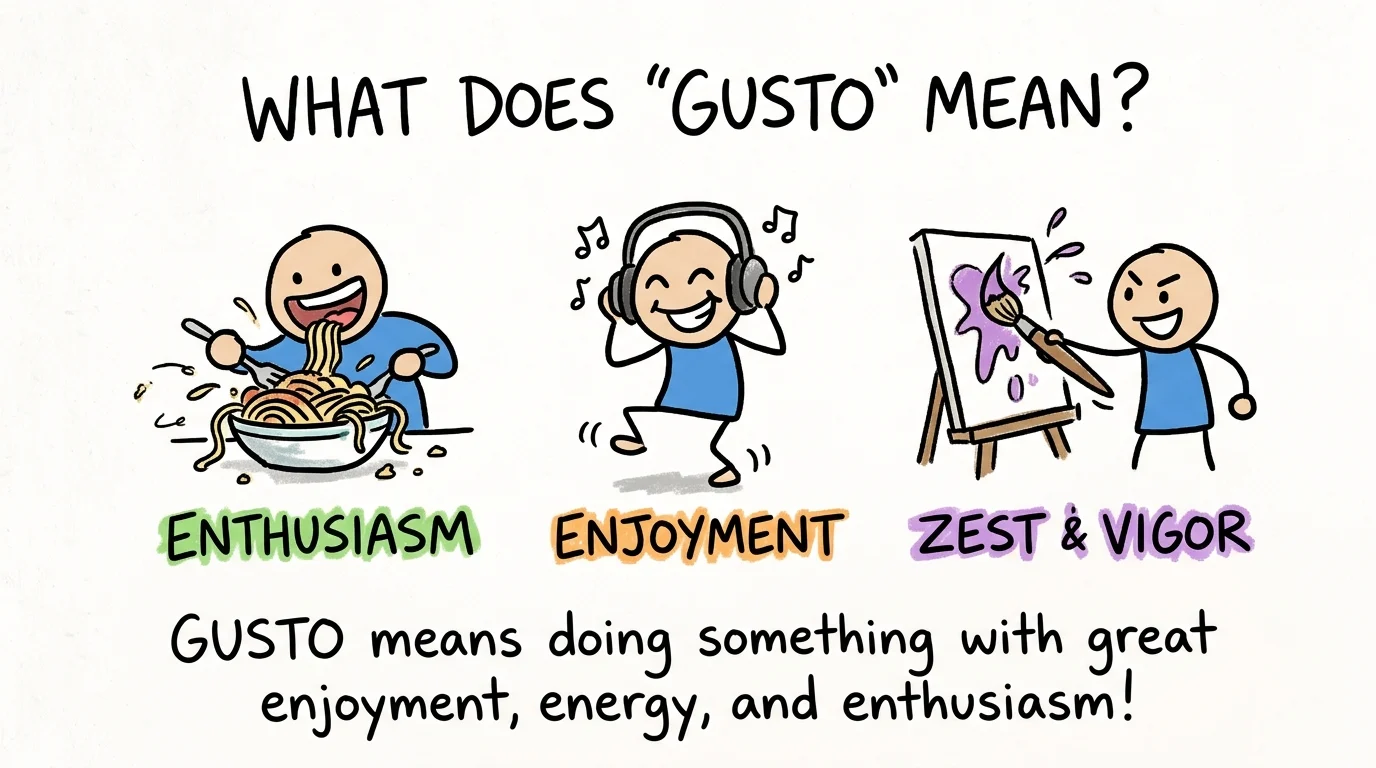
What Does Gusto Mean?
The gusto meaning is enthusiasm, excitement, passion, or energetic enjoyment while doing something.
A person who acts with gusto approaches an activity with genuine interest and commitment. They are not merely going through the motions. Instead, they are actively involved and eager to participate.
For example:
- She sang with gusto during the concert.
- The children played soccer with gusto.
- He attacked the buffet with gusto.
In all these examples, the word suggests excitement, energy, and wholehearted participation.
Gusto is often associated with positivity because it reflects a strong enjoyment of life and activities.
The Origin and History of Gusto
The word gusto has an interesting history.
It comes from the Italian word “gusto,” which originally meant taste or enjoyment. The term eventually entered English and evolved to describe enthusiasm and energetic appreciation.
During the 17th and 18th centuries, the word became associated with art, culture, and personal expression. Writers used it to describe people who appreciated beauty, music, food, and life itself.
Over time, the meaning expanded beyond artistic appreciation. Today, gusto is widely used to describe enthusiasm in almost any situation.
Despite its age, the word remains popular because it captures a positive and energetic attitude that people admire.
Why Gusto Is Such a Powerful Word
The gusto meaning goes beyond simple excitement.
Many words can describe happiness or enjoyment, but gusto specifically implies active participation. It suggests that someone is fully committed to what they are doing.
For example, there is a difference between enjoying a meal and eating with gusto. The second phrase creates a stronger image of enthusiasm and satisfaction.
Similarly, someone may work hard, but working with gusto suggests passion and eagerness in addition to effort.
This combination of energy and enjoyment makes the word particularly effective in communication.
Gusto Meaning in Everyday Conversations
People frequently use gusto in casual conversations.
Parents may describe their children as playing with gusto. Friends might talk about someone dancing with gusto at a party. Teachers may praise students for participating with gusto in classroom activities.
The word is versatile because it can apply to many different situations.
Examples include:
- Exercising with gusto
- Cooking with gusto
- Learning with gusto
- Celebrating with gusto
In each case, the word emphasizes enthusiasm and energetic involvement.
Because it has a positive tone, it is often used to compliment someone’s attitude or effort.
Gusto Meaning in Food and Dining
Food is one of the most common contexts where the gusto meaning appears.
When someone eats with gusto, they enjoy their meal enthusiastically.
For example:
- The hungry hikers ate with gusto after their long journey.
- The children devoured pizza with gusto.
The phrase suggests more than simple eating. It implies enjoyment, satisfaction, and eagerness.
Food writers and restaurant reviewers often use the term to describe passionate appreciation of meals.
The connection between gusto and food makes sense because the word originally related to taste and enjoyment.
Gusto Meaning in Sports and Competition
Athletes often perform with gusto.
Sports require energy, determination, and enthusiasm, making the word a natural fit.
A player who competes with gusto demonstrates passion for the game.
Examples include:
- The team played with gusto despite difficult conditions.
- She attacked every challenge with gusto.
- The crowd appreciated his gusto and determination.
Coaches often encourage athletes to play with gusto because enthusiasm can improve performance and motivation.
In sports, the word reflects both physical energy and mental commitment.
Gusto Meaning in Work and Career
The workplace is another area where the gusto meaning is highly relevant.
Employers value individuals who approach their responsibilities with enthusiasm.
An employee working with gusto often:
- Shows initiative
- Maintains positive energy
- Embraces challenges
- Inspires coworkers
For example:
“She approached the new project with gusto and quickly became a team leader.”
People who demonstrate gusto at work are often viewed as motivated and engaged.
Their enthusiasm can positively influence the entire workplace environment.
Gusto Meaning in Education and Learning
Students who learn with gusto tend to enjoy the educational process.
Rather than viewing learning as a chore, they approach it with curiosity and excitement.
Teachers often appreciate students who participate with gusto because their enthusiasm contributes to classroom energy.
Examples include:
- Asking thoughtful questions
- Participating in discussions
- Exploring new topics eagerly
The word highlights a positive attitude toward growth and knowledge.
Learning with gusto can make education more rewarding and effective.
Gusto Meaning in Relationships
Relationships often benefit from enthusiasm and engagement.
People who approach friendships and family interactions with gusto tend to create positive experiences.
For example:
- Planning activities with gusto
- Supporting loved ones enthusiastically
- Celebrating achievements with gusto
The word reflects active emotional investment rather than passive involvement.
Relationships thrive when people bring energy, interest, and positivity to their interactions.
This is one reason the concept of gusto remains valuable in everyday life.
Examples of Gusto in Sentences
Understanding examples can make the gusto meaning clearer.
Here are some common examples:
- The children sang with gusto during the school performance.
- He tackled the project with gusto.
- They celebrated the victory with gusto.
- She approached every challenge with gusto.
- The audience applauded with gusto.
- The dog chased the ball with gusto.
- We explored the city with gusto.
- The chef cooked with gusto and creativity.
Each sentence demonstrates enthusiasm, energy, and wholehearted participation.
Synonyms of Gusto
Several words share similarities with gusto.
Common synonyms include:
- Enthusiasm
- Passion
- Energy
- Excitement
- Zeal
- Eagerness
- Spirit
- Vigor
- Determination
- Drive
While these words overlap in meaning, gusto often emphasizes enjoyment in addition to energy.
Choosing the right synonym depends on the specific context.
Expanding your vocabulary with these alternatives can improve communication skills.
Antonyms of Gusto
Understanding opposites helps clarify the gusto meaning.
Common antonyms include:
- Apathy
- Indifference
- Boredom
- Reluctance
- Disinterest
- Laziness
- Weariness
- Unenthusiasm
- Passivity
- Inactivity
These words describe attitudes that lack excitement or energy.
Comparing them with gusto highlights the positive and active nature of the term.
Common Mistakes When Using Gusto
One common mistake is assuming gusto simply means happiness.
While happiness may be involved, the word specifically refers to enthusiastic action.
Another mistake is using it in situations where no energy or participation exists.
For example, saying someone sat quietly with gusto sounds unusual because the word generally implies active involvement.
Understanding these nuances helps ensure correct usage.
The best way to use gusto is when describing energetic, passionate behavior.
Why Gusto Remains Popular Today
The gusto meaning continues to resonate because enthusiasm is universally admired.
People appreciate individuals who approach life with passion and positivity.
Whether in sports, work, education, relationships, or hobbies, gusto represents qualities that many people strive to develop.
The word also feels timeless.
Although it has existed for centuries, its message remains relevant in modern society.
In a world filled with distractions and obligations, approaching activities with gusto can make life more enjoyable and meaningful.
How to Develop More Gusto in Life
Living with gusto does not require extraordinary talent or success.
Instead, it involves choosing to engage fully with life’s opportunities.
Some practical ways to develop more gusto include:
- Pursuing interests you genuinely enjoy
- Maintaining curiosity
- Setting meaningful goals
- Celebrating small victories
- Staying physically active
- Surrounding yourself with positive people
These habits encourage enthusiasm and engagement.
Over time, they can help create a more energetic and fulfilling lifestyle.
Frequently Asked Questions
What is the simple meaning of gusto?
Gusto means enthusiasm, excitement, energy, and wholehearted enjoyment while doing something.
Is gusto a positive word?
Yes. Gusto is generally considered a positive word because it reflects passion, eagerness, and active participation.
Can gusto be used in professional settings?
Absolutely. It is often used to describe employees, leaders, and teams who approach work with enthusiasm and dedication.
What is an example of gusto in a sentence?
An example is: “She approached her new job with gusto and quickly impressed her coworkers.”
What are the best synonyms for gusto?
Some of the best synonyms include enthusiasm, passion, zeal, energy, excitement, spirit, and vigor.
Conclusion
The gusto meaning centers on enthusiasm, energy, and wholehearted participation. It is a word that celebrates people who throw themselves into activities with passion and enjoyment rather than approaching them reluctantly.
Throughout history, gusto has evolved from a term associated with taste and appreciation into a powerful expression of enthusiasm. Today, it appears in conversations about food, sports, work, education, relationships, and personal growth.
Understanding the gusto meaning helps enrich your vocabulary and communication skills. It also encourages a mindset that values engagement, positivity, and commitment.
Ultimately, living with gusto means embracing life’s opportunities with energy and excitement. Whether you’re pursuing a career goal, learning a new skill, enjoying time with friends, or simply exploring the world around you, a little gusto can make every experience more meaningful and memorable.