
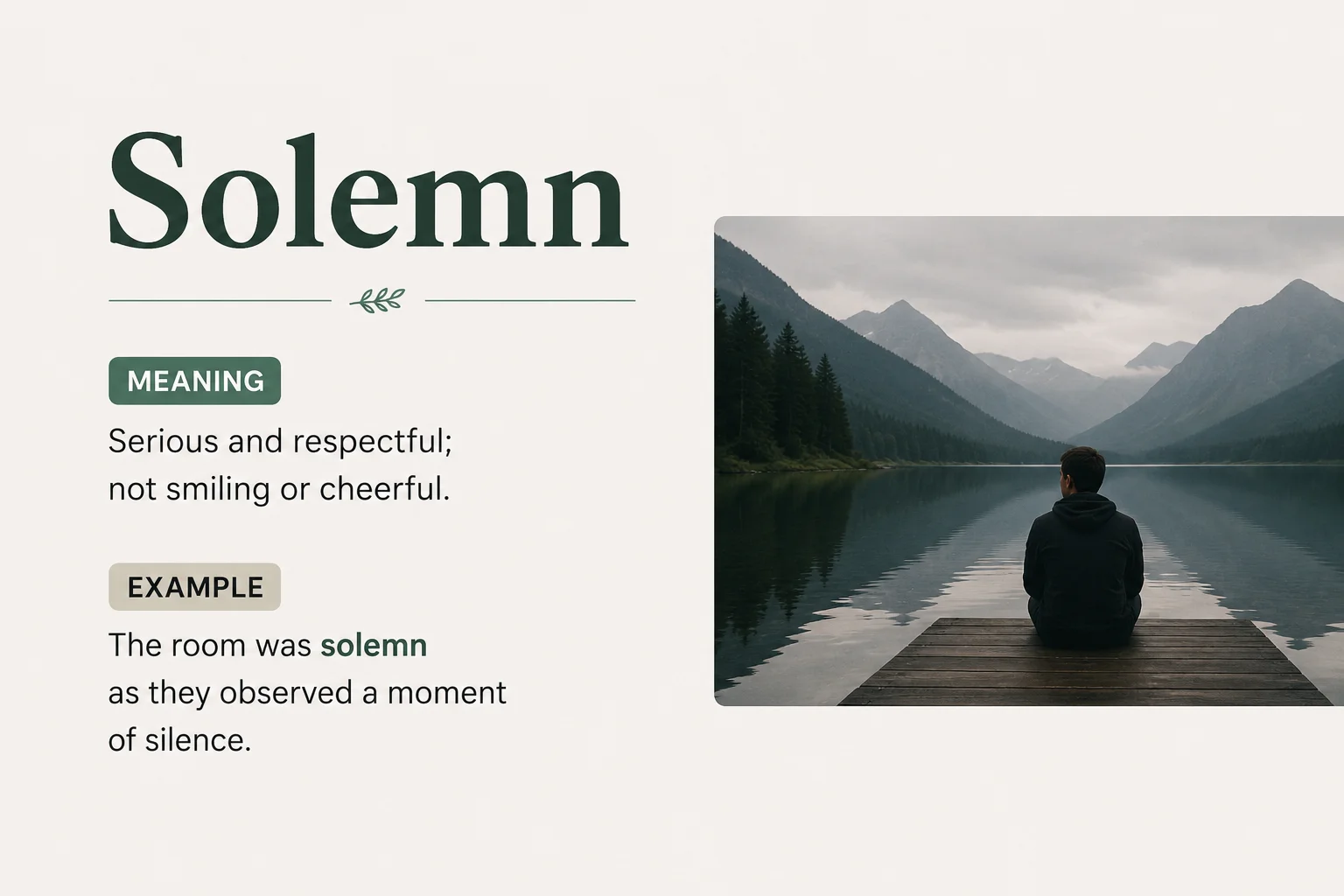
SOLEMN MEANING is a topic many English learners search for because the word appears frequently in books, speeches, news articles, religious ceremonies, and everyday conversations. While it may seem like a simple vocabulary word, solemn carries a deep emotional and cultural significance. It is often used to describe serious situations, respectful behavior, important occasions, and sincere promises.
In modern English, solemn generally refers to something serious, formal, dignified, or emotionally significant. People often use the word when discussing ceremonies, commitments, memories, or moments that require respect and thoughtful attention. Unlike casual or lighthearted situations, solemn occasions typically involve reflection, responsibility, or strong emotions.
The word is especially common during important life events. Weddings, funerals, religious services, memorials, and official ceremonies are often described as solemn because they carry emotional weight and importance. However, solemn is not limited to these settings. It can also describe a person’s facial expression, attitude, or tone of voice.
Understanding the solemn meaning can help improve both your vocabulary and communication skills. Whether you encounter the word in literature, professional writing, or daily conversation, knowing its meaning allows you to better understand the seriousness and emotional depth being expressed.
What Does Solemn Mean?
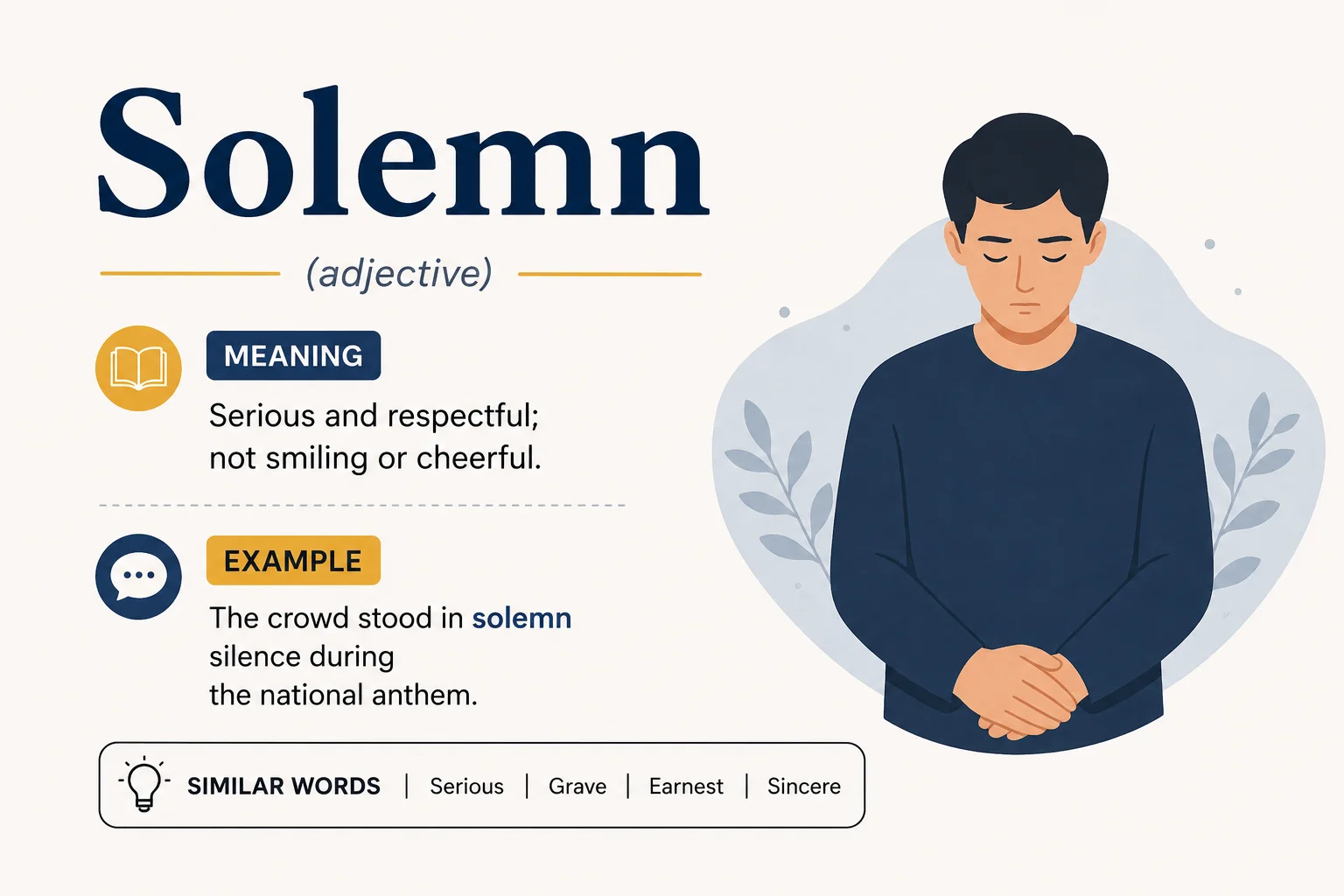
The solemn meaning refers to something that is serious, formal, sincere, or deeply respectful.
When a situation is described as solemn, it usually involves important emotions, responsibilities, or events that deserve careful attention.
For example:
- A funeral may be a solemn occasion.
- A judge may deliver a solemn statement.
- A person may have a solemn expression after hearing important news.
In all of these cases, the word suggests seriousness and dignity rather than humor or casualness.
The term often conveys a sense of respect and emotional significance.
The Origin and History of Solemn
The word solemn has a long history dating back to ancient languages.
It comes from the Latin word “sollemnis,” which referred to something ceremonial, established, or formal.
As the word moved through Old French and eventually entered English, it maintained its association with important events and serious occasions.
Historically, solemn was often used to describe religious ceremonies, legal proceedings, and official gatherings.
Over centuries, its meaning expanded to include serious emotions, sincere promises, and respectful behavior.
Today, the word remains an important part of formal English vocabulary.
Why the Word Solemn Is Important
The solemn meaning plays an important role in communication because it helps express seriousness and respect.
Without words like solemn, it can be difficult to accurately describe emotionally significant situations.
For example, saying a ceremony was “solemn” communicates much more than simply saying it was “quiet.”
The word suggests dignity, emotional depth, and importance.
It helps listeners and readers understand that a situation deserves thoughtful attention.
Because of this, solemn remains widely used in education, media, literature, and professional communication.
Solemn Meaning in Everyday Life
Although many people associate solemn with formal ceremonies, the word also appears in everyday situations.
Someone may become solemn when discussing a difficult topic.
Parents might adopt a solemn tone when explaining an important lesson to their children.
A person may appear solemn after receiving life-changing news.
In these situations, the word does not necessarily indicate sadness.
Instead, it reflects seriousness and emotional focus.
This flexibility makes solemn a valuable word in daily communication.
Solemn Meaning in Religious Contexts
Religion is one of the most common areas where the solemn meaning appears.
Many religious ceremonies are considered solemn because they involve worship, reflection, and spiritual significance.
Examples include:
- Prayer services
- Memorial ceremonies
- Religious holidays
- Sacred rituals
Participants are often expected to behave solemnly to show respect.
The atmosphere during such events is typically calm, thoughtful, and dignified.
The word helps capture the importance of these spiritual experiences.
Solemn Meaning in Weddings
Weddings are often joyful occasions, but they can also be solemn.
The exchange of vows is a good example.
When two people make lifelong commitments to one another, the moment carries serious meaning.
Many wedding ceremonies include solemn promises, formal declarations, and emotional reflections.
Even amid celebration and happiness, there is often a solemn recognition of the responsibilities involved in marriage.
This combination of joy and seriousness makes weddings unique occasions.
Solemn Meaning in Funerals and Memorials
Funerals are perhaps the most common example associated with the solemn meaning.
These events provide opportunities for people to honor and remember loved ones.
The atmosphere is often respectful, reflective, and emotionally significant.
People typically speak in quiet voices and behave with dignity.
The solemn nature of funerals helps create a space where grief, remembrance, and support can be shared.
The word captures the emotional weight of these moments effectively.
Solemn Expressions and Body Language
The word solemn can also describe a person’s appearance.
A solemn expression often includes:
- A serious face
- Limited smiling
- Focused attention
- Thoughtful eyes
Someone might appear solemn while listening to important news or reflecting on a difficult situation.
Body language often reinforces this seriousness.
For example, standing quietly with respectful posture may contribute to a solemn appearance.
These visual cues help communicate emotions without words.
Solemn Promises and Commitments
The solemn meaning is frequently associated with promises.
A solemn promise is one that is made sincerely and with great seriousness.
Examples include:
- Marriage vows
- Oaths of office
- Legal declarations
- Personal commitments
When someone makes a solemn promise, they are emphasizing their intention to keep it.
The word adds weight and importance to the commitment.
It suggests honesty, responsibility, and dedication.
Solemn Meaning in Literature
Authors often use solemn to create mood and atmosphere.
A solemn scene may involve:
- Important decisions
- Emotional conversations
- Moments of reflection
- Historical events
The word helps readers understand the emotional tone of a story.
For example, a solemn gathering before a battle creates a very different feeling than a festive celebration.
Writers rely on words like solemn to communicate emotional depth effectively.
Solemn Meaning in Professional Communication
In professional settings, the word solemn can appear in speeches, reports, and official statements.
Leaders may adopt a solemn tone when discussing serious issues.
Governments often release solemn statements after major events.
Organizations may hold solemn ceremonies to honor achievements or remember losses.
Using the word appropriately helps convey respect and seriousness.
It signals that a topic deserves careful consideration.
Common Examples of Solemn in Sentences
Here are some examples showing how the word is used:
- The audience remained solemn throughout the memorial service.
- She made a solemn promise to keep the secret.
- His solemn expression worried his friends.
- The ceremony was both beautiful and solemn.
- The judge delivered a solemn warning.
- They observed the anniversary with a solemn gathering.
- The students listened in solemn silence.
- A solemn atmosphere filled the room.
These examples demonstrate the versatility of the word.
Synonyms of Solemn
Several words share similarities with solemn.
Common synonyms include:
- Serious
- Dignified
- Respectful
- Formal
- Sincere
- Thoughtful
- Grave
- Earnest
- Reverent
- Ceremonial
Each synonym emphasizes a slightly different aspect of seriousness or respect.
Learning these alternatives can help expand your vocabulary.
Antonyms of Solemn
Understanding opposites can make the solemn meaning clearer.
Common antonyms include:
- Cheerful
- Playful
- Lighthearted
- Funny
- Casual
- Carefree
- Joyful
- Silly
- Humorous
- Relaxed
These words describe moods and situations that contrast with seriousness and dignity.
Comparing opposites helps clarify the emotional tone associated with solemn.
Common Mistakes When Using Solemn
One mistake is assuming solemn always means sad.
While solemn situations can involve sadness, the word primarily refers to seriousness and respect.
A wedding ceremony may be solemn even though it is a happy event.
Another mistake is using solemn to describe any quiet situation.
Silence alone does not make something solemn.
The word implies emotional significance or importance, not simply a lack of noise.
Understanding these distinctions improves communication accuracy.
Why Solemn Remains Relevant Today
The modern world often emphasizes speed, entertainment, and constant communication.
Despite these trends, there are still moments that require seriousness and reflection.
The solemn meaning remains relevant because people continue to experience important life events, responsibilities, and emotional milestones.
Whether in personal relationships, public ceremonies, or professional settings, solemn moments help people recognize significance and show respect.
The word continues to provide an effective way to describe these experiences.
Frequently Asked Questions
What is the simple meaning of solemn?
Solemn means serious, sincere, respectful, or emotionally significant.
Does solemn always mean sad?
No. Solemn often refers to seriousness and dignity rather than sadness. A wedding can be solemn even though it is joyful.
What is a solemn promise?
A solemn promise is a sincere and serious commitment that someone intends to keep.
Can a person be solemn?
Yes. A person can appear solemn through their expression, behavior, or tone of voice.
What are common synonyms for solemn?
Common synonyms include serious, dignified, sincere, respectful, grave, and earnest.
Conclusion
The solemn meaning goes far beyond a simple definition. It represents seriousness, sincerity, respect, and emotional significance. Whether describing a ceremony, a promise, a facial expression, or an important event, the word helps communicate depth and dignity.
Throughout history, solemn has been associated with religious practices, official ceremonies, legal commitments, and meaningful personal experiences. Its enduring presence in the English language reflects the importance of recognizing moments that deserve thoughtful attention.
Understanding the solemn meaning can improve both comprehension and communication. It allows people to accurately describe situations that involve responsibility, reflection, and respect.
Ultimately, the word reminds us that some moments in life are too important to treat casually. The ability to recognize and honor those moments with solemnity is a valuable part of human experience and meaningful communication.