
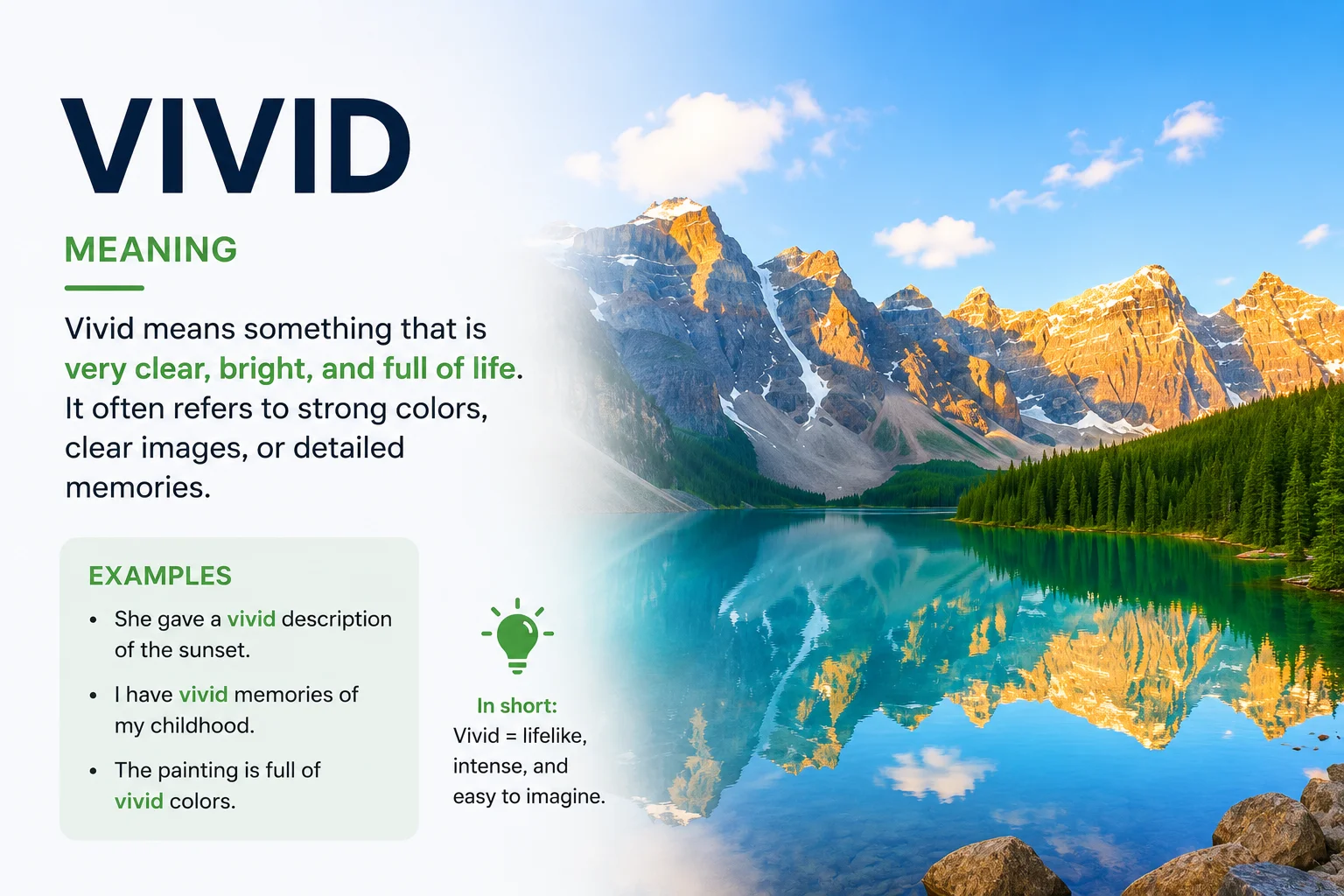
The vivid meaning is commonly searched by people who encounter the word in books, conversations, movies, and social media posts. Although “vivid” is a relatively simple English word, it carries rich and powerful meanings that can make descriptions more expressive and memorable.
In general, vivid means very clear, bright, detailed, or producing strong and easily imagined images in the mind. The word is often used to describe colors, memories, dreams, descriptions, emotions, and imaginations that feel realistic and easy to picture.
For example, if someone says, “I have a vivid memory of my first day at school,” they mean they remember it very clearly and can almost relive the experience in their mind. Similarly, a vivid dream feels so real that you may remember it long after waking up.
The word “vivid” is extremely useful because it helps describe experiences that are intense, colorful, and easy to imagine. Writers, speakers, teachers, and everyday English users frequently use this term because it adds depth and emotion to communication.
Understanding the vivid meaning can improve both your vocabulary and communication skills. This guide explains what vivid means, where it came from, how it is used in different situations, examples of its usage, synonyms, and why it remains an important word in everyday English. For more insight read this:- ily meaning and apricity meaning.
What Does Vivid Mean?
The vivid meaning refers to something that is extremely clear, bright, detailed, or easily imagined.
In simple words, vivid describes things that seem:
- Very clear
- Highly detailed
- Bright and colorful
- Easy to imagine
- Emotionally powerful
- Realistic
Examples:
“I still have a vivid memory of my childhood home.”
“The artist used vivid colors in the painting.”
“She gave a vivid description of the accident.”
In each example, the word emphasizes clarity and intensity.
The word often suggests that something stands out strongly in your mind and leaves a lasting impression.
The Origin of the Word Vivid
Understanding the vivid meaning also involves looking at its origins.
The word comes from the Latin word vividus, which means:
- Full of life
- Energetic
- Lively
- Animated
Over time, the word entered English and evolved into its modern meaning.
Although today’s definition often focuses on clarity and detail, the original idea of being “full of life” still influences how we use the word.
For example:
- Vivid colors seem alive.
- Vivid memories feel real.
- Vivid descriptions create lifelike images.
The historical meaning explains why the word often conveys energy and realism.
Vivid Meaning in Everyday English
The vivid meaning appears frequently in everyday conversations.
People commonly use it when discussing:
- Memories
- Dreams
- Colors
- Stories
- Emotions
- Experiences
Examples:
“I have a vivid memory of that summer.”
“Her explanation was so vivid that I could imagine everything.”
“The sunset had vivid orange and pink colors.”
The word helps communicate that something is exceptionally clear or impressive.
Without “vivid,” descriptions may feel less expressive.
Compare:
“I remember my birthday.”
“I have a vivid memory of my birthday.”
The second sentence creates a much stronger image.
Vivid Meaning in Memories
One of the most common uses of the vivid meaning involves memories.
A vivid memory is one that feels:
- Extremely clear
- Easy to recall
- Detailed
- Emotionally powerful
Examples:
“I still have vivid memories of my grandparents.”
“He has a vivid memory of winning his first competition.”
“We all have vivid childhood experiences that remain with us.”
Certain events become vivid memories because they involve:
- Strong emotions
- Important milestones
- Surprising experiences
- Meaningful relationships
The human brain often remembers emotional events more clearly than ordinary experiences.
As a result, vivid memories can remain with people for many years.
Vivid Meaning in Dreams
The vivid meaning frequently appears when discussing dreams.
A vivid dream feels:
- Extremely real
- Detailed
- Intense
- Memorable
Examples:
“I had a vivid dream last night.”
“The dream was so vivid that I thought it really happened.”
“She often experiences vivid dreams.”
Many people remember vivid dreams because they involve:
- Strong emotions
- Unusual situations
- Realistic experiences
- Detailed imagery
Some vivid dreams remain memorable for years.
Because they seem almost real, they can leave strong emotional impressions even after waking up.
Vivid Meaning in Colors
Another important interpretation of the vivid meaning involves colors.
Vivid colors are:
- Bright
- Intense
- Rich
- Eye-catching
Examples:
“The garden was full of vivid flowers.”
“The painting featured vivid shades of blue and red.”
“The sunset displayed vivid colors across the sky.”
Designers and artists often use vivid colors because they:
- Attract attention
- Create emotion
- Increase visual interest
- Leave lasting impressions
Bright colors naturally stand out.
The word “vivid” helps communicate this sense of energy and intensity.
Vivid Meaning in Writing and Storytelling
The vivid meaning is especially important in writing.
Writers use vivid descriptions to help readers imagine scenes clearly.
Examples:
“The forest was covered in sparkling snow and glowing moonlight.”
“The bakery smelled of warm bread and sweet cinnamon.”
These descriptions are vivid because they:
- Appeal to the senses
- Create mental images
- Feel realistic
- Capture emotions
Good storytelling often depends on vivid language.
Readers become more engaged when they can:
- Picture scenes
- Hear sounds
- Smell environments
- Feel emotions
Vivid descriptions make stories feel alive. Also xplore:- imk-meaning
Vivid Meaning in Emotions
The vivid meaning can also apply to emotions.
Examples:
“He experienced vivid feelings of happiness.”
“She has vivid memories associated with sadness.”
“The experience left vivid emotions.”
Strong emotions often become vivid because they:
- Feel intense
- Leave lasting impressions
- Are easy to remember
- Influence future experiences
Emotional experiences frequently become some of our most vivid memories.
The word helps emphasize the strength and clarity of those feelings.
Examples of Vivid in Sentences
Understanding the vivid meaning becomes easier through examples.
Memory
“I still have a vivid memory of my graduation.”
Dream
“I had a vivid dream about traveling the world.”
Color
“The artist used vivid shades of green.”
Storytelling
“Her vivid description made everyone laugh.”
Experience
“He recalled the event in vivid detail.”
Each sentence demonstrates how the word emphasizes clarity, intensity, and realism.
Synonyms of Vivid
Several words have meanings similar to the vivid meaning.
Bright
“The room had bright decorations.”
Detailed
“She gave a detailed explanation.”
Clear
“He has a clear memory of the event.”
Colorful
“The festival was colorful and lively.”
Graphic
“The witness gave a graphic description.”
Realistic
“The painting looked realistic.”
Although these words share similarities, “vivid” often combines:
- Detail
- Clarity
- Emotional impact
- Realism
This combination makes it particularly powerful.
Vivid vs Other Similar Words
Understanding comparisons can clarify the vivid meaning.
Vivid vs Clear
Clear means easy to understand.
Vivid means clear and highly detailed.
Vivid vs Bright
Bright refers mainly to light and colors.
Vivid can describe colors, memories, dreams, and emotions.
Vivid vs Detailed
Detailed refers to information.
Vivid often adds realism and emotional intensity.
For example:
Detailed:
“He explained every step.”
Vivid:
“He described every step so clearly that I could picture it.”
The second sentence creates a stronger mental image.
Why the Word Vivid Is So Powerful
The vivid meaning remains important because it transforms ordinary descriptions into memorable ones.
The word adds:
- Energy
- Realism
- Emotion
- Detail
- Clarity
Compare these sentences:
“The beach was beautiful.”
“The beach had vivid blue water and golden sand.”
The second sentence immediately creates stronger mental images.
People naturally remember vivid descriptions more easily.
This explains why writers, teachers, speakers, and marketers frequently use the word.
Its ability to stimulate imagination makes communication more engaging.
Common Mistakes About Vivid
People occasionally misunderstand the vivid meaning.
Assuming It Only Refers to Colors
The word also describes:
- Memories
- Dreams
- Stories
- Emotions
- Experiences
Thinking It Means Beautiful
Something can be vivid without being beautiful.
For example:
“He had a vivid memory of the storm.”
The storm may not be beautiful, but the memory is clear and detailed.
Believing It Means Complicated
Vivid descriptions can actually improve understanding by making ideas easier to imagine.
Understanding these distinctions helps people use the word correctly.
Why Vivid Remains Popular in English
The vivid meaning remains highly relevant because people naturally respond to clear and memorable descriptions.
Human beings enjoy language that:
- Creates pictures in the mind
- Evokes emotions
- Feels realistic
- Captures attention
Whether discussing dreams, memories, art, stories, or personal experiences, the word “vivid” communicates intensity and realism effectively.
Its versatility makes it useful in:
- Daily conversations
- Literature
- Education
- Journalism
- Public speaking
- Social media
Few words express clarity and emotional impact as effectively as “vivid.”
Frequently Asked Questions
What does vivid mean?
Vivid means very clear, detailed, bright, realistic, or easy to imagine.
What is a vivid memory?
A vivid memory is one that feels extremely clear and remains easy to remember.
What is a vivid dream?
A vivid dream is a dream that feels highly realistic and detailed.
Can vivid describe emotions?
Yes. The word can describe strong emotions and emotionally powerful experiences.
Is vivid a positive word?
Usually yes, although it can also describe unpleasant memories or experiences that remain very clear.
Conclusion
Understanding the vivid meaning can greatly improve your English vocabulary and communication skills. The word generally refers to something that is exceptionally clear, bright, detailed, realistic, or easy to imagine. Whether describing memories, dreams, emotions, colors, or stories, vivid adds depth and intensity to language.
One reason the word remains so popular is its ability to create strong mental images. A vivid memory feels real, a vivid dream stays in your mind, and vivid colors immediately capture attention. The term transforms ordinary descriptions into experiences that seem alive and memorable.
Writers, speakers, and everyday English users frequently rely on vivid language because people naturally connect with descriptions that engage their imagination and emotions. The word helps bridge the gap between simple information and meaningful experiences.
Ultimately, the vivid meaning reminds us of the power of language. Sometimes, one carefully chosen word can make a memory clearer, a story more engaging, and an experience feel almost real again.