
The phrase duly noted meaning is commonly searched because many people encounter it in emails, workplace conversations, and online messages but are unsure what it actually means. At first glance, the expression may sound formal or even slightly confusing. However, its meaning is quite simple.
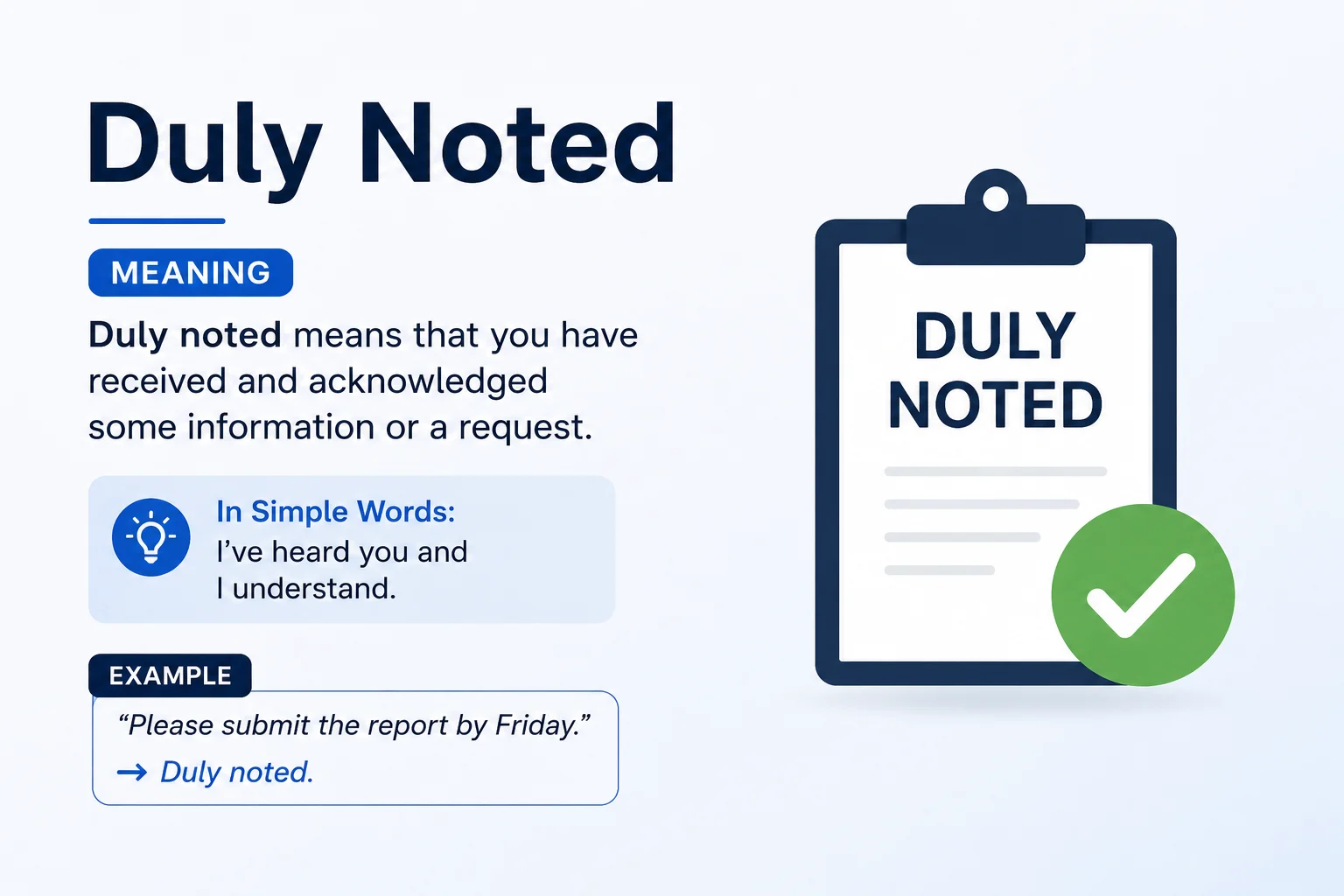
In everyday English, duly noted means “I have taken note of your information,” “I understand what you said,” or “I acknowledge your point.” The phrase is often used to confirm that a message has been received and understood.
You might receive an email from your manager saying, “Duly noted, thank you,” or see someone reply, “Duly noted,” during an online discussion. Depending on the situation and tone, the phrase can sound polite, professional, neutral, or occasionally even sarcastic.
Because digital communication has become a huge part of modern life, phrases like “duly noted” appear more frequently than ever before. Understanding the duly noted meaning can help you communicate more confidently in professional settings and avoid misunderstandings.
This guide explains the duly noted meaning, its origins, how it is used in text messages and emails, examples of real conversations, and why this simple phrase remains popular today. For more insight read this:- paramore meaning and elicit meaning.
What Does Duly Noted Mean?
The duly noted meaning is straightforward. The phrase generally means:
- I understand.
- I have acknowledged your message.
- I have taken note of what you said.
- Your information has been received.
For example:
Manager: “Please submit the report by Friday.”
Employee: “Duly noted.”
In this situation, the employee is simply saying, “I understand and will remember your instruction.”
Another example:
Friend: “Don’t forget dinner at seven.”
You: “Duly noted.”
Here, the phrase indicates that you received the reminder and will keep it in mind.
The expression is mainly used to acknowledge information rather than continue a discussion.
Breaking Down the Words “Duly” and “Noted”
To understand the duly noted meaning, it helps to look at the individual words.
Duly
“Duly” means:
- Properly
- Correctly
- In an appropriate manner
Noted
“Noted” means:
- Observed
- Recorded
- Remembered
- Acknowledged
When combined, duly noted literally means:
“Properly acknowledged” or “carefully taken into consideration.”
The phrase sounds formal because both words have professional and traditional uses in English.
However, despite its formal appearance, the meaning is simple and easy to understand.
Where Did “Duly Noted” Come From?
The duly noted meaning has roots in formal written communication.
For many years, businesses, government offices, and organizations needed ways to confirm that information had been received and understood.
Phrases such as:
- Noted
- Received
- Acknowledged
- Duly noted
became standard responses.
Before email and instant messaging existed, written letters often included expressions confirming receipt of information.
As workplaces became increasingly digital, the phrase continued to be widely used.
Today, “duly noted” remains common because it provides a concise and professional way to acknowledge messages.
It communicates understanding without requiring lengthy responses.
Duly Noted Meaning in Emails
The duly noted meaning is most commonly encountered in emails.
Examples include:
Boss: “Please update the presentation.”
Employee: “Duly noted.”
Another example:
Client: “The meeting has been moved to Thursday.”
You: “Duly noted. Thank you.”
In professional emails, the phrase indicates:
- You received the information.
- You understand it.
- You will remember it.
- No further clarification is necessary.
Many professionals appreciate concise communication.
Instead of writing an entire paragraph, “duly noted” efficiently acknowledges the message.
For this reason, the phrase remains highly popular in workplaces worldwide.
Duly Noted Meaning in Text Messages
The duly noted meaning also appears in text messages.
Examples:
Friend: “Don’t be late.”
You: “Duly noted.”
Sibling: “Mom wants us there by six.”
You: “Duly noted.”
In texting, the phrase can sound:
- Polite
- Formal
- Playful
- Slightly humorous
Because it sounds somewhat professional, younger users sometimes employ it jokingly.
For example:
Friend: “Bring snacks.”
You: “Duly noted.”
The formality of the phrase often creates a humorous contrast in casual conversations.
Is Duly Noted Polite?
The duly noted meaning is generally considered polite.
The phrase acknowledges someone’s statement respectfully.
Examples:
“Duly noted, thank you.”
“Duly noted. I appreciate the reminder.”
“Duly noted. I’ll take care of it.”
However, tone matters.
Depending on context, “duly noted” can sometimes sound:
- Dismissive
- Cold
- Sarcastic
- Passive-aggressive
For example:
Person: “You always leave dishes in the sink.”
Response: “Duly noted.”
This reply may sound like:
“I heard what you said, but I don’t necessarily care.”
Because written messages lack tone of voice, readers sometimes interpret the phrase differently.
Duly Noted Meaning in Workplace Communication
The duly noted meaning is especially useful in professional environments.
Employees often use the phrase when:
- Receiving instructions
- Confirming deadlines
- Acknowledging feedback
- Responding to updates
Examples:
“Duly noted. I’ll complete the report today.”
“Duly noted. Thank you for the clarification.”
“Duly noted. I’ll make the necessary changes.”
The phrase helps maintain professionalism.
It shows attentiveness and indicates that information has been properly received.
Managers and colleagues often appreciate concise acknowledgments because they keep communication efficient. Also explore:- feining meaning
Examples of Duly Noted in Conversations
Understanding the duly noted meaning becomes easier through examples.
Example One
Teacher: “Your assignment is due Monday.”
Student: “Duly noted.”
Example Two
Friend: “Remember to call me tonight.”
You: “Duly noted.”
Example Three
Manager: “Please review these documents.”
Employee: “Duly noted.”
Example Four
Parent: “Take out the trash before dinner.”
Teenager: “Duly noted.”
In each example, the phrase simply acknowledges information.
The speaker is saying:
“I understand and have taken note of what you said.”
Similar Phrases to Duly Noted
Several expressions carry meanings similar to the duly noted meaning.
Noted
“Noted. Thank you.”
Understood
“Understood. I’ll handle it.”
Got It
“Got it. I’ll remember.”
Message Received
“Message received.”
Acknowledged
“Acknowledged. Thank you.”
These phrases all communicate understanding.
However, “duly noted” sounds slightly more formal and professional than most alternatives.
When Should You Use Duly Noted?
The duly noted meaning makes the phrase useful in many situations.
You can use it:
In Emails
“Duly noted. Thank you.”
During Meetings
“Duly noted. We’ll address it.”
In Text Messages
“Duly noted.”
In Professional Conversations
“Duly noted. I’ll make the updates.”
The phrase works best when:
- Information is clear
- Acknowledgment is sufficient
- No lengthy response is necessary
Its brevity makes communication efficient and professional.
When Should You Avoid Using Duly Noted?
Although the duly noted meaning is usually positive, certain situations may call for different wording.
Avoid using it when:
Someone Is Emotional
“Duly noted” may sound cold.
Instead, try:
“I understand how you feel.”
More Explanation Is Needed
Instead of:
“Duly noted.”
Try:
“Thank you for explaining. I’ll review the information.”
The Situation Is Sensitive
Sometimes empathy matters more than efficiency.
Choosing warmer language can improve communication.
Understanding context is important when using professional phrases.
Why Is Duly Noted Still Popular?
The duly noted meaning remains relevant because it solves a simple communication problem.
People often need ways to say:
- I understand.
- I received your message.
- I will remember it.
- No further explanation is necessary.
“Duly noted” accomplishes all of these goals in only two words.
Modern workplaces value efficiency.
Emails and messages can quickly become overwhelming.
Short acknowledgments save time and reduce unnecessary communication.
This practicality explains why the phrase has remained popular for decades.
Duly Noted Meaning Across Generations
Different generations sometimes interpret the duly noted meaning differently.
Older Professionals
Often see it as polite and professional.
Millennials
Frequently use it in workplace communication.
Gen Z
Sometimes use it seriously and sometimes humorously.
Because younger generations enjoy blending formal and casual language, “duly noted” occasionally appears in memes and playful conversations.
Despite generational differences, the core meaning remains the same:
“I have acknowledged your message.”
Frequently Asked Questions
What does duly noted mean?
Duly noted means that you have received, understood, and acknowledged someone’s information or instruction.
Is duly noted rude?
Usually no. It is generally polite and professional. However, depending on tone and context, it can occasionally sound cold or sarcastic.
Can I use duly noted in emails?
Yes. It is commonly used in professional emails to confirm that information has been received and understood.
Is duly noted formal?
Yes. The phrase is considered relatively formal and is especially common in workplace communication.
What is another way to say duly noted?
Alternatives include:
- Noted
- Understood
- Got it
- Message received
- Acknowledged
Conclusion
Understanding the duly noted meaning can make both professional and personal communication easier. The phrase simply means that you have received information, understood it, and taken note of it. Although it sounds formal, its purpose is straightforward and practical.
The expression remains widely used in emails, workplace conversations, and even text messages because it provides an efficient way to acknowledge information. Whether you’re responding to a manager’s instructions, a friend’s reminder, or an important update, “duly noted” communicates understanding quickly and clearly.
However, context matters. While the phrase is usually polite, it can occasionally sound cold or sarcastic depending on the situation and tone. Using it thoughtfully helps ensure that your message is interpreted correctly.
Ultimately, the duly noted meaning reflects one of the simplest yet most useful principles of communication: letting others know that their message has been heard, understood, and remembered.