
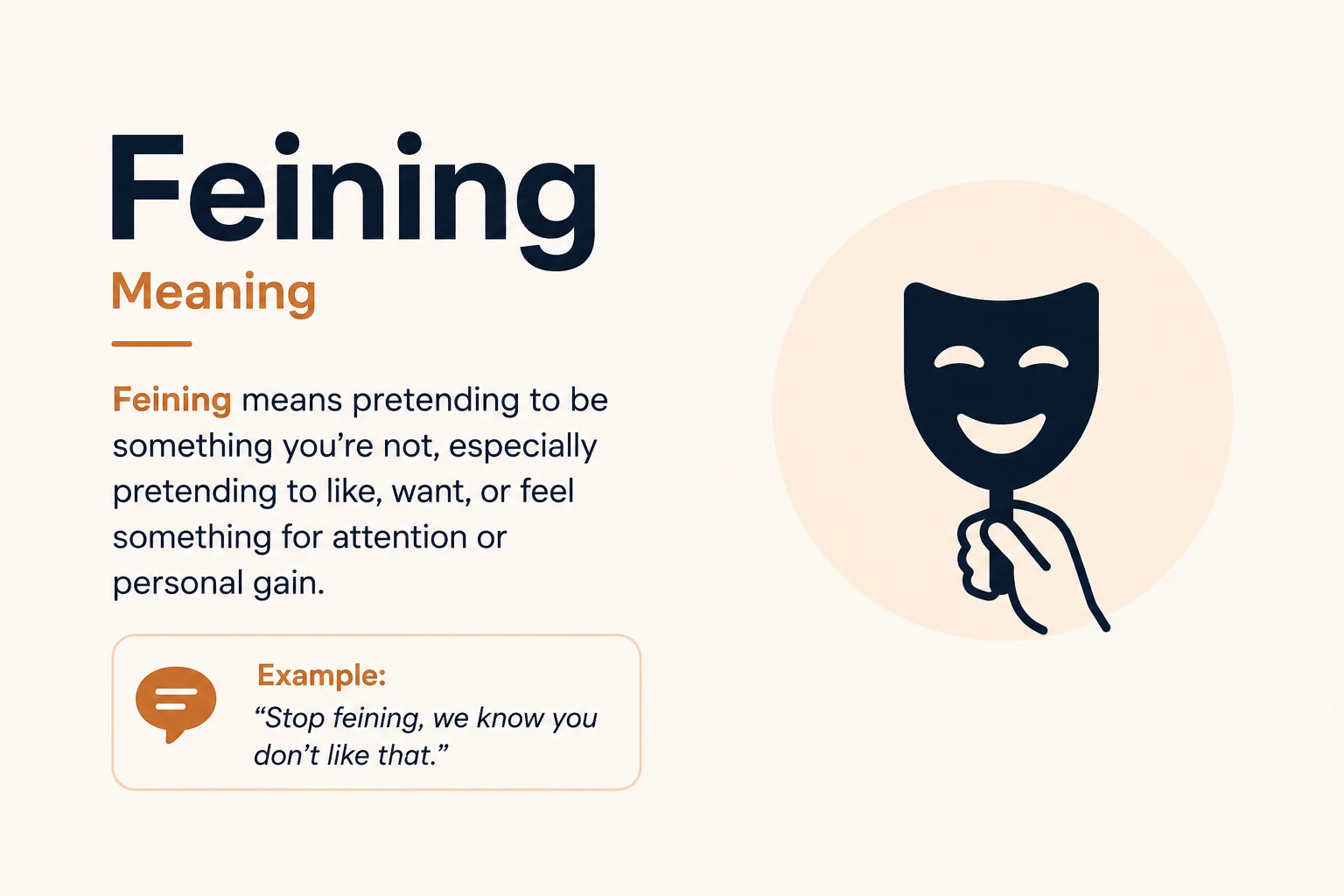
The term feining meaning has become increasingly popular on TikTok, Snapchat, Instagram, and other social media platforms. If you’ve seen someone say, “I’m feining for coffee,” or “He’s feining for the new game,” you may have wondered what exactly the word means.
In modern slang, feining usually means craving something badly, desperately wanting something, or being extremely eager to get something. It describes a strong desire that feels difficult to ignore. The term is commonly used when talking about food, entertainment, relationships, or anything someone wants very badly.
The word has gained massive popularity among Gen Z and internet users because it adds extra emphasis compared to simply saying “I want something.” Saying you’re feining for something suggests a much stronger level of desire or excitement.
Although the slang is widely used online today, many people are unfamiliar with its origins and proper usage. Understanding the feining meaning can help you follow modern conversations and use the term naturally in your own texts and social media posts.
This guide explains the feining meaning, where the word came from, how it is used in texting and social media, examples of conversations, and why it has become such a popular internet expression. For more insight read this:- imk meaning and blue heart emoji meaning
What Does Feining Mean?
The feining meaning in slang is usually desperately wanting something or craving something intensely.
When someone says they are feining, they mean they strongly desire something and cannot stop thinking about it.
Examples:
- “I’m feining for pizza right now.”
- “She’s feining for concert tickets.”
- “They’re feining for summer vacation.”
In these examples, the people do not merely want something. They strongly crave it.
The expression often communicates:
- Excitement
- Strong desire
- Cravings
- Eagerness
- Obsession
The word is generally used in casual conversations and internet slang rather than formal English.
Where Did Feining Come From?
Understanding the feining meaning also requires looking at its origins.
The slang “feining” comes from the word fiending.
Originally, “fiend” referred to someone who strongly craved something. Over time, slang usage transformed “fiending” into “feining” in online conversations and spoken language.
The term became increasingly popular in:
- Hip-hop culture
- Social media communities
- Internet memes
- Casual texting
- TikTok videos
Many people now spell the expression as “feining” because it reflects how the word is often pronounced in everyday speech.
Today, both “fiending” and “feining” commonly appear online and generally carry the same meaning.
Why Is Feining So Popular?
The feining meaning became popular because internet users enjoy expressive language.
Instead of saying:
“I want coffee.”
People often say:
“I’m feining for coffee.”
The second sentence sounds more dramatic and entertaining.
Social media encourages exaggerated expressions because they:
- Sound fun
- Create humor
- Add personality
- Increase emotional emphasis
Gen Z especially enjoys slang that makes ordinary situations feel more expressive.
The word “feining” perfectly fits this communication style.
It instantly tells people that someone wants something very badly.
Feining Meaning in Text Messages
The feining meaning frequently appears in text conversations.
Friends often use the expression when discussing things they are craving or looking forward to.
Examples:
Friend: “What are you doing?”
You: “Honestly, I’m feining for burgers.”
Another example:
Friend: “Ready for vacation?”
You: “I’ve been feining for this trip all month.”
In texting, the term often conveys:
- Strong excitement
- Intense cravings
- Anticipation
- Enthusiasm
The expression helps messages feel more casual and emotionally expressive.
Feining Meaning on TikTok
TikTok has played a major role in spreading the feining meaning.
Users frequently use the term in:
- Video captions
- Comments
- Memes
- Voiceovers
Examples:
“I’m feining for iced coffee.”
“We’re all feining for season two.”
“I’m feining for the weekend.”
TikTok trends often exaggerate emotions for entertainment.
The word “feining” fits perfectly because it emphasizes desire in a funny and relatable way.
Many users enjoy the term because nearly everyone has experienced intense cravings or excitement about something.
Feining Meaning on Snapchat
The feining meaning is also extremely common on Snapchat.
Because Snapchat conversations are usually casual and fast-paced, slang terms naturally thrive there.
Examples:
“I’m feining for some snacks.”
“He’s feining to see her.”
“I’m feining for summer break.”
The expression often appears:
- In chats
- In captions
- On private stories
- In group conversations
Snapchat users prefer short and expressive phrases.
“Feining” efficiently communicates strong emotions without requiring lengthy explanations.
Feining Meaning on Instagram
Instagram users frequently use the feining meaning in:
- Captions
- Comments
- Stories
- Reels
Examples:
“Feining for beach weather.”
“I’m feining for this album release.”
“We’re all feining for Friday.”
Instagram encourages users to share feelings and experiences.
The term helps communicate enthusiasm in an engaging and relatable manner.
Its casual tone makes it ideal for social media conversations.
Feining Meaning in Relationships
The feining meaning sometimes appears in discussions about relationships and dating.
Examples:
“He’s feining to text her.”
“She’s feining to see her boyfriend.”
“They’re feining to spend time together.”
In relationship contexts, the expression usually means:
- Missing someone
- Looking forward to seeing someone
- Feeling excited
- Wanting attention
- Craving companionship
The phrase often carries playful and affectionate tones.
It emphasizes emotional excitement rather than simple desire.
Feining Meaning and Food Cravings
One of the most common uses of the feining meaning involves food.
Examples:
“I’m feining for tacos.”
“I’m feining for chocolate.”
“We’re feining for pizza tonight.”
Food cravings are universal experiences.
Because everyone occasionally wants certain foods intensely, the expression feels highly relatable.
Many social media memes use the term in food-related situations because people immediately understand the emotion being described. Also explore:- hoe meaning
Examples of Feining in Conversations
Understanding the feining meaning becomes easier through examples.
Example One
Friend: “Want to order food?”
You: “Yes! I’m feining for sushi.”
Example Two
Friend: “Are you excited about the concert?”
You: “Absolutely. I’ve been feining for this all year.”
Example Three
Friend: “Ready for vacation?”
You: “I’m seriously feining for some time off.”
Example Four
Friend: “Do you want coffee?”
You: “Please. I’ve been feining for it since this morning.”
These examples show how the expression communicates intense desire and enthusiasm.
Similar Slang Words to Feining
Several expressions have meanings similar to the feining meaning.
Craving
“I’m craving ice cream.”
Dying For
“I’m dying for a vacation.”
Obsessed
“I’m obsessed with this show.”
Can’t Wait
“I can’t wait for the concert.”
Desperate For
“I’m desperate for sleep.”
All these phrases communicate strong desire.
However, “feining” often sounds more playful and modern.
Is Feining Formal English?
The feining meaning belongs primarily to informal language.
It is generally appropriate in:
- Text messages
- Social media
- Casual conversations
- Online communities
- Friendly discussions
It is usually not appropriate in:
- Academic papers
- Professional emails
- Business reports
- Formal presentations
For example:
Informal:
“I’m feining for a vacation.”
Formal:
“I am looking forward to my upcoming vacation.”
Understanding context is important when using modern slang.
Why Gen Z Loves the Word Feining
The feining meaning has become especially popular among Gen Z because it aligns with their communication style.
Gen Z often prefers language that is:
- Expressive
- Relatable
- Humorous
- Informal
- Emotionally engaging
The word “feining” transforms ordinary situations into entertaining expressions.
Instead of simply wanting coffee, someone can say they are “feining” for it.
This exaggeration adds personality and humor to conversations.
Social media further accelerates the spread of these expressions.
Common Mistakes About Feining
People sometimes misunderstand the feining meaning.
Assuming It Means Addiction
The word often describes cravings and excitement rather than serious addiction.
Thinking It Is Formal Vocabulary
The term remains internet slang.
Believing It Only Refers to Food
People can be feining for:
- Vacations
- Movies
- Relationships
- Video games
- Sleep
- Weekends
The expression applies to many situations involving strong desire.
Will Feining Remain Popular?
Internet slang changes rapidly.
Some expressions disappear quickly.
Others become long-lasting parts of everyday language.
The feining meaning remains popular because it communicates an experience that nearly everyone understands: wanting something badly.
Its versatility increases its chances of staying relevant.
People constantly experience cravings, excitement, and anticipation.
As long as those feelings exist, expressive terms like “feining” will likely continue appearing in conversations and social media posts.
Frequently Asked Questions
What does feining mean?
Feining usually means strongly craving something or desperately wanting something.
Is feining the same as fiending?
Yes. In modern slang, feining and fiending generally carry the same meaning.
Is feining a real word?
Feining is considered internet slang and informal speech rather than standard formal English.
Where is feining commonly used?
People commonly use it on TikTok, Snapchat, Instagram, text messages, and casual online conversations.
Can feining refer to people?
Yes. Someone can be feining to see another person, spend time with friends, or reconnect with loved ones.
Conclusion
Understanding the feining meaning helps you better navigate modern internet culture and digital conversations. In most situations, feining means strongly craving, eagerly wanting, or desperately looking forward to something. The term expresses emotions more dramatically than simply saying, “I want something.”
The expression has grown in popularity through social media platforms such as TikTok, Snapchat, and Instagram, where users prefer playful and highly expressive language. Whether discussing food cravings, vacations, concerts, relationships, or favorite activities, “feining” effectively communicates excitement and anticipation.
Like many internet slang terms, feining reflects how language continuously evolves. Younger generations enjoy words that add personality and emotional intensity to everyday conversations.
The next time someone says they’re “feining” for something, you’ll know they are not just interested in it—they want it badly and probably can’t stop thinking about it.