
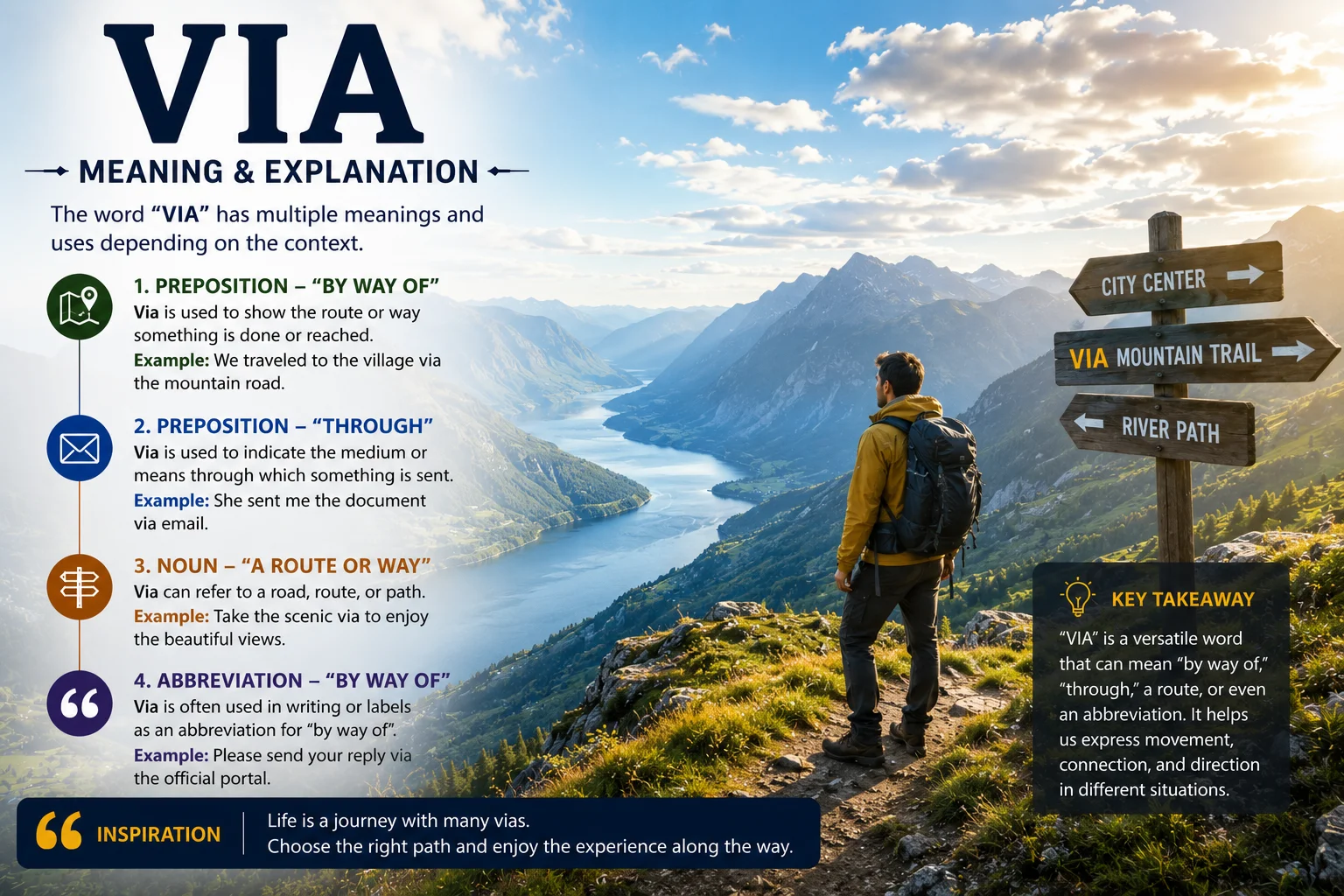
VIA MEANING is one of the most searched English terms online because people frequently encounter it in text messages, social media posts, emails, maps, news articles, and everyday conversations. Although the word is short and simple, many people are unsure what it actually means and how it should be used correctly.
The good news is that the via meaning is easy to understand once you know the basic concept behind it. In most situations, “via” means “through,” “by way of,” or “using.” It describes the route, method, source, or medium through which something happens. For example, if someone says they received information “via email,” it means the information came through email.
You may also see the word in travel plans, delivery updates, social media captions, and professional communication. Because it appears in so many different places, understanding the meaning of via can help improve both your reading and writing skills.
Whether you’re reading a news story, chatting online, checking flight routes, or browsing social media, you’ll likely encounter this useful word regularly. Let’s explore the complete meaning of via, its origins, common uses, and how it fits into modern communication.
The Full Meaning of Via in Text Messages and Everyday Communication
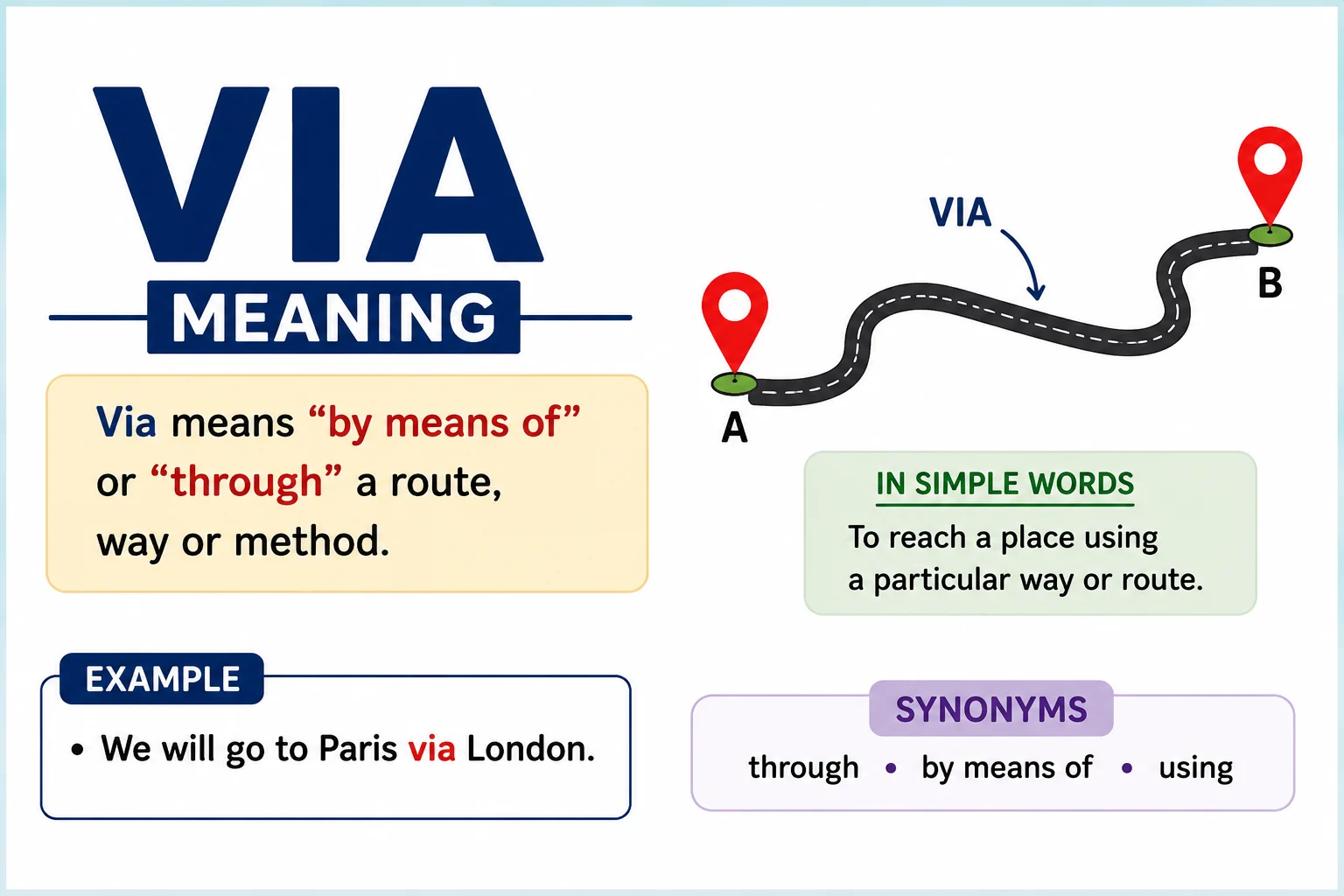
The most common via meaning is “through,” “by way of,” or “using a particular method.” The word explains how something travels, happens, or reaches its destination.
For example:
“I received the photos via WhatsApp.”
This simply means the photos were received through WhatsApp.
Another example is:
“The documents were sent via email.”
In this sentence, email was the method used to send the documents.
The word is extremely flexible because it can describe communication methods, travel routes, delivery systems, and information sources. Once you understand the idea of “through” or “using,” the meaning becomes much easier to recognize.
Where the Word Via Came From and How It Became Popular
The via meaning comes from Latin, where the word originally meant “road,” “path,” or “way.” Ancient Romans used the term when talking about roads that connected cities and regions.
As Latin influenced many modern languages, the word eventually became part of English vocabulary. Over time, its meaning expanded beyond physical roads and began referring to methods, routes, and channels of communication.
Because the word is short and efficient, it became popular in business writing, journalism, transportation, and technology. Instead of saying “through the use of” or “by means of,” writers could simply use “via.”
Today, the word appears in both formal and casual communication, making it one of the most useful terms in modern English.
How To Use Via Correctly in Texting and Online Chats
Understanding the via meaning becomes easier when you see how it works in everyday conversations.
For example:
“I got the invite via Instagram.”
This means the invitation came through Instagram.
Another example:
“The file was shared via Google Drive.”
This means Google Drive was used to share the file.
People often use via in texting because it sounds clear and concise. It allows users to explain where information came from without writing long explanations.
Although the word is somewhat formal, it still appears regularly in online chats, especially when discussing sources, messages, files, or social media content.
Via Meaning When Used on Snapchat, Instagram, and Social Media
The via meaning is extremely common on social media platforms. Users often include the word when giving credit for content or identifying the source of information.
For example:
“Photo via Instagram”
This means the photo originated from Instagram.
Another common example is:
“Video via TikTok”
This indicates TikTok was the source of the video.
Content creators, bloggers, and journalists frequently use via when sharing material from other platforms. It helps acknowledge the original source while maintaining transparency.
Because information constantly moves between apps and websites, the word via has become a valuable part of online communication.
Via Meaning in Relationships and Personal Conversations
In relationships and personal discussions, the via meaning usually refers to how communication occurred.
For example:
“We met via a mutual friend.”
This means a mutual friend introduced the two people.
Another example:
“I heard the news via my cousin.”
This means the cousin was the source of the information.
Using via in these situations helps explain the connection or pathway through which something happened. It provides context while keeping the sentence short and clear.
Because relationships often involve networks of people, the word is useful for explaining introductions, messages, and shared information.
Using Via as a Reply to Someone Else’s Message
The via meaning can also appear in responses to questions or messages.
For example:
Person A:
“How did you get those tickets?”
Person B:
“Via the official website.”
Another example:
Person A:
“Where did you find that article?”
Person B:
“Via Twitter.”
In these situations, via functions as a quick and efficient answer. Instead of writing a full sentence, the speaker simply identifies the source or method.
This makes the word particularly useful in texting and online conversations where brevity is valued.
When You Should NOT Use Via in a Conversation
Although the via meaning is simple and useful, there are situations where it may not sound natural.
For example, using via repeatedly in casual conversations can make speech sound overly formal. Sometimes words like through, from, or using feel more conversational.
Instead of saying:
“I bought coffee via the store.”
Most people would simply say:
“I bought coffee from the store.”
Context matters when choosing vocabulary. Via works best when emphasizing a route, source, or method rather than ordinary everyday actions.
Using the word appropriately helps maintain natural communication.
Examples of Via Used in Real-Life Conversations
Here are several examples showing the via meaning in action:
Example 1:
“The package arrived via courier.”
Example 2:
“I learned about the event via Facebook.”
Example 3:
“The payment was made via bank transfer.”
Example 4:
“We traveled to New York via Chicago.”
Example 5:
“The photos were shared via email.”
In every example, the word identifies the method, route, or source involved.
These practical examples demonstrate why via remains one of the most useful words in English communication.
Similar Words and Alternatives to Via
Several words can replace the via meaning depending on the sentence.
Common alternatives include:
- Through
- By
- Using
- By way of
- Through the use of
- By means of
For example:
“I received the file via email.”
can become:
“I received the file through email.”
or
“I received the file using email.”
Although these alternatives work, via is often preferred because it is shorter and more concise.
How the Via Meaning Differs Across Generations and Age Groups
The via meaning remains largely consistent across generations because it has been part of English vocabulary for a long time.
Older generations often use the word in professional writing, business communication, and travel discussions.
Millennials frequently encounter it in emails, websites, and digital communication.
Gen-Z users see the word regularly on social media platforms, content credits, and messaging apps.
While usage patterns may differ slightly, the core meaning remains the same. Everyone generally understands via as a way of describing how something happened or where it came from.
This consistency helps explain why the word continues to thrive in modern English.
Frequently Asked Questions
What does via mean?
Via usually means “through,” “by way of,” or “using.”
What does via mean in texting?
In texting, via often refers to the method or platform used to send something.
What does via mean on social media?
On social media, via typically identifies the source of content, information, or media.
Can via mean through?
Yes. In many situations, via and through have very similar meanings.
Is via a formal word?
Yes, but it is commonly used in both formal and casual communication.
Conclusion
The via meaning is simple once you understand its core idea: “through,” “by way of,” or “using.” Whether you’re discussing emails, social media posts, travel routes, online communication, or information sources, the word helps explain how something happened or where it came from.
Its origins trace back to Latin, where it referred to roads and pathways. Over time, the meaning expanded to include methods, routes, and channels of communication. Today, the word appears everywhere from professional emails to TikTok captions.
One reason via remains popular is its efficiency. Instead of using longer phrases, speakers and writers can communicate the same idea with a single word. This makes it especially useful in modern digital communication.
As technology continues to connect people through countless platforms and channels, the via meaning will remain an important part of everyday English. It’s a small word with a big role in helping people explain how information, messages, and experiences move from one place to another.