
ASHURA MEANING is something many people search online during the Islamic month of Muharram after seeing posts, videos, discussions, and religious content on social media. The word carries deep historical, spiritual, and emotional importance for Muslims around the world. From religious gatherings to TikTok educational videos and Instagram reminders, Ashura meaning becomes widely discussed every year during the Islamic calendar.
A lot of people first hear about Ashura through Muharram processions, fasting reminders, or emotional social media posts. Others discover it while learning about Islamic history, especially the events connected to Imam Hussain (RA) and the Battle of Karbala. Because the word appears in both religious and cultural conversations online, many users become curious about its exact meaning and significance.
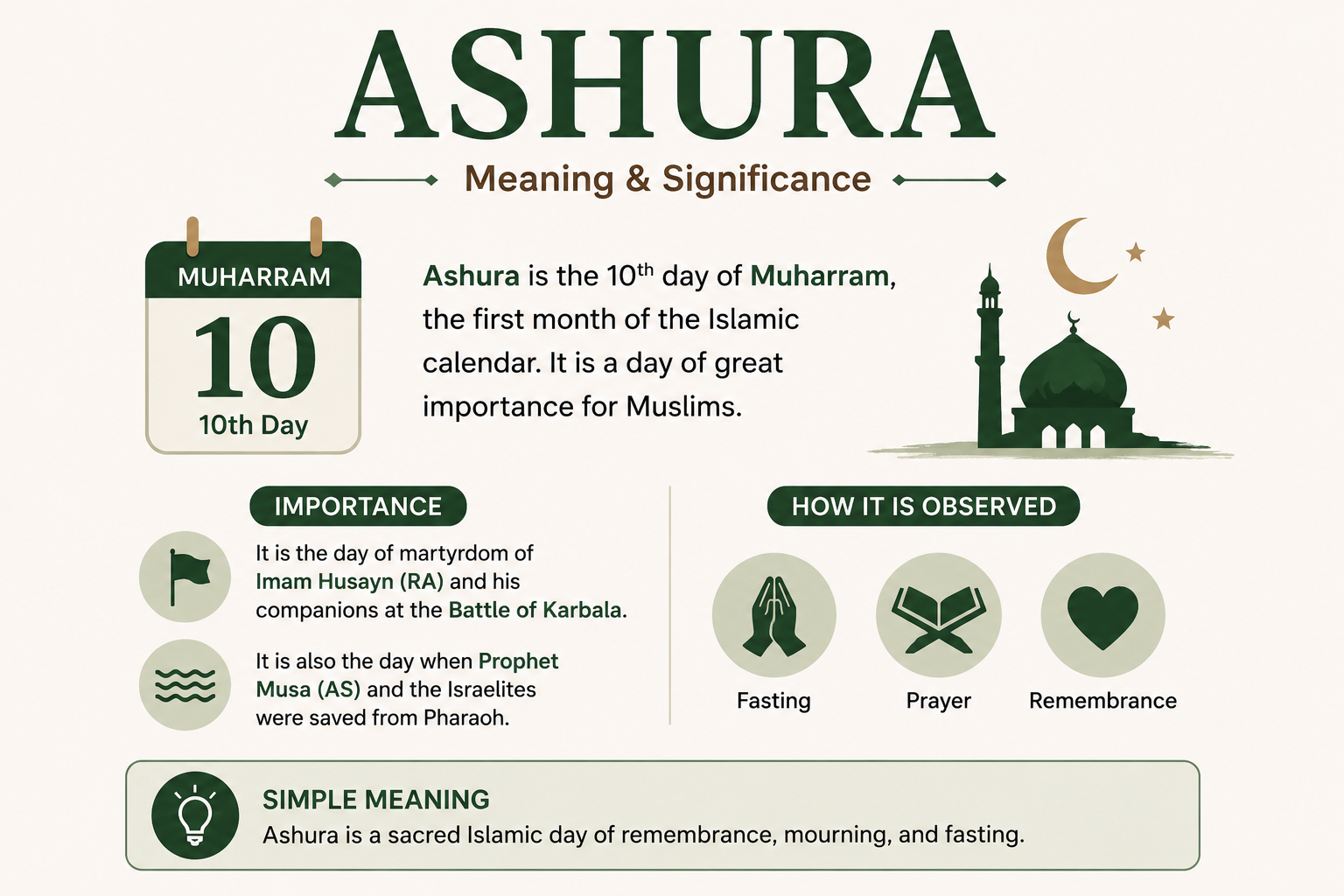
In simple terms, Ashura refers to the 10th day of Muharram, which is the first month of the Islamic calendar. The day holds major importance in Islam for several historical and spiritual reasons. For Sunni Muslims, Ashura is associated with fasting and important events involving Prophets. For Shia Muslims, the day strongly connects to the martyrdom of Imam Hussain (RA) at Karbala.
Another reason Ashura meaning became highly searched online is because social media spreads Islamic educational content rapidly. Platforms like TikTok, YouTube, Instagram, and Twitter help younger audiences learn about Islamic history, Muharram traditions, fasting practices, and the emotional importance of Ashura in Muslim communities worldwide.
The Full Meaning of Ashura in Islamic Tradition
Ashura meaning comes from the Arabic word “Ashara,” which means ten. The term specifically refers to the 10th day of Muharram in the Islamic lunar calendar. This day carries deep spiritual significance in Islam and is remembered differently across Muslim communities.
For Sunni Muslims, Ashura is considered a blessed day connected to fasting and several important historical events involving Prophets. Many Muslims believe Prophet Musa (AS) and the Israelites were saved from Pharaoh on this day, which is why fasting on Ashura is highly recommended in Islamic tradition.
For Shia Muslims, Ashura holds profound emotional importance because it marks the martyrdom of Imam Hussain (RA), the grandson of Prophet Muhammad ﷺ, during the Battle of Karbala in 680 CE. The day symbolizes sacrifice, justice, patience, and standing against oppression.
Another reason Ashura meaning feels powerful online is because the day combines spirituality, history, grief, remembrance, and community traditions. Social media allows Muslims worldwide to share educational reminders, emotional reflections, and historical lessons connected to Ashura.
Where Ashura Came From and Why It Is Important
Ashura meaning is deeply rooted in Islamic history and early religious traditions. Long before modern social media discussions, Muslims observed Ashura through fasting, prayer, remembrance, and reflection.
One of the most commonly mentioned events associated with Ashura is the story of Prophet Musa (AS). Islamic teachings explain that Allah saved Musa (AS) and his followers from Pharaoh on this day. Prophet Muhammad ﷺ later encouraged Muslims to fast on Ashura as an act of gratitude and worship.
The Battle of Karbala also made Ashura historically significant. Imam Hussain (RA) and his companions were martyred while standing against injustice and tyranny. Their sacrifice became one of the most emotional and defining moments in Islamic history.
Modern internet culture helped Ashura meaning reach younger generations globally. Educational TikTok videos, Islamic podcasts, YouTube lectures, and social media reminders now help millions learn about the spiritual and historical importance of the day.
How Ashura Is Observed Around the World
Ashura meaning connects not only to history but also to religious practices and traditions observed worldwide. Muslims commemorate the day differently depending on cultural background and Islamic tradition.
Many Sunni Muslims observe fasting on the 9th and 10th of Muharram or the 10th and 11th to follow Sunnah practices connected to Prophet Muhammad ﷺ. Mosques often hold lectures discussing Islamic history, gratitude, and spiritual reflection.
Shia Muslim communities observe Ashura through mourning gatherings, processions, poetry recitations, sermons, and remembrance ceremonies honoring Imam Hussain (RA) and the tragedy of Karbala. These events focus heavily on sacrifice, justice, loyalty, and faith.
Social media also changed how Ashura is observed publicly. Today, people share Quran verses, Islamic reminders, historical videos, and emotional tributes online, making Ashura discussions visible across global digital communities.
Ashura Meaning When Used on TikTok and Instagram
Ashura meaning appears constantly on TikTok and Instagram during Muharram because Islamic educational content becomes highly active during this period. Users post fasting reminders, historical explanations, religious quotes, and emotional edits connected to Karbala.
TikTok creators especially helped younger audiences understand Ashura through short educational videos explaining Islamic history in simple language. Many creators discuss why fasting on Ashura is important and what happened during the Battle of Karbala.
Instagram pages also share black-themed remembrance posts, Islamic calligraphy, duas, and lectures during Muharram. Hashtags related to Ashura trend heavily among Muslim communities worldwide every year.
Another reason Ashura meaning became popular online is because modern Muslims increasingly use social media for religious education and community connection. Digital platforms help people learn, reflect, and participate in discussions regardless of location.
Ashura Meaning in Islamic History and Karbala
Ashura meaning is strongly connected to the Battle of Karbala, one of the most important events in Islamic history. In 680 CE, Imam Hussain (RA), along with family members and companions, was martyred in Karbala after refusing allegiance to injustice and corruption.
For millions of Muslims, especially within Shia communities, Ashura symbolizes courage, sacrifice, dignity, and resistance against oppression. Imam Hussain’s (RA) stand became a timeless example of faith and moral strength.
The tragedy of Karbala continues influencing Islamic thought, poetry, speeches, and religious gatherings centuries later. Muharram majalis and processions often focus on lessons learned from Imam Hussain’s sacrifice.
Social media now plays a major role in spreading awareness about Karbala globally. Educational threads, documentaries, podcasts, and videos allow younger audiences to understand the emotional and historical depth behind Ashura meaning.
Ashura as a Spiritual Reminder for Muslims
Ashura meaning is not only historical but also deeply spiritual. Many Muslims use the day for fasting, prayer, charity, repentance, and reflection on faith and patience.
The fasting associated with Ashura is considered highly rewarding in Islamic teachings. Many Muslims believe fasting on this day brings forgiveness for sins from the previous year, based on authentic Islamic narrations.
Another spiritual lesson connected to Ashura is gratitude. The story of Prophet Musa (AS) reminds Muslims about trusting Allah during difficult situations and remaining thankful after hardship.
Online Islamic communities often encourage users to spend Ashura meaningfully instead of treating it as only a historical topic. Religious reminders, duas, and motivational reflections become very common during Muharram online.
When You Should NOT Misunderstand Ashura Meaning
Even though Ashura meaning is widely discussed online, misinformation sometimes spreads through social media. Some users oversimplify Islamic history or share inaccurate details without proper knowledge.
Another issue happens when internet discussions become disrespectful toward different Islamic traditions. Muslims around the world observe Ashura differently based on beliefs, schools of thought, and cultural practices.
It is also important not to reduce Ashura to only internet trends or aesthetics. While social media helps educate people, the day carries serious spiritual and historical significance for millions globally.
Reliable Islamic scholars, books, lectures, and authentic sources should always be prioritized when learning about Ashura meaning and its religious importance.
Examples of Ashura Mentioned in Online Conversations
One common example would be:
“Are you fasting for Ashura tomorrow?”
In this situation, the person refers to recommended fasting during Muharram.
Another example might be:
“Learning about Karbala changed my understanding of Ashura.”
Here, the discussion focuses on Islamic history and Imam Hussain (RA).
Social media captions also commonly include phrases like:
“May Allah accept our fasts on Ashura.”
This reflects spiritual and religious observance online.
TikTok educational creators may also post:
“Explaining Ashura in under one minute.”
This style became popular for simplifying Islamic history and religious topics for younger audiences.
Similar Islamic Terms Related to Ashura
Ashura meaning connects closely with several other Islamic terms and events. One major related term is Muharram, which is the first month of the Islamic calendar and the month in which Ashura occurs.
Another connected term is Karbala, the city where Imam Hussain (RA) and his companions were martyred. Discussions about Ashura often naturally include Karbala’s historical importance.
Words like majlis, matam, fasting, and Ahlul Bayt also appear frequently during Muharram discussions online depending on Islamic traditions and community practices.
Islamic social media culture continues spreading awareness about these terms globally, helping younger Muslims learn more about religious history and spirituality online.
How Ashura Differs Across Cultures and Generations
Ashura meaning remains spiritually important across all generations, but younger Muslims now experience the day differently because of social media and digital learning.
Older generations often learned about Ashura mainly through family traditions, mosques, scholars, and local religious gatherings. Community participation played the biggest role in understanding the day.
Millennials and Gen-Z Muslims increasingly learn through YouTube lectures, Islamic TikTok creators, podcasts, Instagram reminders, and online discussions. Digital platforms made Islamic education much more accessible worldwide.
Different Muslim cultures also observe Ashura uniquely. Some communities focus more on fasting and worship, while others emphasize mourning gatherings and historical remembrance. Despite these differences, Ashura continues symbolizing faith, sacrifice, patience, and spiritual reflection across the Muslim world.
Frequently Asked Questions
What does Ashura mean in Islam?
Ashura refers to the 10th day of Muharram, the first month of the Islamic calendar. The day holds major spiritual and historical importance in Islam.
Why is Ashura important?
Ashura is important because of events connected to Prophet Musa (AS) and the martyrdom of Imam Hussain (RA) at Karbala. It symbolizes faith, sacrifice, and gratitude.
Do Muslims fast on Ashura?
Yes, many Muslims fast on Ashura because fasting on this day is highly recommended in Islamic teachings and traditions.
What happened on Ashura in Karbala?
Imam Hussain (RA), the grandson of Prophet Muhammad ﷺ, was martyred during the Battle of Karbala on Ashura in 680 CE.
Why is Ashura discussed on social media?
Social media helps spread Islamic education, historical awareness, fasting reminders, and religious discussions connected to Muharram and Ashura globally.
Conclusion
Ashura meaning carries deep spiritual, historical, and emotional importance for Muslims worldwide. Whether connected to fasting, gratitude, Karbala, or remembrance, the day continues inspiring reflection, faith, and community across generations.
Platforms like TikTok, Instagram, YouTube, and Islamic podcasts helped younger audiences understand Ashura more clearly through accessible educational content and digital discussions.
Understanding Ashura meaning also helps people appreciate the rich history and values connected to patience, sacrifice, justice, and devotion in Islam. The lessons of Ashura remain meaningful far beyond one single day in the calendar.